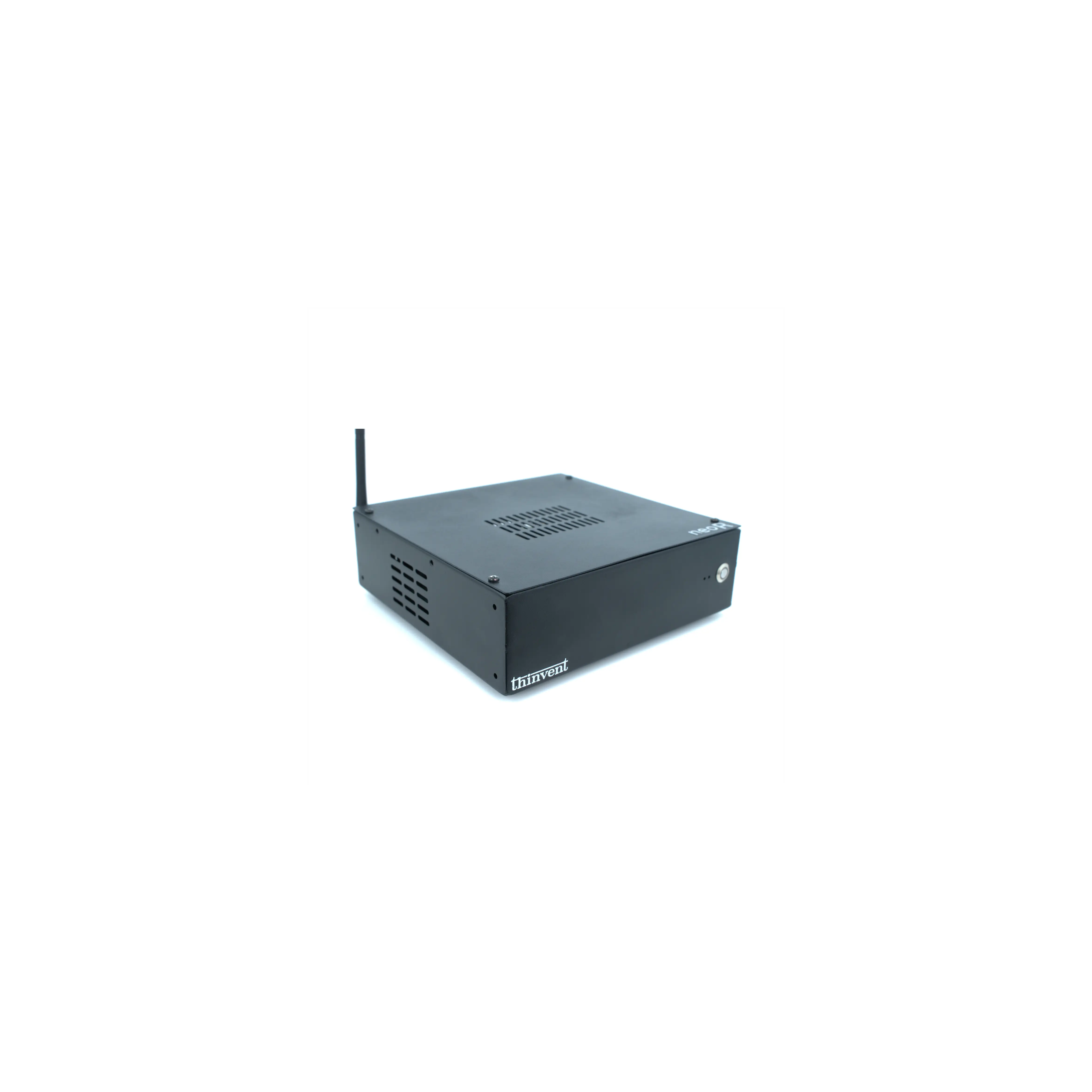
What is a Compact Thin Client PC?
A compact thin client PC is a small, energy-efficient, and secure endpoint device designed primarily for remote desktop and virtualized computing environments. Unlike traditional desktop PCs, thin clients have minimal local processing power, storage, and software. They rely on a central server or cloud infrastructure to run applications and manage data, functioning primarily as a terminal for display and input. This architecture makes them ideal for centralized IT management, enhanced security, and reduced total cost of ownership.
Key Specifications and Technical Advantages
Modern compact thin clients, like those featured here, balance performance with efficiency. They typically utilize low-power processors from ARM (like Cortex A53/A55) or Intel (such as the N100, Core i3/i5). Key specifications include onboard RAM (2GB to 16GB), fast eMMC or SSD storage (16GB to 512GB), and support for multiple operating systems including Thinux™ Embedded Linux, Ubuntu Linux, and Windows IoT/Pro. Their compact form factor, often fanless for silent operation, and low power consumption (using adapters like 5V/2A or 12V/5A) make them perfect for space-constrained and always-on deployments. Integrated features like dual-band Wi-Fi, VESA mounts, and multiple display outputs (HDMI) add to their versatility.
Primary Use Cases and Applications
These devices are engineered for scenarios where security, manageability, and reliability are paramount.
-
Secure Remote Access & VDI: The primary use case, providing secure endpoints for Virtual Desktop Infrastructure (VDI), Citrix, VMware Horizon, and remote desktop services (RDP). Centralized data storage minimizes the risk of local data breaches.
-
Digital Signage & Kiosks: Their small size, low heat output, and ability to run 24/7 make them ideal for driving digital signage displays, interactive kiosks, and information terminals in retail, hospitality, and public spaces.
-
Office & Task-Based Computing: For general office productivity, web-based applications, and call center environments, they offer a cost-effective and easily managed alternative to full desktop PCs.
-
Industrial & Embedded Applications: Ruggedized or industrially designed models can serve as control panels, HMIs (Human-Machine Interfaces), or edge computing nodes in manufacturing and automation settings.
Comparison of Thinvent Compact Thin Client Series
The following table highlights the key differences between popular Thinvent series to help you select the right model for your needs.
| Series | Typical Processor | Key Strengths | Ideal For |
|---|---|---|---|
| Micro Series | ARM Cortex A53/A55 | Ultra-compact, fanless, very low power, cost-effective. | Basic VDI/remote access, digital signage, lightweight web terminals. |
| Treo / IPC1 Series | Intel Processor N100 | Excellent balance of x86 performance and power efficiency. | General office VDI, entry-level industrial computing, software requiring x86 compatibility. |
| Aero / IPC3 Series | Intel Core i3/i5 | Higher performance for demanding applications, more RAM and storage. | Power users in VDI environments, multi-display setups, light CAD/graphic design workstations. |
| IPC5 Series | Intel Core i5-1240P | High-performance computing with multiple cores and high clock speeds. | Advanced engineering workstations, data analysis terminals, intensive multi-tasking environments. |
Thinvent's Range of Compact Thin Client Solutions
Thinvent offers a comprehensive portfolio of compact thin client PCs designed to meet diverse performance and deployment requirements. Our Micro Series leverages ARM architecture for maximum efficiency in ultra-compact, fanless designs. For users needing x86 compatibility and a performance boost, the Treo and IPC1 series with Intel N100 processors provide an optimal balance. The Aero and IPC3 series, powered by Intel Core i3 and i5 processors, deliver robust performance for more demanding virtualized workloads. At the top end, the IPC5 industrial PC features a 12-core Intel i5 processor for high-performance computing tasks. All Thinvent thin clients are built for reliability, secure remote access, and seamless integration into centralized IT environments, supported by a choice of operating systems including our proprietary Thinux™ Embedded Linux, Ubuntu, and Windows.