What is a DVR System?
A DVR (Digital Video Recorder) system is a dedicated computing solution designed for continuous video capture, compression, storage, and management from multiple security cameras. Unlike a standard PC, a DVR is engineered for 24/7 operation, offering stability, efficient video processing, and robust data storage for surveillance applications. It serves as the central hub in a CCTV setup, converting analog camera feeds into digital recordings.
Key Specifications for DVR Computers
An effective industrial DVR computer requires specific hardware to handle constant video streams. Key specifications include:
-
Processor: A multi-core CPU (e.g., Intel Celeron or Core i-series) with integrated graphics is essential for encoding multiple video channels simultaneously.
-
Storage: High-capacity SSDs (256GB to 1TB+) are preferred for fast write speeds and reliability, often supported by multiple drive bays for RAID configurations.
-
Memory: Ample RAM (8GB to 16GB minimum) ensures smooth operation of the recording software and playback.
-
Connectivity: Multiple Ethernet ports (Gigabit) are crucial for network cameras (NVR functionality), while legacy systems require video capture cards for analog inputs. Ample USB ports are needed for peripherals.
-
Reliability: Fanless, rugged designs are ideal to prevent dust ingress and ensure silent, maintenance-free operation in control rooms or harsh environments.
Applications and Use Cases
DVR systems are the backbone of modern security and monitoring infrastructure.
-
Commercial Security: Monitoring retail stores, offices, and banks for theft prevention and safety.
-
Industrial Monitoring: Overseeing manufacturing floors, warehouses, and logistics centers for process control and asset protection.
-
Public Safety & Traffic Management: Used in city surveillance, traffic monitoring, and license plate recognition systems.
-
Residential Complexes: Providing security for apartment buildings and gated communities.
DVR vs. NVR: A Quick Comparison
While both are used for video recording, they differ in core technology:
| Feature | DVR (Digital Video Recorder) | NVR (Network Video Recorder) |
|---|---|---|
| Camera Connection | Coaxial cables (BNC) for analog cameras. | Standard Ethernet (IP) network for digital IP cameras. |
| Video Processing | Processing occurs in the DVR unit. | Processing occurs in the IP camera itself. |
| Flexibility & Setup | Limited to analog camera systems; less scalable. | Highly flexible, uses existing network infrastructure; easier to scale. |
| Video Quality | Limited by analog signal standards (e.g., 1080p). | Supports modern high-resolution IP cameras (4K, 8MP+). |
| Modern Trend | Legacy systems are being phased out. | The current standard for new installations. |
Note: Many modern "DVR" systems are hybrid, supporting both analog and IP cameras, or are purely NVRs.
Thinvent Industrial Computers for DVR/NVR Applications
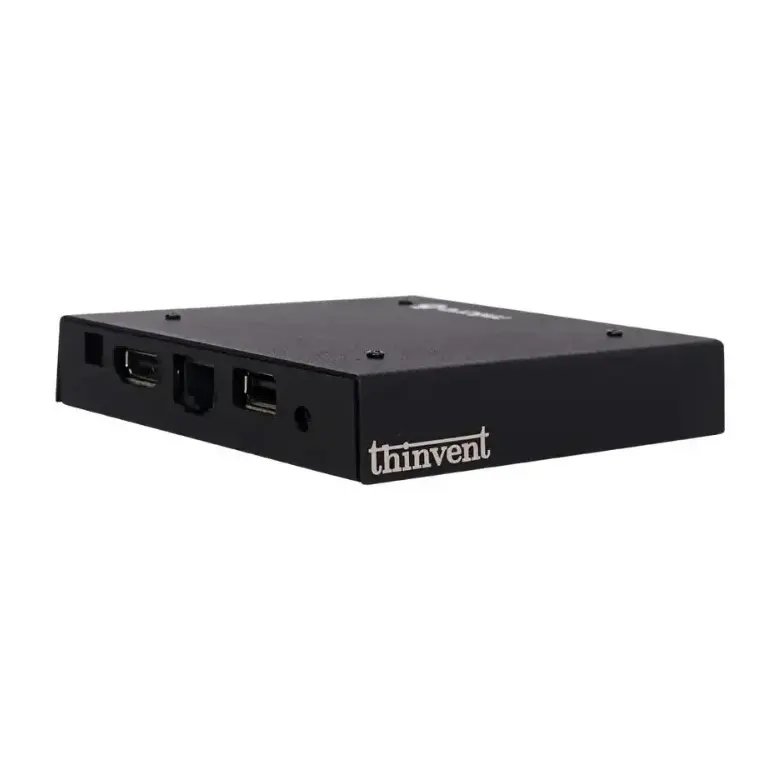
Thinvent offers a range of robust, fanless industrial computers perfectly suited for demanding 24/7 DVR and NVR deployments. Our systems feature reliable Intel processors, ample RAM and storage options, and multiple Gigabit Ethernet ports to handle streams from numerous cameras. Built with durability in mind, they operate silently in varied temperatures and environments, from server racks to outdoor enclosures. Whether you need a compact Mini PC for a small business or a powerful Industrial PC for a large-scale surveillance network, Thinvent provides the stable, high-performance computing foundation required for critical video surveillance tasks.