What is a Central Processing Unit (CPU)?
A Central Processing Unit (CPU), often referred to as a processor, is the primary component of a computer responsible for executing instructions from programs. It performs the basic arithmetic, logic, controlling, and input/output (I/O) operations specified by the instructions, acting as the "brain" of the system. In industrial computing, the choice of CPU is critical for determining performance, power efficiency, thermal management, and overall system reliability in demanding environments.
Key Specifications and Technical Details
Modern industrial CPUs are defined by several key specifications:
-
Cores: The number of independent processing units within a single CPU. Multi-core processors (e.g., 4, 6, 10 cores) can handle multiple tasks simultaneously, improving multitasking and performance for parallel workloads.
-
Clock Speed: Measured in Gigahertz (GHz), this indicates how many cycles a core can execute per second. Higher speeds generally mean faster processing for single-threaded tasks.
-
Cache Memory: A small, high-speed memory located on the CPU die that stores frequently accessed data, drastically reducing latency and improving efficiency.
-
Thermal Design Power (TDP): The maximum amount of heat a CPU is expected to generate. Lower TDP processors (common in Intel N-series) are ideal for fanless, compact designs as they require less cooling.
-
Instruction Set Architecture (ISA): Defines how the CPU handles instructions. The most common for industrial PCs are x86 (from Intel) and ARM, with x86 being dominant for general-purpose computing and software compatibility.
Use Cases and Applications
The CPU is the cornerstone of an industrial computer's capability, directly influencing its suitability for various applications:
-
Digital Signage & Kiosks: Efficient, low-power CPUs like the Intel N-series are perfect for driving displays, handling media playback, and running interactive applications 24/7.
-
IoT Gateways & Edge Computing: Processors with a balance of performance and power efficiency are required to collect, process, and transmit data from sensors and devices at the network edge.
-
Factory Automation & Machine Control: Reliable CPUs ensure precise timing and deterministic performance for controlling machinery, robotics, and PLC systems.
-
Thin Clients & Virtual Desktop Infrastructure (VDI): Processors optimized for connectivity and efficient data handling are used to access centralized virtual desktops and applications.
CPU Comparison for Industrial Applications
| Processor Series | Typical Cores | Ideal Use Case | Key Characteristics |
|---|---|---|---|
| Intel® N-Series (e.g., N100) | 4 | Digital Signage, Basic IoT, Thin Clients | Ultra-low power, fanless operation, cost-effective. |
| Intel® Celeron® | 2-4 | Entry-level Industrial PCs, Kiosks | Reliable performance for essential tasks, good value. |
| Intel® Core™ i3/i5 | 4-10 | Advanced Automation, Edge Servers, Medical Devices | Higher performance, integrated graphics, support for more demanding applications. |
Thinvent Industrial PCs Featuring Advanced CPUs
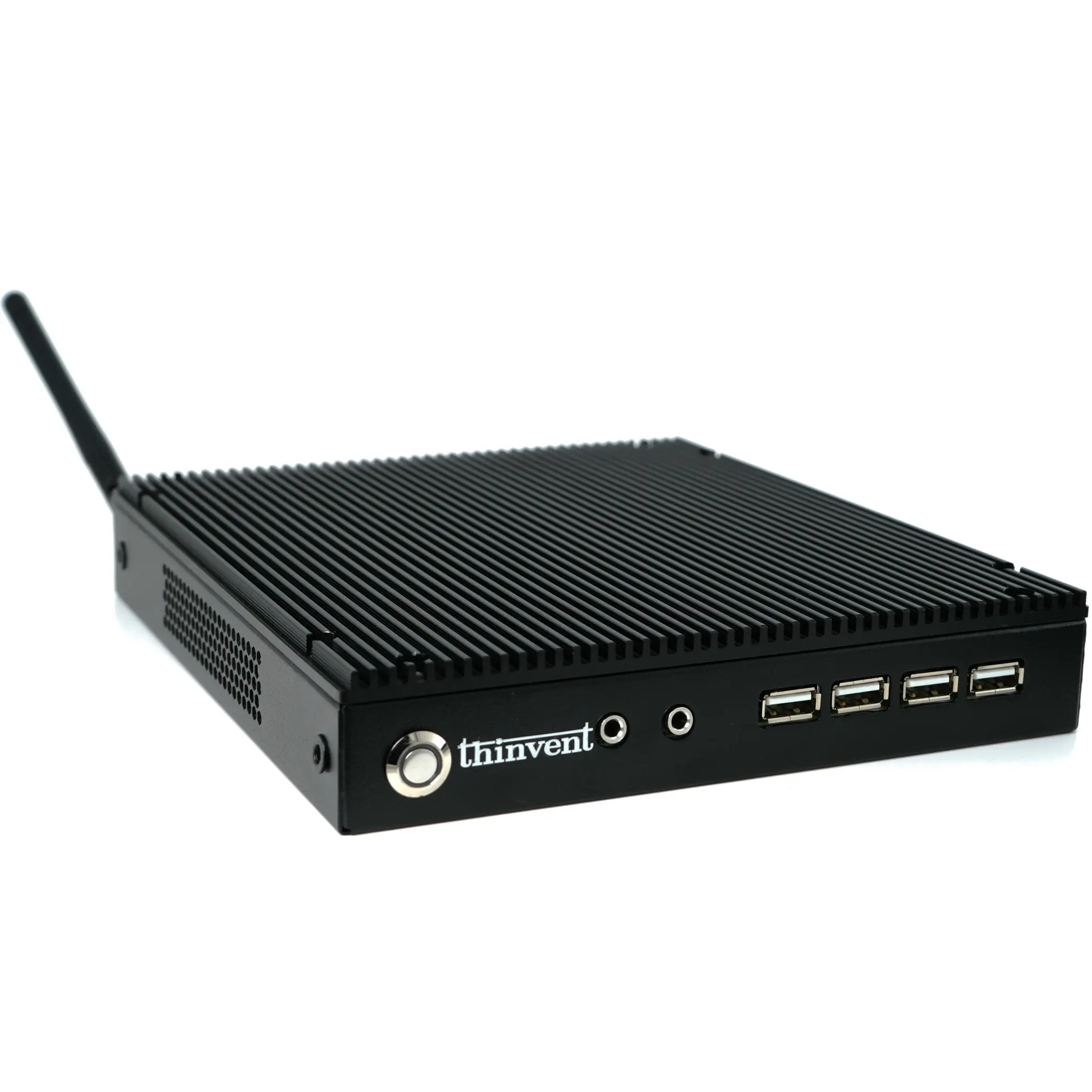
Thinvent designs and manufactures a robust range of industrial computers built around carefully selected CPUs to meet specific operational demands. Our product lines, including the Aero Mini PC series, utilize processors like the Intel N100 to deliver silent, fanless operation perfect for embedded and space-constrained environments. We offer configurations across multiple CPU brands, series, and generations, allowing customers to select the perfect balance of processing power, energy efficiency, and thermal performance for their project. Each system is engineered for durability and long-term reliability in commercial and industrial settings worldwide.