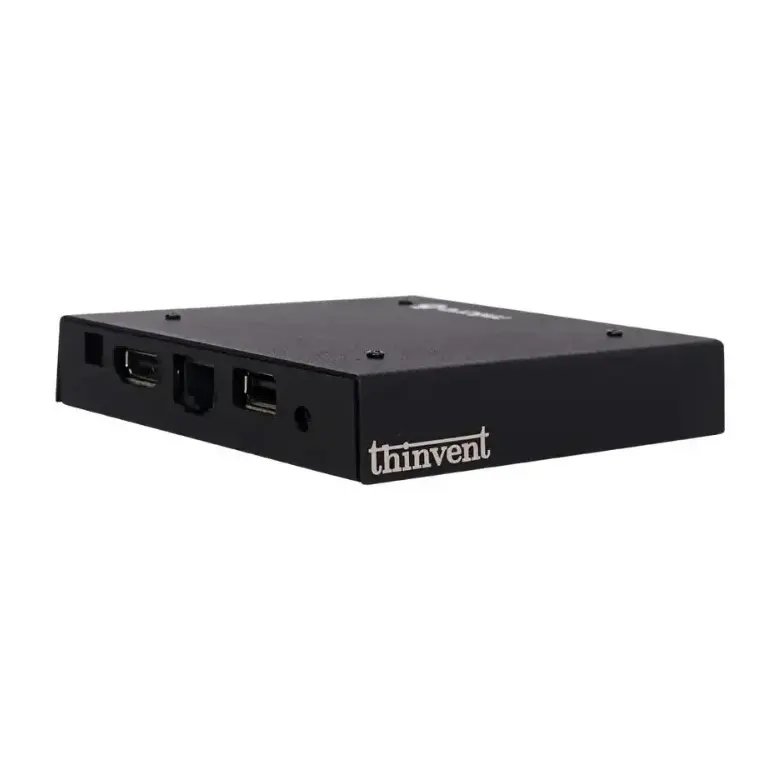
What Are Industrial PCs, Mini PCs, and Thin Clients?
Industrial PCs, Mini PCs, and Thin Clients are specialized computing devices designed for reliability, space efficiency, and specific workloads. Unlike standard desktop computers, these systems are engineered for durability, low power consumption, and deployment in diverse environments, from office desks to factory floors.
Key Specifications and Technical Details
These compact computing solutions vary widely in their core components to match their intended use. Key specifications to consider include:
-
Processor: Options range from power-efficient ARM Cortex cores for basic tasks to high-performance Intel Core i-series processors (e.g., i3, i5) for demanding applications. Intel's N-series processors (like the N100) offer a balance of efficiency and capability for mainstream mini PCs.
-
Memory (RAM): Configurations typically start at 2GB or 4GB for lightweight thin clients and scale up to 16GB or more for industrial workstations handling complex data.
-
Storage: Devices may use eMMC storage (16GB-64GB) for embedded OS operation, or SSDs (128GB to 512GB+) for faster performance and local application storage.
-
Form Factor & Cooling: A major advantage is their small footprint. Many models feature fanless, solid-state designs for silent operation and protection against dust, making them ideal for 24/7 use in harsh conditions.
-
Connectivity: Standard features include Gigabit Ethernet, HDMI outputs, and multiple USB ports. Some models add WiFi and Bluetooth for wireless connectivity.
Common Use Cases and Applications
Each type of computer serves distinct purposes:
-
Industrial PCs (IPCs): Built for rugged environments, used in manufacturing automation, digital signage, kiosks, and machine vision systems where reliability is critical.
-
Mini PCs: Versatile compact desktops perfect for home theaters, office workstations, light gaming, and as space-saving general-purpose computers.
-
Thin Clients: Low-power devices that connect to a central server or cloud desktop, primarily used in virtual desktop infrastructure (VDI), call centers, schools, and hospitals for secure, manageable, and cost-effective computing.
Comparison of Computing Device Types
| Feature | Thin Client | Mini PC | Industrial PC |
|---|---|---|---|
| Primary Use | Remote desktop access | General-purpose desktop | Harsh environment operation |
| Typical Processor | ARM, Intel Celeron/N-series | Intel Core i-series, N-series | Intel Core i-series, high-end Celeron |
| Performance Profile | Low to Moderate | Moderate to High | High to Very High |
| Durability & Design | Basic, compact | Consumer/office grade | Rugged, fanless, wide temperature range |
| Ideal For | VDI, task workers, secure terminals | Office, home, digital signage | Factory automation, outdoor kiosks, IoT gateways |
Thinvent's Range of Compact Computing Solutions
Thinvent offers a comprehensive portfolio of reliable computing devices to meet any need. Our product lines include:
-
Thinvent Micro Series: Energy-efficient thin clients and mini PCs based on ARM processors, perfect for lightweight computing and VDI endpoints.
-
Thinvent Treo & Aero Series: Versatile mini PCs powered by Intel processors like the N100, i3-1215U, and Core 5 120U, balancing performance and size for office and commercial use.
-
Thinvent Industrial PC (IPC) Series: Rugged, fanless computers built for demanding environments. Featuring processors like the i5-1250P, they deliver high performance for industrial automation, digital signage, and embedded applications. All Thinvent devices are designed for stability, long-term availability, and global deployment, supporting various operating systems including Windows, Ubuntu Linux, and our proprietary Thinux™ Embedded Linux.