What Are Fanless Mini PCs?
Fanless mini PCs are compact, solid-state computing systems designed to operate without internal cooling fans. Instead, they utilize passive cooling techniques, such as heatsinks and thermally conductive chassis, to dissipate heat. This design eliminates moving parts, making them exceptionally reliable, silent, and resistant to dust ingress. They are ideal for environments where noise, space, or maintenance are critical concerns.
Key Specifications and Technical Details
These systems are built around low-power, high-efficiency processors, typically from Intel's N-series (like the N100) or similar mobile/embedded platforms. Key specifications include:
-
Processor: Modern, efficient CPUs (e.g., Intel N100 with 4 cores) that generate minimal heat.
-
Memory: Typically 8GB to 16GB of DDR4 or DDR5 RAM, sufficient for everyday tasks and light multitasking.
-
Storage: Fast M.2 NVMe or SATA SSDs ranging from 128GB to 1TB for quick boot times and responsive performance.
-
Connectivity: Multiple USB ports (including USB 3.2 and Type-C), HDMI/DisplayPort outputs, and Gigabit Ethernet are standard. Many models also offer optional Wi-Fi and Bluetooth.
-
Power: Low-voltage DC input (e.g., 12V), contributing to energy efficiency and enabling use with power-over-Ethernet (PoE) adapters or in-vehicle power systems.
Use Cases and Applications
The fanless, rugged design makes these PCs perfect for embedded and industrial applications:
-
Digital Signage & Kiosks: Silent operation is crucial in retail, hospitality, and public information displays.
-
Industrial Automation: Reliable performance in factories with dust, vibrations, and wide temperature ranges.
-
Thin Clients & VDI: Ideal for office environments, call centers, and healthcare, providing a quiet and secure endpoint.
-
Edge Computing & IoT Gateways: Deploying computing power in remote or harsh locations for data collection and processing.
-
Home Theater PCs (HTPCs): A silent media center that won't disrupt movie or music playback.
Comparison: Fanless Mini PC vs. Traditional Desktop
| Feature | Fanless Mini PC | Traditional Desktop |
|---|---|---|
| Cooling | Passive (Fanless) | Active (Fans) |
| Noise Level | Silent | Audible fan noise |
| Dust Resistance | High (sealed chassis) | Low (vents for airflow) |
| Form Factor | Ultra-compact | Large tower |
| Typical Use Case | Embedded, Industrial, Quiet Offices | High-performance Gaming, Workstations |
| Power Consumption | Very Low (10W-30W) | Moderate to High (65W+ ) |
| Reliability | Higher (no moving parts) | Lower (fan failure risk) |
Thinvent Fanless Mini PCs
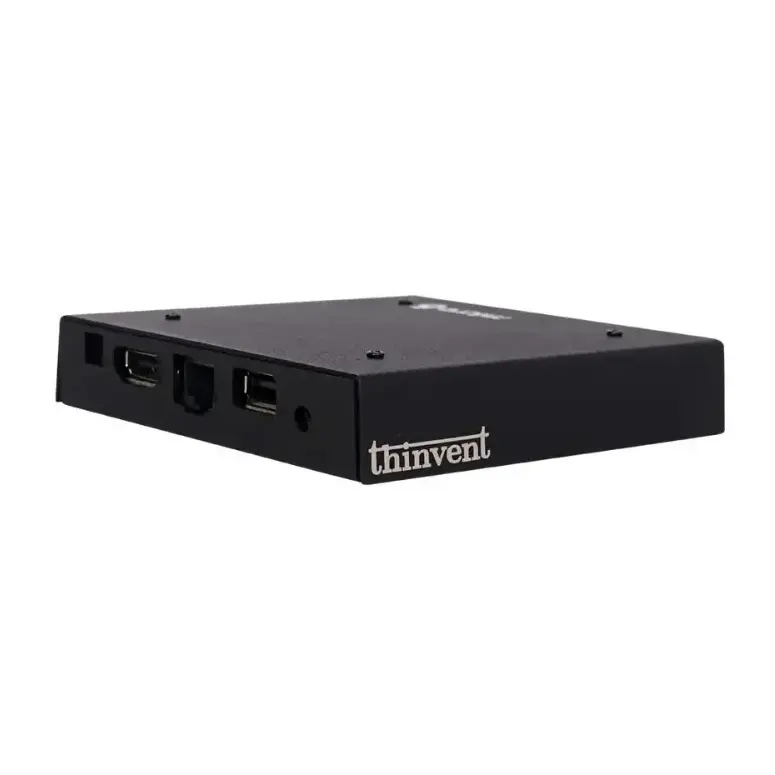
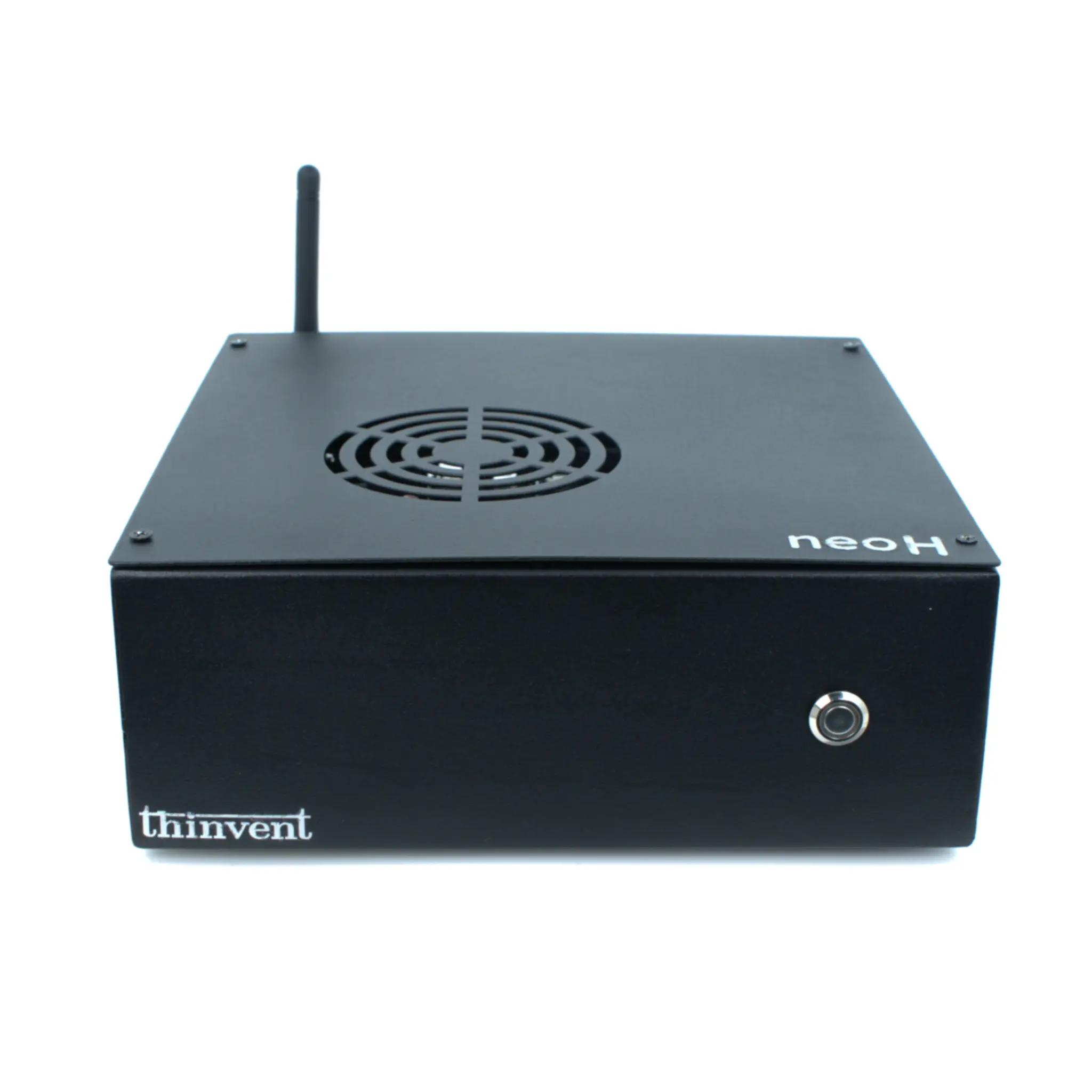
Thinvent offers a robust range of fanless industrial mini PCs designed for demanding applications. Our Aero Series, for example, features the efficient Intel N100 processor in a compact, all-metal chassis. These systems are built for 24/7 operation and come with flexible configuration options, including choice of operating system (Windows, Linux, or DOS), memory, and storage. Engineered for reliability and performance in constrained spaces, Thinvent fanless PCs are a trusted solution for digital signage, factory automation, and edge computing deployments worldwide.