Understanding Fat Clients and Thin Clients
Fat clients (also known as thick clients) and thin clients represent two fundamental computing architectures for enterprise and industrial environments. A fat client is a standard desktop computer or mini PC that performs the bulk of data processing locally. It runs a full operating system and applications, stores data on its own storage, and requires significant local resources (CPU, RAM, storage). In contrast, a thin client is a lightweight endpoint device designed primarily to connect to a centralized server (like a virtual desktop infrastructure or VDI). It offloads most processing, storage, and application execution to the server, requiring minimal local hardware.
Key Specifications and Technical Differences
The core difference lies in hardware capability and system architecture. A fat client, such as a modern mini PC, typically features a multi-core processor (e.g., Intel Core i3/i5 or N-series), 8GB to 32GB of RAM, and substantial SSD storage (256GB to 1TB). It is a self-contained unit. A thin client often uses lower-power processors (like Intel Celeron or ARM-based chips), has minimal RAM (4GB-8GB), limited or no local storage, and relies on network connectivity for operation. The choice impacts network dependency, security, total cost of ownership, and management overhead.
| Feature | Fat Client (Mini PC/Workstation) | Thin Client |
|---|---|---|
| Processing | Local, powerful CPU | Primarily server-side, low-power CPU |
| Data Storage | Local SSD/HDD (128GB+) | Minimal or none; network storage |
| OS & Apps | Installed and run locally | Streamed or run on central server |
| Network Dependency | Low (for standalone apps) | High (constant connection required) |
| Management | Individual device updates | Centralized server management |
| Use Case | Graphic design, engineering, POS | Call centers, education labs, task workers |
Ideal Use Cases and Applications
Fat Clients are ideal for performance-intensive and offline-capable scenarios. This includes engineering workstations, graphic design, video editing, point-of-sale (POS) systems running complex software, digital signage with local media, and industrial PCs for machine control. They offer flexibility and full functionality without constant network access.
Thin Clients excel in centralized, secure, and easily managed environments. Common applications include call centers, bank teller terminals, classroom or library computer labs, hospital workstations accessing electronic health records (EHR), and administrative task workers using a limited set of cloud or virtualized applications. They enhance security (data stays on the server), simplify software deployment, and can reduce long-term hardware refresh costs.
Thinvent Solutions for Both Architectures
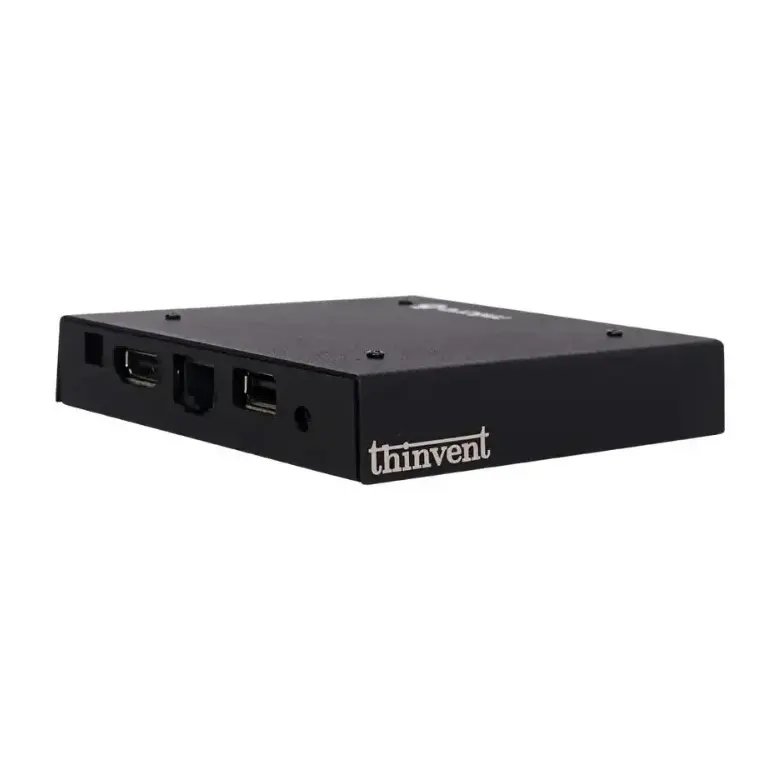
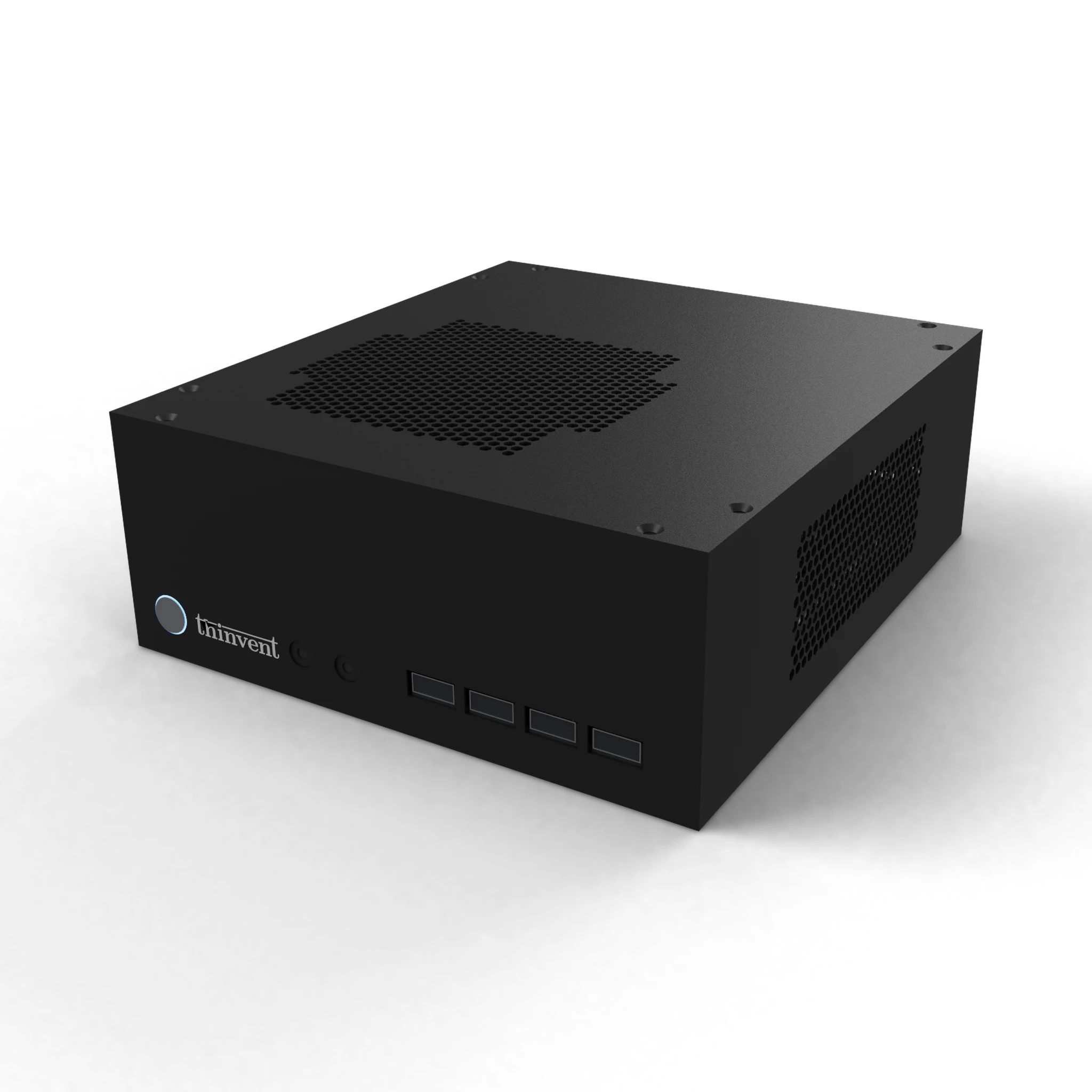
Thinvent provides robust hardware solutions tailored for both computing models. Our Aero Mini PC series, featuring efficient Intel N-series processors, serves as an excellent, compact fat client for everyday business computing, digital signage, and light industrial tasks. For environments requiring thin clients, Thinvent offers dedicated, secure, and reliable thin client devices designed for seamless integration with major VDI platforms like Citrix, VMware, and Microsoft RDS. All our systems are built for durability, often featuring fanless designs for silent operation in sensitive environments, and come with a range of OS options including Windows 11 IoT/Pro and various Linux distributions to match your infrastructure needs.