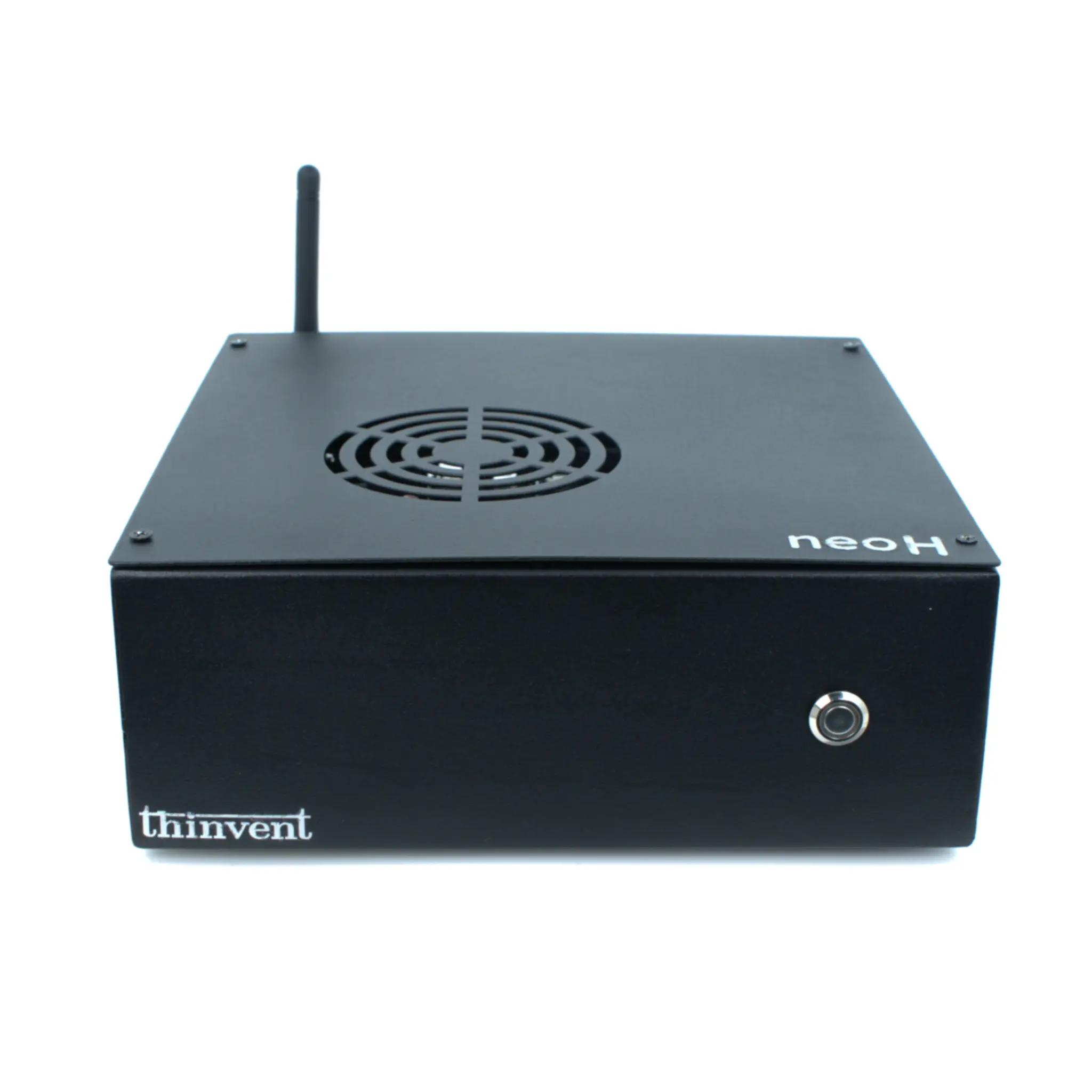
What is a Battery-Powered Mini PC?
A battery-powered mini PC is a compact, fanless computer system designed to operate from a DC power source, such as a battery pack or power bank, instead of being permanently plugged into a wall outlet. These systems are engineered for low power consumption and often feature wide voltage input ranges (e.g., 9V-36V DC), making them ideal for mobile, remote, or off-grid applications where traditional AC power is unavailable or unreliable.
Key Specifications and Technical Details
The core of a battery-operated mini PC is its energy-efficient hardware. Processors from Intel's N-series (like the N100 or N95) are common, offering a balance of performance and minimal thermal design power (TDP). These systems typically use solid-state drives (SSD) for storage and DDR4 or LPDDR5 RAM to reduce power draw. Critical technical features include:
-
Low-Power Processors: Intel Celeron or N-series CPUs with TDPs as low as 6W.
-
Fanless Design: Passive cooling eliminates moving parts, reducing power consumption and increasing reliability in dusty environments.
-
Wide Voltage Input: Support for 12V/19V DC or a broad range (9V-36V) to connect directly to batteries, vehicle power systems, or solar panels.
-
Compact Form Factor: Small footprints (often under 0.5L) for easy deployment in tight spaces.
Use Cases and Applications
Battery-driven mini PCs are versatile solutions for a wide array of portable and embedded computing tasks.
-
Mobile Digital Signage & Kiosks: Powering interactive displays in vehicles, trade shows, or temporary retail pop-ups.
-
Field Data Collection & IoT Gateways: Deployed in agricultural, environmental monitoring, or logistics for gathering and processing sensor data.
-
Portable Workstations & Emergency Response: Creating compact command centers or diagnostic stations that can run on battery packs.
-
In-Vehicle Computing: Used in police cars, ambulances, forklifts, or public transport for fleet management and onboard systems.
-
Remote Surveillance: Operating security cameras and NVR systems in locations without grid power.
Comparison of Key Features for Battery Operation
| Feature | Importance for Battery Operation | Typical Spec |
|---|---|---|
| Processor TDP | Lower TDP directly extends battery life. | 6W - 15W |
| Operating Voltage | Determines compatibility with common battery voltages (12V, 24V). | 9V - 36V DC |
| Idle Power Draw | Critical for always-on applications. | As low as 2W - 5W |
| Storage Type | SSDs consume less power and are more shock-resistant than HDDs. | M.2 SSD or eMMC |
| Cooling Method | Fanless systems use zero power for cooling and are silent. | Passive Heatsink |
Thinvent's Battery-Compatible Mini PCs
Thinvent specializes in robust, fanless mini PCs perfectly suited for battery-powered deployments. Our Aero series, for example, features Intel's efficient N-series processors and supports a standard 12V DC input, making it straightforward to integrate with external battery packs or UPS systems. Built with industrial-grade components for durability across temperature ranges, Thinvent mini PCs provide a reliable computing core for your mobile or off-grid projects, whether you require Windows, Linux, or a custom embedded OS.