What Are Embedded Computers for Industrial Automation?
Embedded computers for industrial automation are specialized, compact computing systems designed to perform dedicated control, monitoring, and data processing functions within industrial environments. Unlike standard desktop PCs, these systems are built for reliability, long-term operation, and resilience in harsh conditions characterized by dust, vibration, wide temperature ranges, and continuous 24/7 operation. They form the computational backbone of modern smart factories, enabling process automation, machine vision, robotics control, and data acquisition.
Key Specifications and Design Features
Industrial embedded computers prioritize durability and consistent performance. A prime example is the fanless design, which eliminates moving parts prone to failure and prevents dust ingress, ensuring silent and maintenance-free operation. These systems often feature wide-range DC power input (e.g., 12V) for compatibility with industrial power supplies and low-power, efficient processors like the Intel® N-series. Core specifications include robust memory (16GB DDR4), reliable solid-state storage (128GB SSD), and support for multiple operating systems tailored for embedded applications, such as Windows IoT, Linux distributions, or a bare-bones DOS environment for maximum stability.
Applications and Use Cases
The primary application of these computers is in automating and optimizing industrial processes. Common use cases include:
-
Machine Control & PLC Integration: Acting as a supervisory controller or HMI (Human-Machine Interface) for Programmable Logic Controllers (PLCs).
-
Industrial IoT (IIoT) Gateway: Collecting data from sensors and machinery on the factory floor and transmitting it to cloud or on-premise servers.
-
Vision Inspection Systems: Powering cameras and software for automated quality control and defect detection on production lines.
-
Digital Signage & Kiosks: Driving displays for operational dashboards, work instructions, or interactive information points in warehouses and factories.
-
Edge Computing: Processing data locally at the "edge" of the network to reduce latency, bandwidth costs, and ensure operation even if network connectivity is lost.
Comparison of Typical Configurations
The versatility of embedded systems is evident in their software and bundle options. Below is a comparison based on common configurations:
| Feature | Standard Industrial PC | Thin Client / Kiosk Mode | Development / Custom Platform |
|---|---|---|---|
| Typical OS | Windows 11 IoT / Windows 11 Pro | Thinux™ Embedded Linux / Ubuntu Linux | DOS / No OS |
| Primary Use | Running dedicated automation software, HMIs | Running a single, secure application, web kiosks | Custom software deployment, OEM integration |
| Key Benefit | Full Windows compatibility, managed updates | Lightweight, secure, low overhead | Maximum control, no licensing cost |
| Common Bundle | Often includes keyboard/mouse for setup | May be used headless or with peripherals | Ideal for OEMs adding their own peripherals |
Thinvent's Embedded Computing Solutions
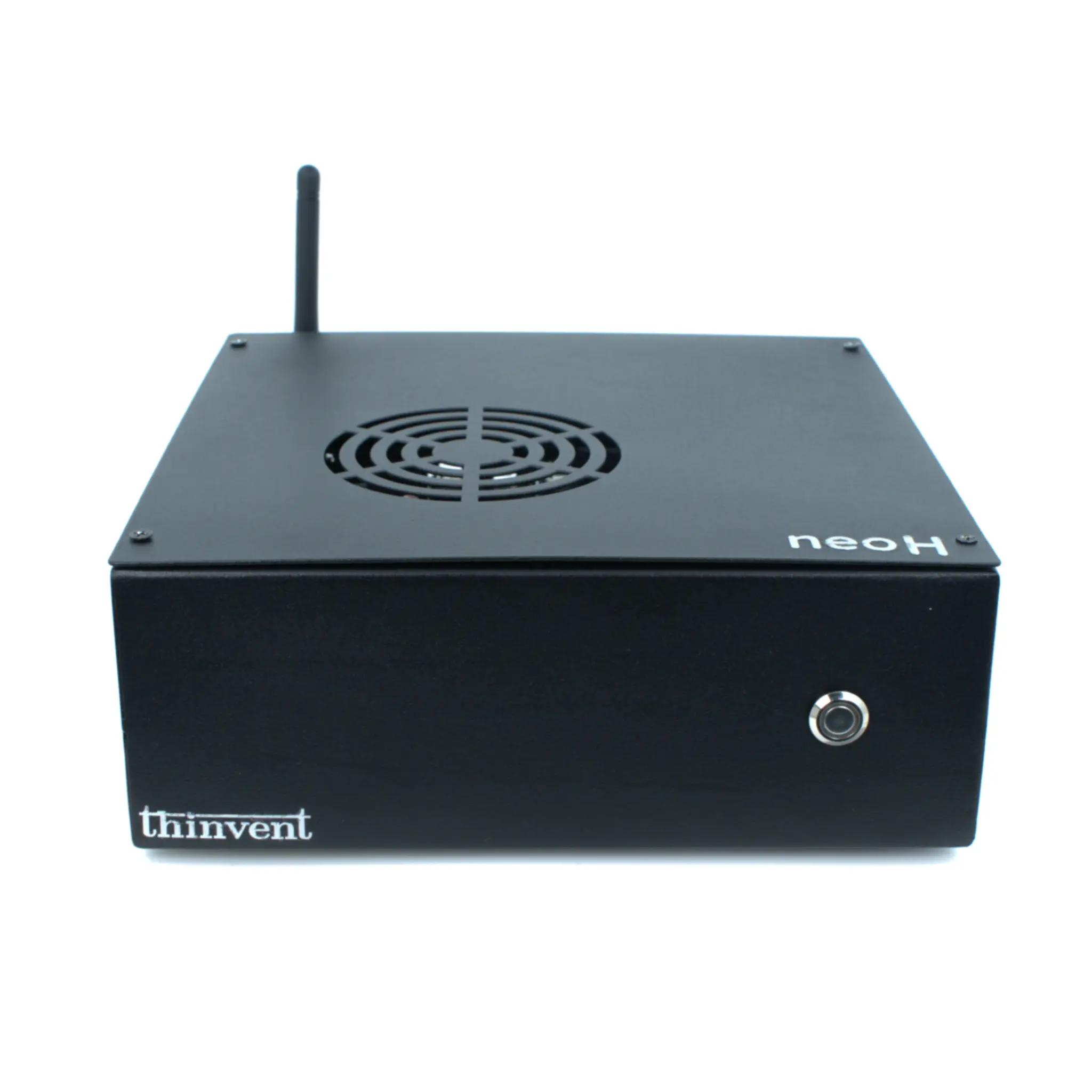
Thinvent offers a robust range of embedded computers engineered for the demands of industrial automation. Our Aero Mini PC series exemplifies this commitment, featuring the efficient Intel® N100 processor in a completely fanless chassis for ultimate reliability. Available with multiple operating system choices—including Windows 11 IoT for managed environments, our proprietary Thinux™ Embedded Linux for secure kiosks, Ubuntu for open-source development, or DOS for custom platforms—these systems provide the flexibility needed for diverse automation tasks. With standard configurations featuring 16GB of RAM and 128GB SSD storage, they deliver the performance necessary for edge computing, machine control, and IIoT gateway applications in a compact, durable form factor built for 24/7 operation.