What is a 10ZiG Operating System?
A 10ZiG operating system refers to a specialized, optimized software environment designed to run on 10ZiG-branded thin client hardware. Thin clients are lightweight, secure endpoint devices that rely on a central server or cloud infrastructure to perform most computing tasks. The 10ZiG OS is typically a locked-down, minimal Linux-based system or a customized version of Windows IoT/Embedded, engineered for stability, security, and efficient delivery of virtual desktops and applications from solutions like VMware Horizon, Citrix Virtual Apps and Desktops, and Microsoft Remote Desktop Services (RDS).
Key Specifications and Technical Details
The core function of a 10ZiG OS is to provide a secure, manageable, and high-performance connection broker. Key technical characteristics include:
-
Lightweight Footprint: The OS is stripped of unnecessary components, reducing attack surface and boot times.
-
Centralized Management: Devices can be managed, updated, and configured in bulk from a central console (e.g., 10ZiG Manager).
-
Protocol Optimization: Built-in support and optimization for major display protocols like PCoIP, Blast Extreme, HDX, and RDP.
-
Hardware Integration: The OS is tightly integrated with specific 10ZiG hardware components for reliable power management, peripheral support, and display output.
-
Security Features: Often includes features like write filters, secure boot, and encrypted connections to prevent data persistence and unauthorized access at the endpoint.
Use Cases and Applications
10ZiG OS-powered thin clients are ideal for environments requiring centralized control, security, and simplified IT management.
-
Virtual Desktop Infrastructure (VDI): Deploying standardized desktops from data centers to knowledge workers, call centers, or healthcare staff.
-
Task-Based Workstations: In manufacturing, retail (POS), and banking, where users need access to a limited set of cloud or server-hosted applications.
-
Secure and Compliant Environments: In government, finance, or healthcare, where data must not be stored on the endpoint device.
-
Remote Work Solutions: Providing a consistent, secure corporate desktop experience to employees working from various locations.
Operating System Comparison for Thin Clients
| Feature | 10ZiG Linux-Based OS | Windows IoT/Embedded | Standard Windows 11 Pro |
|---|---|---|---|
| Primary Use | Optimized for VDI/Remote Desktop | Locked-down Windows for specialized apps | General-purpose computing |
| Management | Centralized via 10ZiG Manager | Can be managed with standard Windows tools | Standard Windows management |
| Security | High (minimal OS, write filters) | High (locked down, app whitelisting) | Moderate (requires additional hardening) |
| Cost | Typically lower (no Windows license) | Requires Windows licensing | Requires full Windows licensing |
| Hardware Requirements | Very Low | Low to Moderate | Moderate to High |
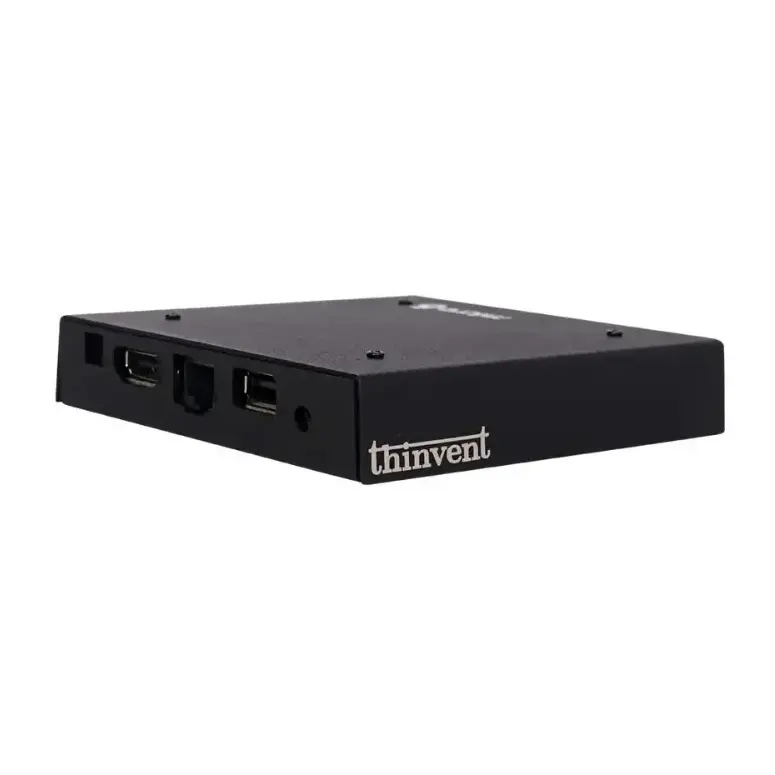
Thinvent Products Compatible with Thin Client OS Environments
While Thinvent does not manufacture 10ZiG-branded devices, our industrial computing solutions are perfectly suited for similar thin client and centralized computing deployments. Our fanless, rugged Mini PCs and Thin Clients can be configured with a variety of operating systems to create robust, reliable endpoints. For example, our Aero Mini PC series, featuring efficient Intel processors, can be deployed with Thinux™ Embedded Linux or Windows 11 IoT to create a secure, manageable thin client. These systems offer the durability, wide-temperature operation, and long-term availability required for industrial and commercial settings, providing a powerful alternative for building a custom thin client infrastructure.