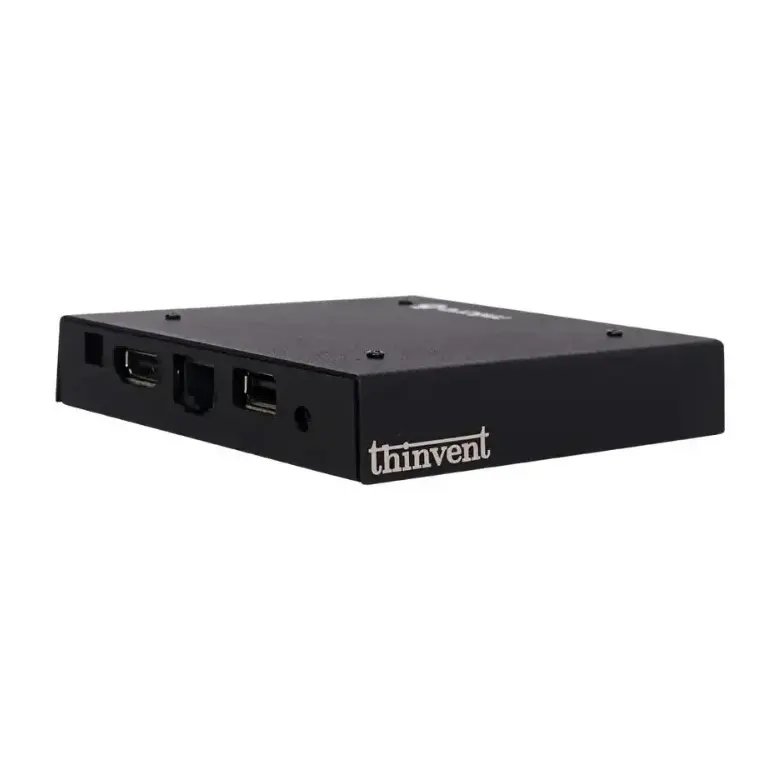
What "4K Computer" Means
A 4K computer is a system whose graphics output and video pipeline can drive a display at 3840 × 2160 pixels — four times the pixel count of Full HD (1920 × 1080). Reaching true 4K is not just about the panel: the machine needs a GPU or integrated graphics engine that supports the resolution, an output port with enough bandwidth, the right cable, and enough CPU/GPU headroom to decode and render content smoothly. Without all four, you get either a downscaled image or 4K at a stuttering 24–30 Hz.
Resolution, Refresh Rate and Port Bandwidth
The single most common reason a "4K-capable" PC fails in the field is the port, not the processor. HDMI 1.4 caps 4K at 30 Hz; HDMI 2.0 and DisplayPort 1.2 raise it to 4K at 60 Hz, which is the threshold where desktop work, video playback and cursor movement feel natural. Modern Intel integrated graphics — including the Intel UHD Graphics engine in 12th generation Core i3 processors such as the i3-1215U — support 4K at 60 Hz over HDMI 2.0/DisplayPort and include hardware decode for H.264, HEVC and VP9, so 4K video plays without loading the CPU. This matters for always-on deployments, where a software-decoded 4K stream would keep the processor hot and the fan spinning.
| Output Standard |