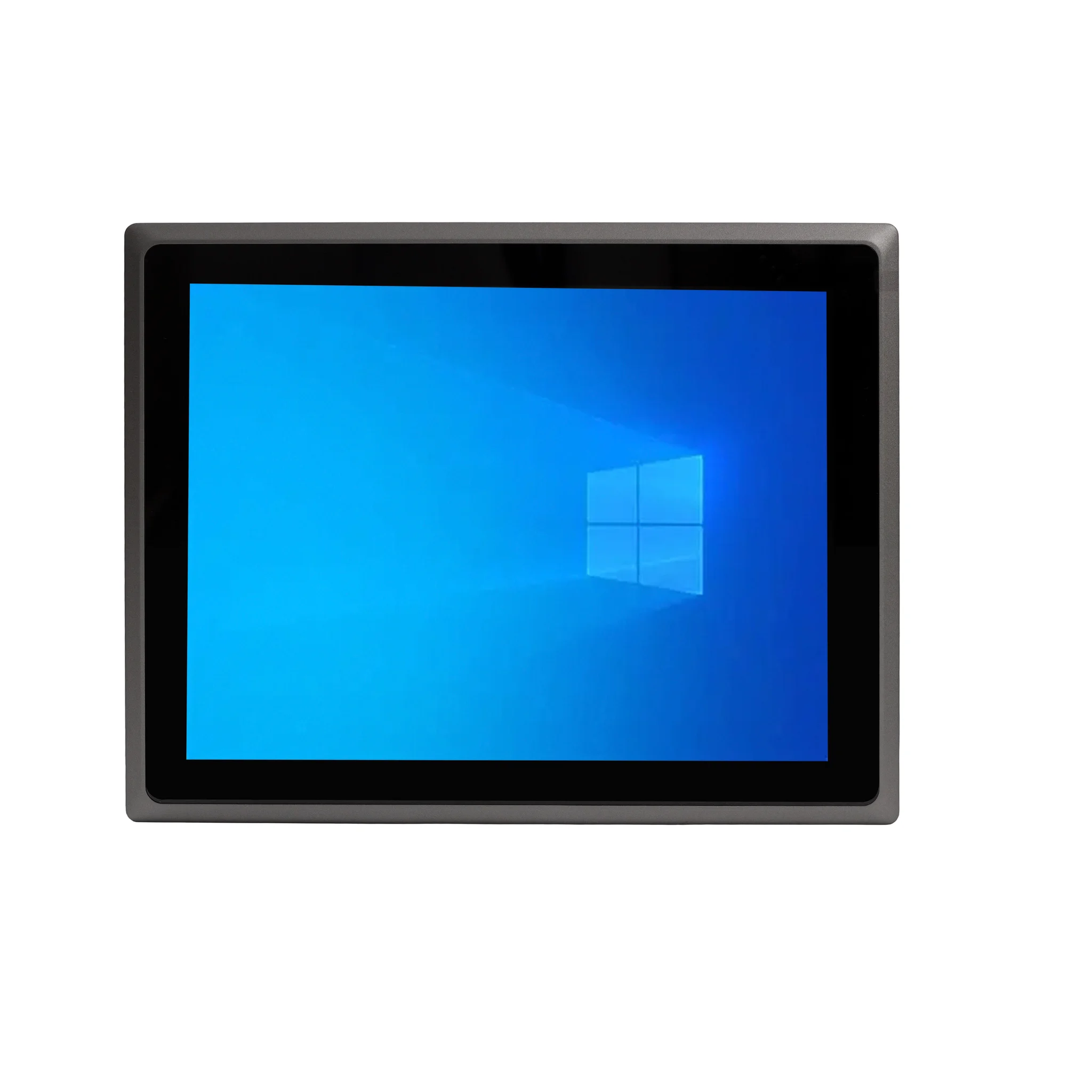
What Is an All-in-One PC?
An all-in-one (AIO) PC integrates the computer's processing hardware, motherboard, storage and I/O directly into the display chassis, eliminating the separate tower or box that traditional desktop setups require. A single power cable and a single unit replace the monitor-plus-PC combination, which reduces cable clutter, shrinks the physical footprint and simplifies deployment. In industrial, retail and office environments this matters more than it does on a home desk: fewer components mean fewer failure points, faster installation and easier cleaning around dust and spills.
Key Specifications to Consider
All-in-one computers are defined less by a single headline spec and more by the balance between panel size, processor class and connectivity. Typical commercial AIO panels range from roughly 21.5-inch Full HD up to 23.8-inch or larger, with IPS or LED backlighting for wide viewing angles. Behind the panel, modern AIOs use low-power Intel processors — from efficient Celeron and N-series chips for kiosk and point-of-sale duties, up to Core i3 and i5 parts when the workload includes multitasking, light analytics or virtualisation.
| Attribute | Entry / Kiosk Class | Mainstream / Industrial Class |
|---|---|---|
| Screen size | 21.5-inch FHD | 23.8-inch FHD |
| Processor | Intel Celeron / N-series | Intel Core i3 / i5 |
| Memory | 4–8 GB | 16–32 GB |
| Storage | 128–256 GB SSD | 512 GB – 1 TB SSD |
| Networking | Gigabit Ethernet, optional Wi-Fi | Dual Gigabit Ethernet, Wi-Fi |
| Typical OS | Linux, FreeDOS, Windows IoT | Windows 11 Pro, Ubuntu LTS |
Other decision points include mounting (VESA arms, wall brackets, panel-mount cutouts), touch versus non-touch input, serial and USB port count for peripherals, and whether the chassis needs fanless cooling for dusty or quiet-critical locations.
Use Cases and Applications
All-in-one PCs are the natural form factor wherever a screen and a computer are used at the same station by the same person. Common deployments include point-of-sale terminals and self-service kiosks, reception and enquiry desks, clinic and laboratory workstations, control-room operator panels, library and education terminals, and shop-floor stations running MES or SCADA dashboards. Because the display and the PC share one enclosure, AIOs also suit mobile carts and compact booths where there is no room for a separate chassis.
Industrial all-in-one units extend this further: wide-voltage DC inputs, fanless thermal design, watchdog timers, locked-down operating systems and long-lifecycle component sourcing let the same form factor run continuously in environments that would shorten the life of a consumer desktop.
Choosing Between an AIO and a Separate PC
An all-in-one is usually the better choice when space, cabling and simplicity dominate — you get a tidier installation and a shorter bill of materials. A separate industrial PC plus monitor remains preferable when the computer must sit in a sealed cabinet, when the display must be mounted far from the electronics, when future upgrades to CPU or storage need to be easy, or when the same PC must drive more than one screen. Many deployments mix both: AIOs at operator stations, and boxed industrial PCs in control cabinets and server rooms.
Thinvent All-in-One and Panel PCs
Thinvent manufactures all-in-one computers built for