What is an AMD EPYC Processor?
AMD EPYC is a family of high-performance server and workstation processors designed for data centers, cloud computing, and enterprise-level applications. These processors are built on AMD's advanced Zen microarchitecture and are renowned for their exceptional core counts, massive memory bandwidth, and robust security features. Unlike standard desktop CPUs, EPYC processors are engineered for maximum throughput, reliability, and scalability in demanding 24/7 environments.
Key Specifications and Technical Details
EPYC processors stand out with several industry-leading specifications. They offer an exceptionally high number of CPU cores, ranging from 8 cores in entry-level models to 128 cores in flagship models, enabling massive parallel processing. They support a vast amount of memory via 8 or 12 channels of DDR4 or DDR5 RAM, with capacities reaching into the terabytes. A key architectural advantage is their use of AMD Infinity Fabric, which connects multiple CPU chiplets (CCDs) and I/O dies to create a unified, high-bandwidth system. They also provide a high number of PCIe lanes (up to 128 lanes in a single socket), allowing for extensive connectivity to GPUs, NVMe storage, and networking cards. Built-in security features like AMD Secure Processor and Secure Memory Encryption (SME) are standard.
Use Cases and Applications
The power of EPYC processors is leveraged in scenarios requiring immense computational power and data handling.
-
Cloud and Hyperscale Data Centers: Their high core density and energy efficiency make them ideal for virtualized environments, web hosting, and SaaS platforms.
-
High-Performance Computing (HPC) & AI: Used for scientific simulations, financial modeling, and machine learning workloads that benefit from parallel processing.
-
Enterprise Databases and ERP Systems: Power large-scale SQL/NoSQL databases, SAP HANA, and other mission-critical business applications requiring low latency and high uptime.
-
Content Delivery and Media Processing: Efficiently handle video transcoding, rendering, and streaming for media companies.
Comparison: EPYC vs. Mainstream Desktop Processors
| Feature | AMD EPYC (Server) | Mainstream Desktop (e.g., Intel Core i7) |
|---|---|---|
| Primary Use | Servers, Data Centers, Workstations | General Computing, Gaming, Office |
| Core Count | Very High (8 to 128+ cores) | Moderate (4 to 24 cores) |
| Memory Support | 8-12 Channels, Multi-TB Capacity | 2 Channels, Up to 128GB typically |
| PCIe Lanes | Very High (Up to 128 lanes) | Moderate (Up to 20 lanes) |
| Reliability | ECC Memory, RAS Features | Standard, non-ECC typically |
| Form Factor | SP5/LGA 6096 Socket | AM5/LGA 1700 Socket |
Thinvent Products Featuring Server-Grade Performance
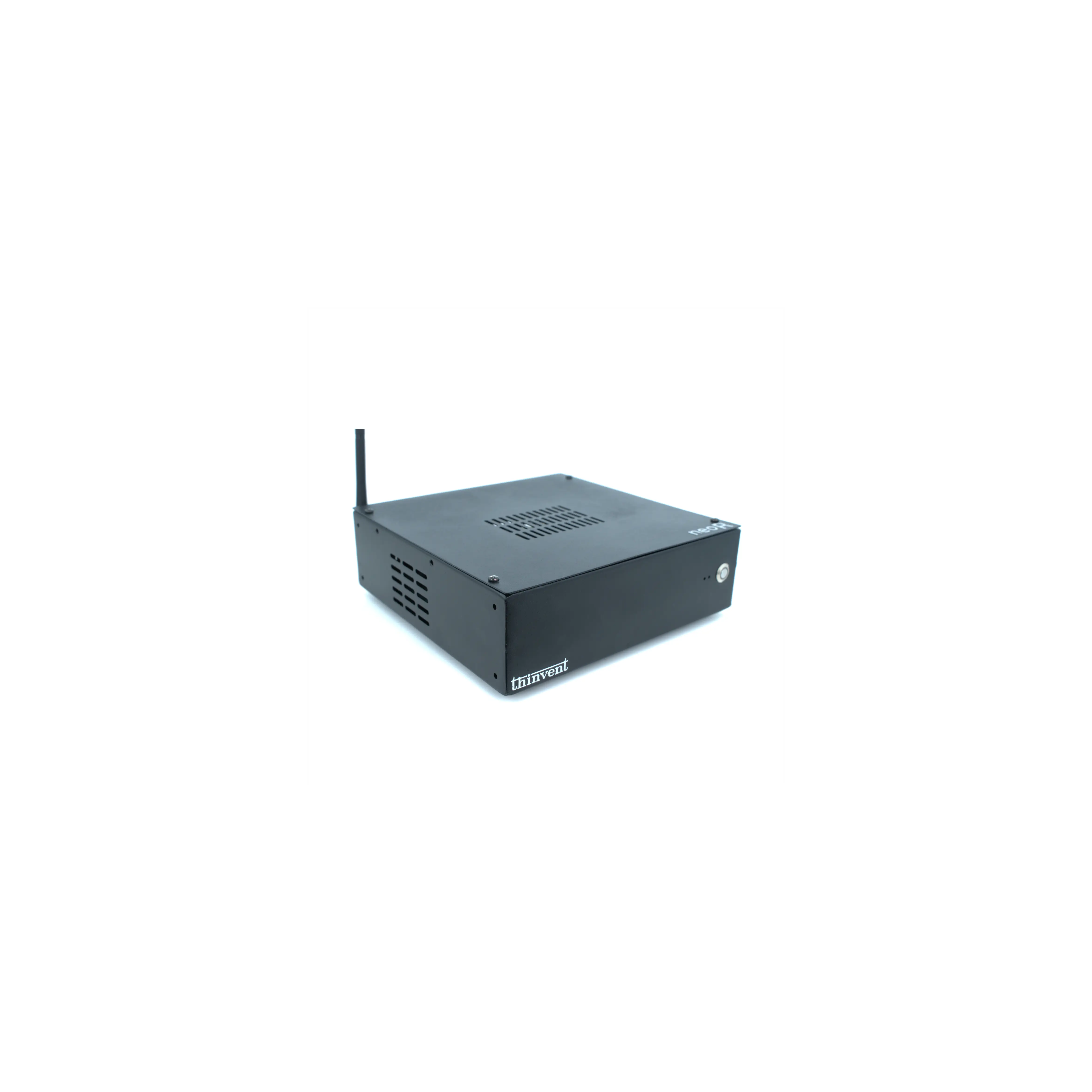
While Thinvent's current product portfolio focuses on robust, fanless industrial computers powered by efficient Intel processors for edge computing and embedded applications, we understand the requirements for high-performance computing. Our engineering expertise in thermal management, reliability, and compact form factors is directly applicable to demanding environments. For projects requiring the extreme multi-core performance and I/O capabilities of server-class hardware like AMD EPYC, we recommend consulting with our technical sales team. They can provide guidance on compatible industrial chassis, cooling solutions, and system integration to build a tailored, reliable platform for your server or high-end workstation application, ensuring it meets the rigorous demands of 24/7 operation.