Understanding AMD Ryzen Processors for Industrial Computing
The query "AMD Ryzen Max 395" appears to refer to a high-performance AMD Ryzen processor, likely from the Ryzen 9 or Ryzen 7 series, which are designed for demanding computing tasks. While the specific "395" model isn't a standard designation, it suggests a focus on top-tier performance, multi-core processing, and advanced integrated graphics. These processors are known for their high core and thread counts, superior multi-threaded performance, and robust integrated Radeon graphics, making them ideal for compute-intensive industrial applications.
Key Specifications and Technical Advantages
AMD Ryzen processors, particularly the Ryzen 7 and Ryzen 9 series, offer significant advantages for industrial environments. Key specifications typically include:
-
High Core/Thread Count: Ranging from 8 cores/16 threads to 16 cores/32 threads for exceptional parallel processing.
-
Advanced Zen Architecture: Provides high instructions per cycle (IPC) for efficient performance.
-
Integrated Radeon Graphics: Offers capable graphics processing without a discrete GPU, suitable for digital signage, light CAD, and multi-display setups.
-
Support for High-Speed Memory: Compatibility with DDR4 and DDR5 RAM for fast data access.
-
Precision Boost & Extended Frequency Range (XFR): Technologies that allow the processor to dynamically adjust clock speeds for optimal performance.
Ideal Use Cases and Applications
Industrial computers powered by high-performance AMD Ryzen processors are built for scenarios requiring sustained computational power and graphical output.
-
Industrial Automation & Control: Running complex PLC software, SCADA systems, and machine vision applications.
-
Digital Signage & Kiosks: Driving multiple high-resolution displays with dynamic content.
-
Edge Computing & AI Inference: Processing data locally at the network edge for IoT deployments.
-
Engineering Workstations: Handling light to moderate CAD/CAM, simulation, and 3D modeling tasks.
-
Media & Broadcast: Video encoding, transcoding, and broadcast graphics.
Comparison: High-Performance Processor Options
For industrial applications, choosing the right processor involves balancing core performance, power efficiency, and graphics capability.
| Feature | AMD Ryzen 7/9 Series | Intel Core i5/i7 (13th/14th Gen) |
|---|---|---|
| Core Strength | Excellent multi-core performance | Strong single & multi-core performance |
| Integrated Graphics | Radeon Graphics (capable) | Intel® UHD/Iris® Xe Graphics (capable) |
| Power Profile | Configurable for performance or efficiency | Configurable with performance hybrid architecture |
| Ideal For | Multi-threaded apps, compute-heavy tasks, graphics workloads | Versatile performance, wide software compatibility |
Thinvent's Range of High-Performance Solutions
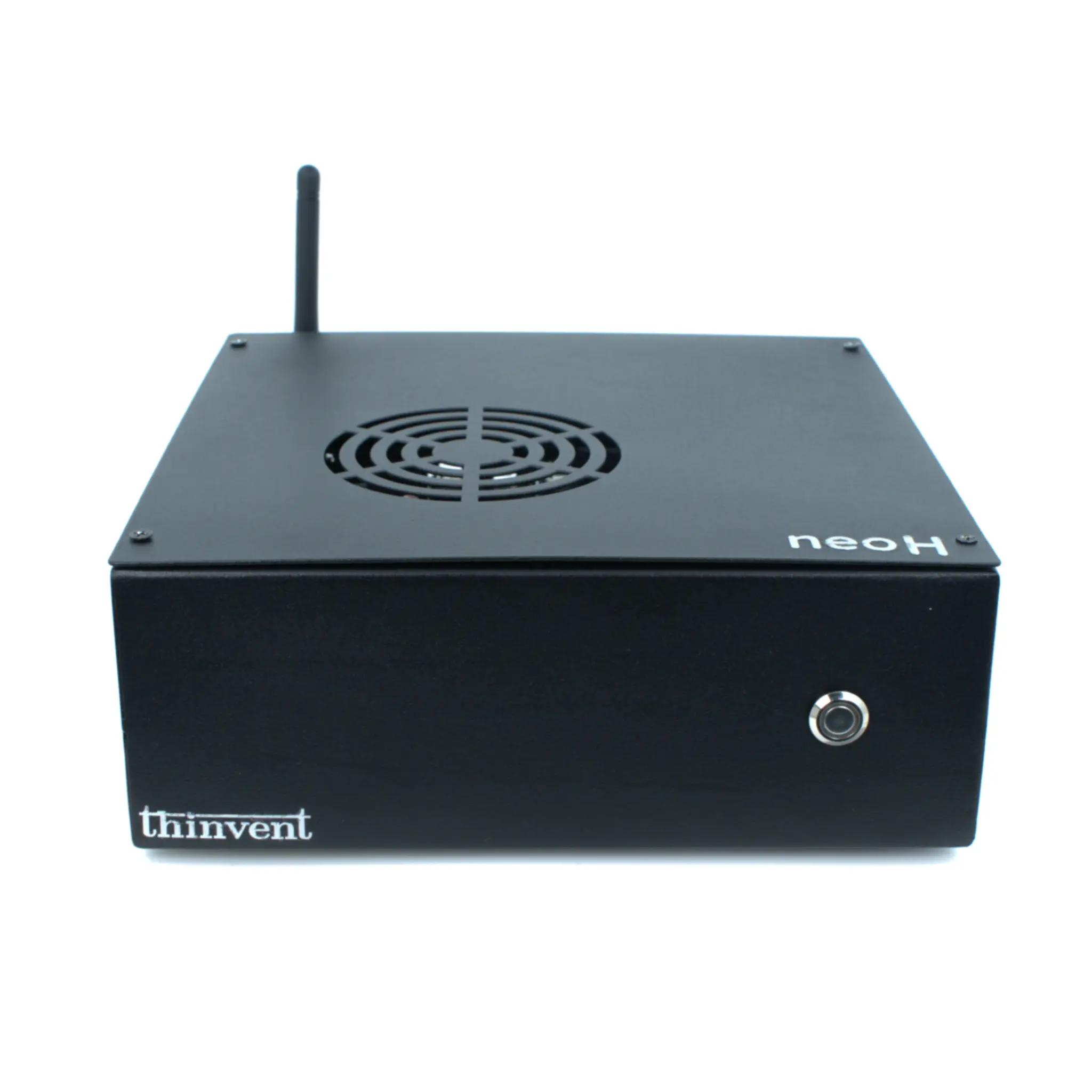
While the sample products on this page feature efficient Intel N-series processors, Thinvent's broader industrial computing portfolio includes solutions designed for high-performance demands. Our engineering team can configure systems with the latest AMD Ryzen and Intel Core processors to meet specific application requirements for automation, digital signage, edge computing, and more. We focus on delivering reliable, fanless designs where possible, with robust connectivity and support for industrial operating systems to ensure longevity in challenging environments.