What Does "an" Refer To?
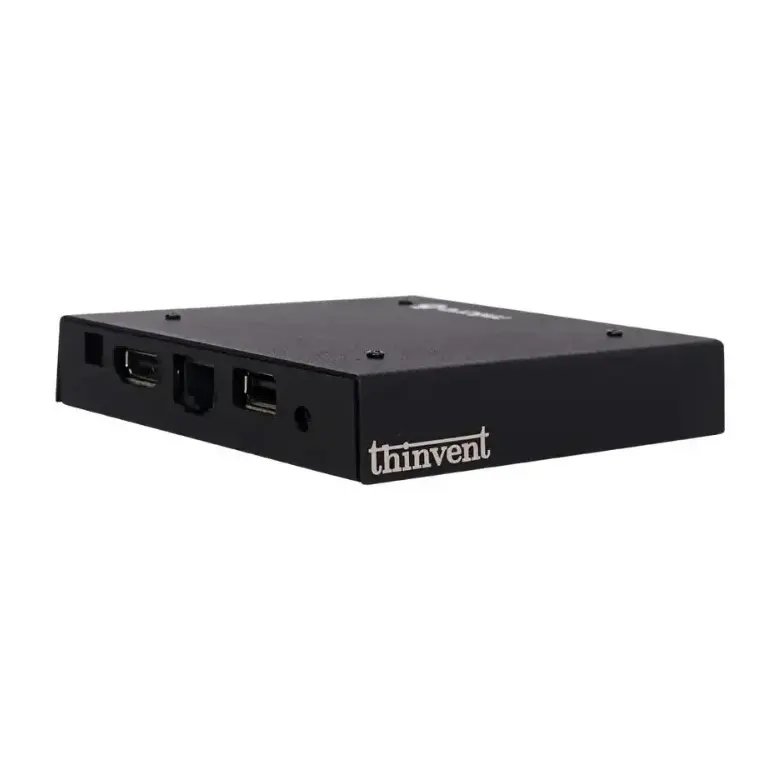
The query "an" is a shorthand fragment, and in the context of industrial computing it most commonly points to fanless industrial computers and mini PCs — compact, rugged systems built to run continuously in factories, kiosks, vehicles, and remote sites. Unlike a desktop tower, an industrial mini PC combines a small chassis, wide-temperature tolerance, and long-life components so it can sit inside a machine cabinet, a control panel, or behind a display for years without maintenance.
Key Specifications to Look For
Industrial mini PCs are defined less by raw speed and more by how they hold up. Important attributes include:
| Attribute | Typical Options | Why It Matters |
|---|---|---|
| Processor | Intel Celeron, N-series, Core i3/i5 | Balance of power draw and performance |
| Cores / Threads | 4 to 12 | Multi-tasking for SCADA, HMI, edge workloads |
| Memory | 4 GB to 64 GB DDR4/DDR5 | Headroom for databases and virtualisation |
| Storage | 128 GB to 1 TB SSD | Shock-resistant, no moving parts |
| Cooling | Fanless passive heatsink | No dust ingress, silent, fewer failure points |
| Mounting | DIN rail, VESA, wall bracket | Fits inside cabinets and behind panels |
| I/O | Multiple serial, USB, HDMI, dual Ethernet | Connects to PLCs, sensors, cameras, networks |
Fanless designs matter because a spinning fan is usually the first component to fail in a dusty or hot environment. Passive cooling removes that failure point entirely and keeps the enclosure sealed.
Where Industrial Mini PCs Are Used
These systems appear wherever a standard office PC would not survive. Typical deployments include:
-
Factory automation — HMI terminals, SCADA nodes, and machine vision controllers on the shop floor.
-
Kiosks and self-service — ticketing, check-in, and retail self-order terminals that run all day.
-
Digital signage — driving displays in airports, malls, and transit hubs.
-
Edge and IoT gateways — collecting data from PLCs and sensors and forwarding it to the cloud.
-
Medical and laboratory equipment — compact, quiet computing beside sensitive instruments.
-
Vehicle and mobile installations — wide-voltage input handles the electrical noise of a vehicle bus.
Choosing Between a Mini PC, Thin Client, and Industrial PC
The three categories overlap but serve different needs. A mini PC is a small general-purpose computer, often fanless, suitable for signage or light office work. A thin client is optimised to connect to a remote desktop or VDI session, using very little local storage. An industrial PC adds ruggedisation, wide-temperature operation, extended I/O such as serial ports, and a longer guaranteed supply life. If your application involves a control cabinet, vibration, dust, or 24/7 duty, an industrial PC is the safer choice; if it is a desk or a screen in a clean room, a mini PC or thin client is usually enough.
Thinvent Products Featuring This Technology
Thinvent builds fanless mini PCs, thin clients, all-in-one PCs, and industrial computers for exactly these environments. Our industrial range pairs Intel Core and Celeron processors with sealed, passively cooled chassis, dual Gigabit Ethernet, multiple HDMI outputs, and optional quad DB9 serial ports for legacy equipment. Operating system choices include Windows 11 Pro, Windows 11 IoT, Ubuntu Linux, our own Thinux embedded Linux, and configurations shipped without an OS. Whether you need a single signage player or a fleet of control-cabinet computers, Thinvent's line-up covers the form factor, I/O, and reliability level your deployment demands.