What Makes a Computer Ideal for Graphic Design?
The best computer for graphic design requires a balance of processing power, memory, fast storage, and reliable graphics performance. Unlike general-purpose computing, graphic design software like Adobe Photoshop, Illustrator, and InDesign demands a system that can handle high-resolution images, complex vector graphics, and multi-layer compositions without lag. Key specifications include a modern multi-core processor, ample RAM for smooth multitasking, a fast SSD for quick file access, and robust connectivity for multiple high-resolution monitors.
Key Specifications for Graphic Design Workstations
For professional graphic design, prioritize these technical components:
-
Processor (CPU): A modern Intel Core i5 or i7 processor (12th generation or newer) is recommended. These CPUs offer high clock speeds and multiple cores to efficiently handle rendering and complex calculations.
-
Memory (RAM): 16GB is the absolute minimum for modern design work. For professional use with large files or multiple applications open, 32GB or 64GB is ideal to prevent slowdowns.
-
Storage (SSD): A 512GB or 1TB NVMe SSD is essential. It drastically reduces application load times, file save/export times, and overall system responsiveness compared to traditional hard drives.
-
Graphics & Connectivity: While a dedicated GPU is often recommended for 3D work, many industrial PCs utilize powerful integrated Intel Iris Xe graphics, which are more than capable for 2D design. Ensure the system has multiple display outputs (like HDMI 2.0) to support dual or triple monitor setups, which are standard in design studios.
Applications and Use Cases
A purpose-built design computer is crucial for:
-
Professional Studios: Handling branding projects, packaging design, and marketing materials.
-
Digital Art & Illustration: Running applications like Corel Painter or Adobe Fresco with high-resolution canvases and numerous brushes.
-
Pre-Press and Publishing: Managing layout for magazines, books, and brochures where precision and color accuracy are paramount.
-
UI/UX Design: Prototyping and designing digital interfaces using tools like Figma, Sketch, and Adobe XD, which benefit from fast performance and multi-monitor support.
Comparison: Entry-Level vs. Professional Design PCs
| Feature | Entry-Level / General Use | Professional Graphic Design |
|---|---|---|
| Processor | Intel Celeron/N-Series, Intel i3 | Intel Core i5, i7 (12th Gen+) |
| RAM | 8GB | 16GB, 32GB, or 64GB |
| Storage | 128GB/256GB SATA SSD | 512GB/1TB NVMe SSD |
| Graphics | Basic Integrated Graphics | Intel Iris Xe or Dedicated GPU |
| Use Case | Web browsing, office suites, light photo editing | Adobe Creative Suite, high-res image editing, multi-app workflows |
Thinvent Solutions for Graphic Design Professionals
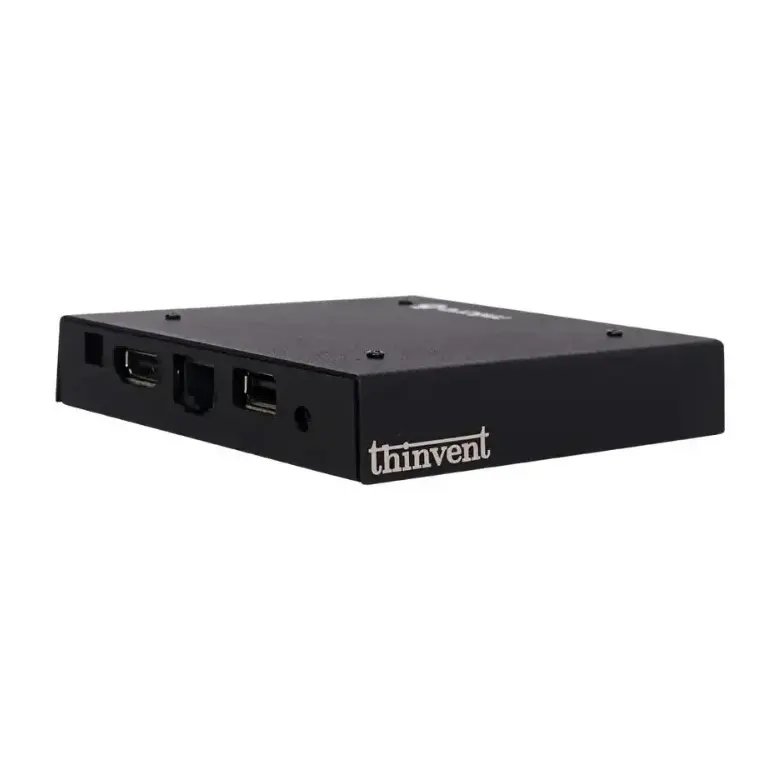
Thinvent offers a range of robust industrial computers that meet the demanding needs of graphic designers. Our systems are engineered for reliability and sustained performance in professional environments. Beyond the compact models shown, our portfolio includes powerful Industrial PCs and All-in-One workstations featuring the latest Intel Core i5 and i7 processors, configurable with up to 64GB of RAM and high-speed NVMe storage. These fanless or actively cooled systems ensure silent operation and durability, making them perfect for creative studios, design labs, and digital signage content creation hubs where uptime and performance are critical.