What Defines the Best CPU for Industrial Use?
The "best" CPU for industrial computing is not defined by raw speed alone, but by a balance of performance, power efficiency, thermal design, and long-term reliability. Unlike consumer processors, industrial-grade CPUs must operate flawlessly in demanding environments with wide temperature ranges, constant uptime requirements, and exposure to dust or vibration. Key considerations include a low Thermal Design Power (TDP) for fanless, sealed designs, support for industrial I/O, and extended product lifecycles to ensure system longevity.
Key Specifications and Technical Details
Modern industrial CPUs, such as Intel's latest generations, offer significant advancements. Important specs to evaluate include:
-
Core Count & Threads: Multi-core processors (e.g., 4, 6, 10 cores) handle multitasking and parallel processing for machine vision, data acquisition, and edge analytics.
-
Integrated Graphics: Modern Intel® UHD Graphics or Iris® Xe support multiple high-resolution displays, crucial for HMIs and digital signage.
-
TDP (Thermal Design Power): Low TDP processors (e.g., 15W-28W) enable completely fanless cooling, eliminating moving parts that can fail and allowing operation in dusty or harsh conditions.
-
Instruction Sets & Security: Support for AES-NI, virtualization (VT-x), and TPM 2.0 is essential for secure, isolated workloads and encrypted data handling.
Ideal Use Cases and Applications
The right CPU powers a vast array of industrial solutions:
-
Factory Automation & Control: Running PLCs, SCADA systems, and robotic control interfaces with deterministic performance.
-
Digital Signage & Kiosks: Driving multiple high-resolution displays in retail, transportation, and public venues.
-
Thin Clients & VDI: Providing secure, centralized access to enterprise applications and cloud resources.
-
Edge Computing Gateways: Aggregating, processing, and analyzing data from IoT sensors before sending it to the cloud.
-
Medical and Laboratory Equipment: Where reliability, low noise (fanless), and consistent performance are non-negotiable.
Thinvent's Range of Industrial Computing Solutions
Thinvent integrates these high-performance, reliable CPUs into a diverse portfolio of industrial-grade hardware. Our products are engineered for 24/7 operation and challenging environments.
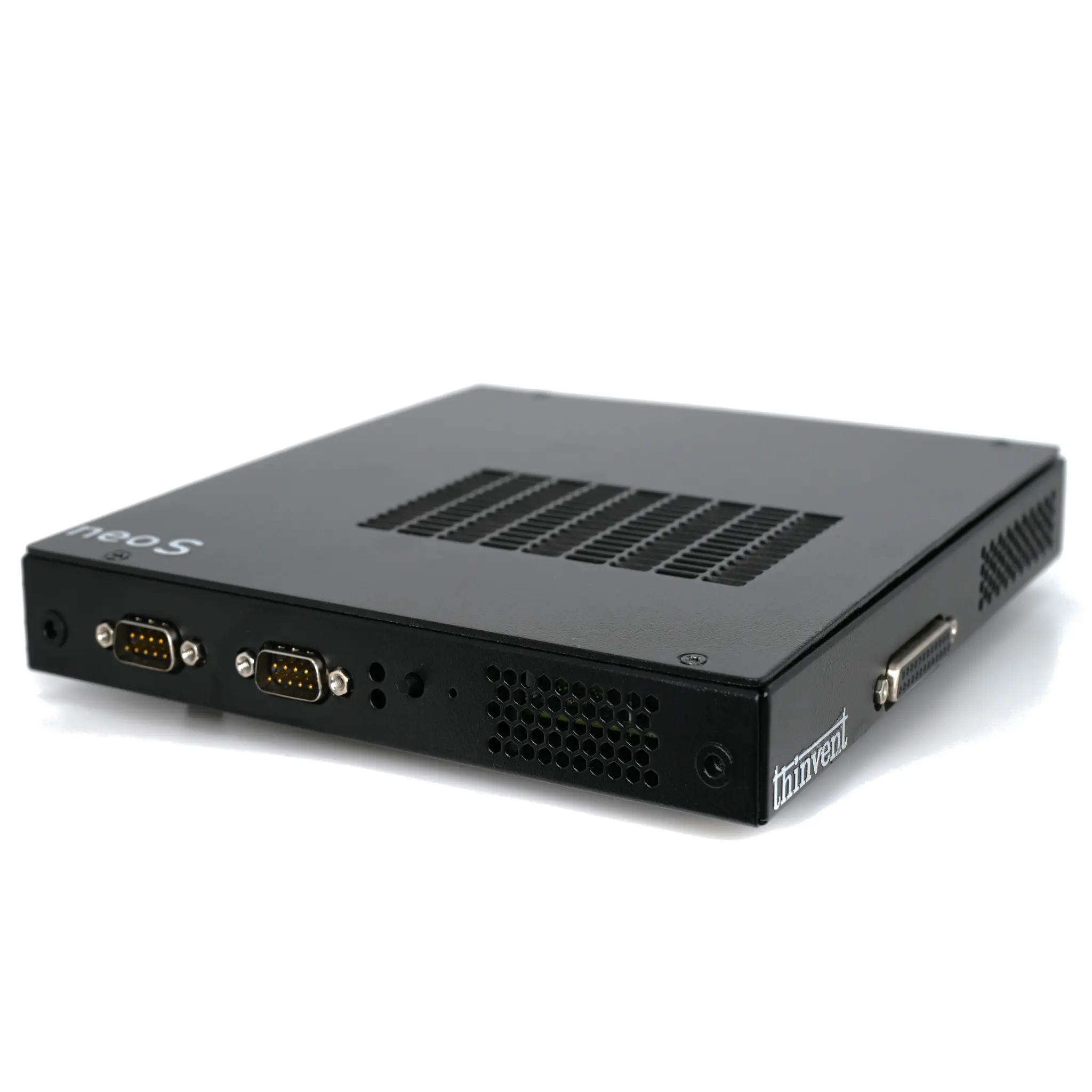
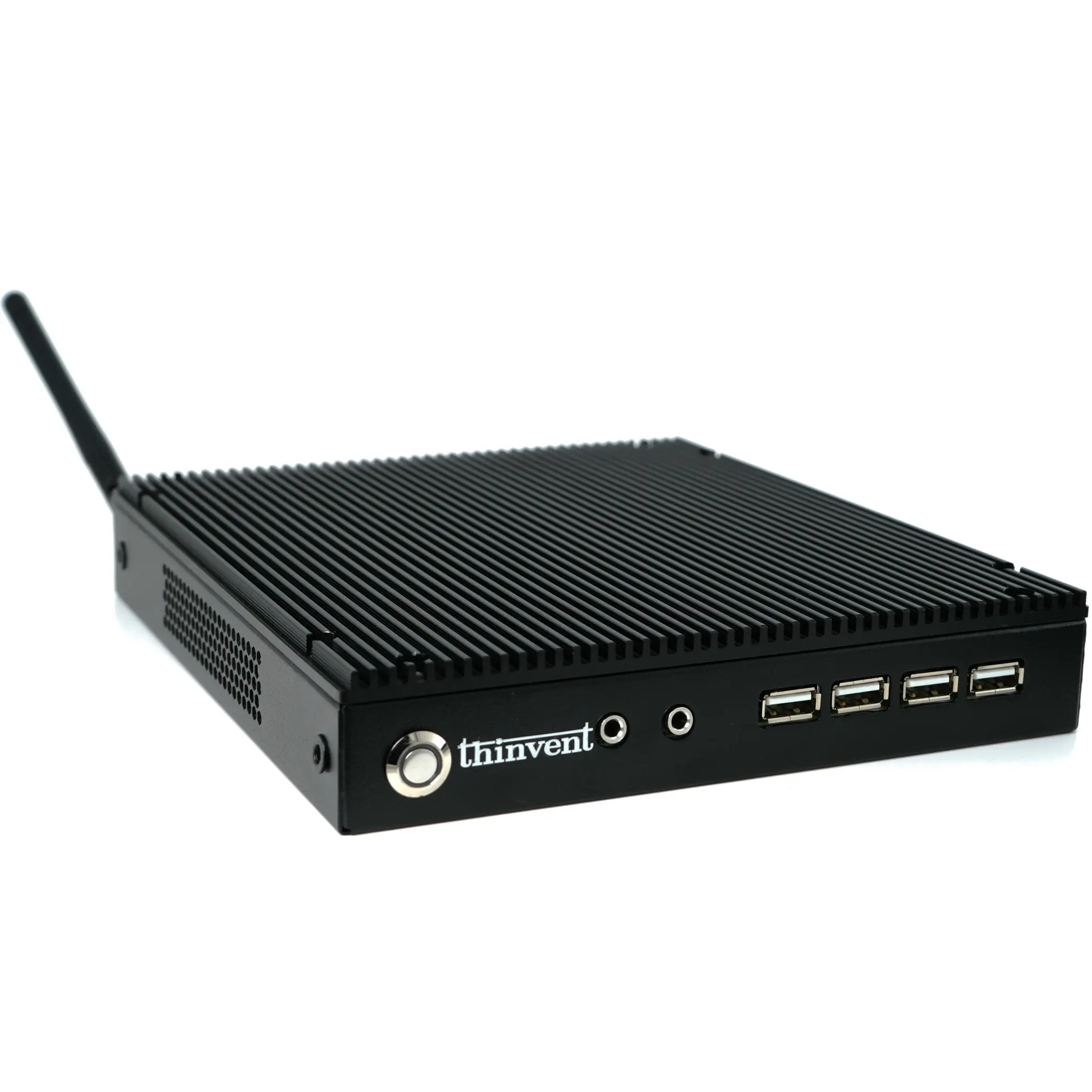
Thinvent Aero Series Mini PCs: Featuring efficient Intel processors like the N100, these compact, fanless systems are perfect for space-constrained installations requiring silent operation and robust performance for digital signage, thin client, and light edge computing tasks. They exemplify how modern, low-power CPUs deliver capable computing in a rugged, minimal footprint.
For more demanding applications, Thinvent offers systems powered by Intel Core i3, i5, and i7 processors from the latest generations, providing the necessary horsepower for complex machine vision, AI inference at the edge, and high-throughput data processing. All Thinvent systems are built with industrial durability, wide-range power input, and extensive connectivity options to integrate seamlessly into your operational technology landscape.