What Defines a High-End Desktop Computer?
A high-end desktop computer is engineered for demanding workloads that require superior processing power, ample memory, fast storage, and robust connectivity. Unlike standard office PCs, these systems are built to handle intensive tasks such as 3D rendering, complex data analysis, virtualization, and high-resolution multi-display setups without performance bottlenecks. Key specifications that define this category include the latest generation multi-core processors (Intel Core i5/i7/i9 or equivalent), a minimum of 16GB of high-speed RAM (with 32GB or 64GB being common), NVMe SSD storage for rapid data access, and professional-grade graphics capabilities, either integrated or discrete.
Key Specifications and Technical Details
The core of a high-performance desktop is its CPU. Modern industrial and workstation-grade systems feature processors from Intel's Core i5, i7, and i9 series, often from the 12th to 14th generations. These CPUs offer high core counts (6, 10, 12, or more), high clock speeds, and advanced technologies like Intel vPro for manageability. They are paired with DDR4 or DDR5 RAM, typically starting at 16GB and scaling to 64GB or more. Storage is dominated by NVMe PCIe SSDs (256GB to 2TB+) for the operating system and applications, often supplemented by larger SATA SSDs or HDDs for data. Robust I/O is critical, featuring multiple USB 3.2/Thunderbolt 4 ports, dual Gigabit or 2.5Gb Ethernet, and multiple display outputs (HDMI, DisplayPort).
Ideal Use Cases and Applications
These powerful desktops are indispensable in professional and industrial environments. They excel as engineering workstations for CAD/CAM and simulation software, as media production hubs for video editing and animation, and as servers for virtualization or local data processing. In industrial automation, they control complex machinery and HMIs (Human-Machine Interfaces). Their reliability and performance also make them suitable for financial modeling, scientific research, and as central nodes in digital signage or control room networks, where 24/7 operation is required.
Comparison of High-End Processor Options
| Feature | Intel Core i5 (e.g., 1250P) | Intel Core i7 (e.g., 1335U) | Intel Core i9 (High-End) |
|---|---|---|---|
| Typical Cores/Threads | 12 Cores (4P+8E) / 16 Threads | 10 Cores (2P+8E) / 12 Threads | 14+ Cores / 20+ Threads |
| Max Turbo Frequency | Up to ~4.4 GHz | Up to ~4.6 GHz | Up to ~5.0+ GHz |
| Cache | 12 MB Intel Smart Cache | 12 MB Intel Smart Cache | 24 MB+ Intel Smart Cache |
| Ideal For | Advanced office tasks, mid-level CAD, programming | Professional content creation, engineering, virtualization | Extreme workloads: 3D rendering, complex simulations, AI development |
| Power Profile | Efficient Performance | Balanced Performance & Power | Maximum Performance |
Thinvent's High-Performance Industrial Desktops
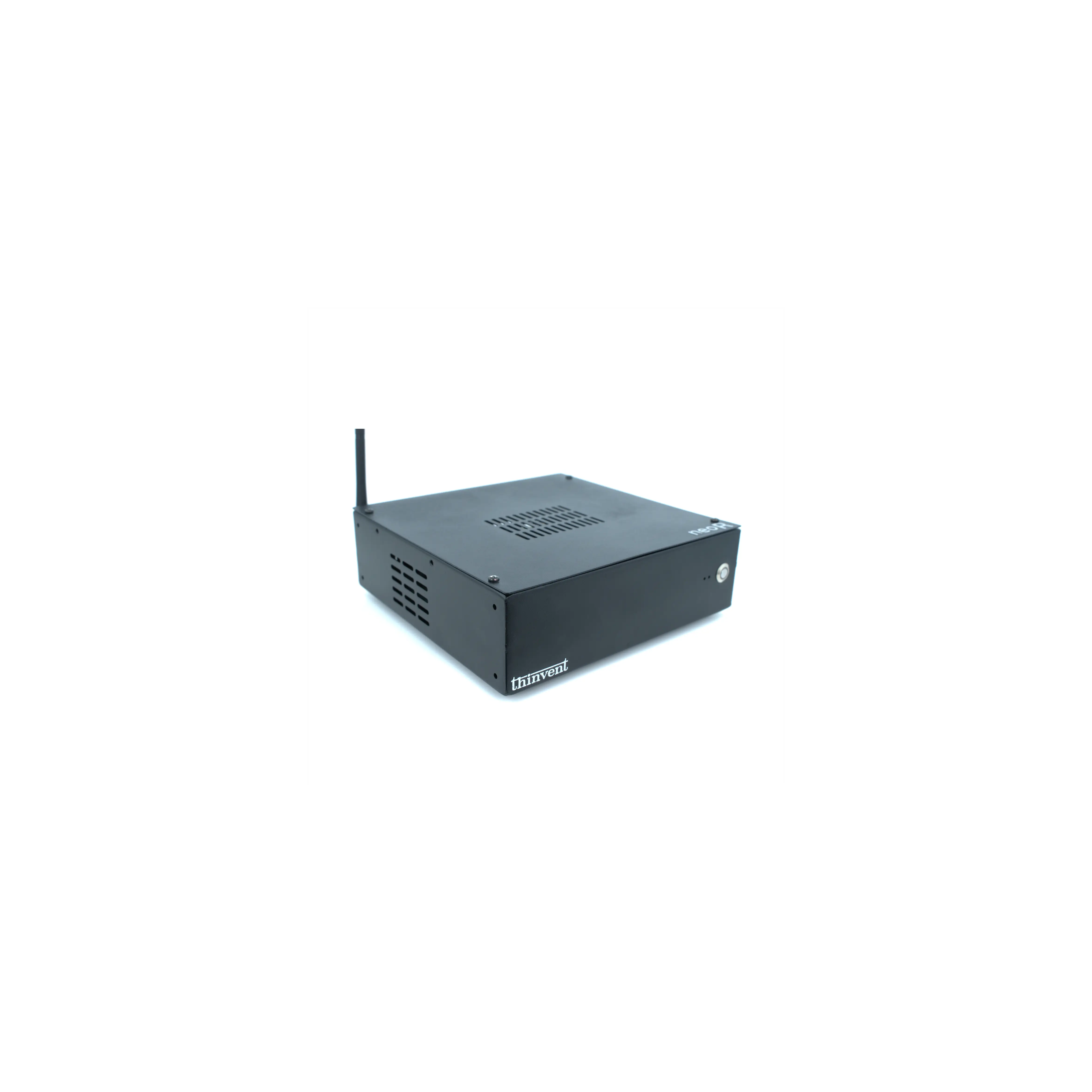
Thinvent offers a range of industrial-grade desktop computers designed to meet the rigorous demands of high-end computing. Our systems leverage the latest Intel Core processor technology, housed in robust, fanless or actively cooled chassis for reliable operation in challenging environments. From compact yet powerful Mini PCs with Core i5/i7 processors to larger Industrial PC form factors with expansive I/O and upgradeability, Thinvent solutions provide the performance, durability, and connectivity required for mission-critical applications worldwide. Explore our portfolio to find a desktop engineered for your specific performance and environmental requirements.