What is a NAS and What Hardware Does It Need?
A Network Attached Storage (NAS) device is a dedicated file storage server connected to a network, allowing multiple users and devices to access and share data from a centralized location. For a reliable and efficient NAS setup, the hardware must prioritize energy efficiency, 24/7 operation stability, and sufficient connectivity for data transfer. An ideal NAS computer is compact, fanless for silent and maintenance-free operation, and equipped with multiple drive bays or expansion ports for storage.
Key Specifications for a NAS Computer
The core of a good NAS system is a low-power, multi-core processor that can handle file serving, data redundancy (RAID), and background tasks without excessive heat or energy use. Adequate RAM (typically 8GB or more) ensures smooth operation when running a NAS operating system and managing multiple user connections. Essential connectivity includes Gigabit Ethernet (or higher) for fast network transfers and multiple USB ports or SATA interfaces for connecting external or internal hard drives. A fanless design is critical for longevity and silent operation in home or office environments.
Use Cases and Applications
A dedicated NAS computer serves various purposes, from a simple home media server for streaming movies and music to a robust business file server for document collaboration and backup. It can act as a personal cloud storage solution, a surveillance system recorder (NVR), or a host for self-hosted applications like photo libraries, password managers, and development environments. Its always-on nature makes it perfect for automated backups and remote access to files.
Recommended NAS Computer Features
| Feature | Importance for NAS | Recommendation |
|---|---|---|
| Processor | Handles file serving, encryption, RAID calculations. | Low-power, multi-core (e.g., Intel N-series). |
| Memory (RAM) | Affects performance with multiple users and services. | Minimum 8GB; 16GB+ for advanced apps. |
| Storage Connectivity | Determines how many drives you can connect. | Multiple USB 3.2/Type-C and/or internal SATA. |
| Network | Defines data transfer speed across the network. | Gigabit Ethernet (1000) is essential. |
| Cooling | Impacts noise and reliability for 24/7 use. | Fanless, passive cooling is ideal. |
| Operating System | The software platform for NAS functionality. | Linux-based OS or a lightweight Windows version. |
Thinvent Products for Your NAS Build
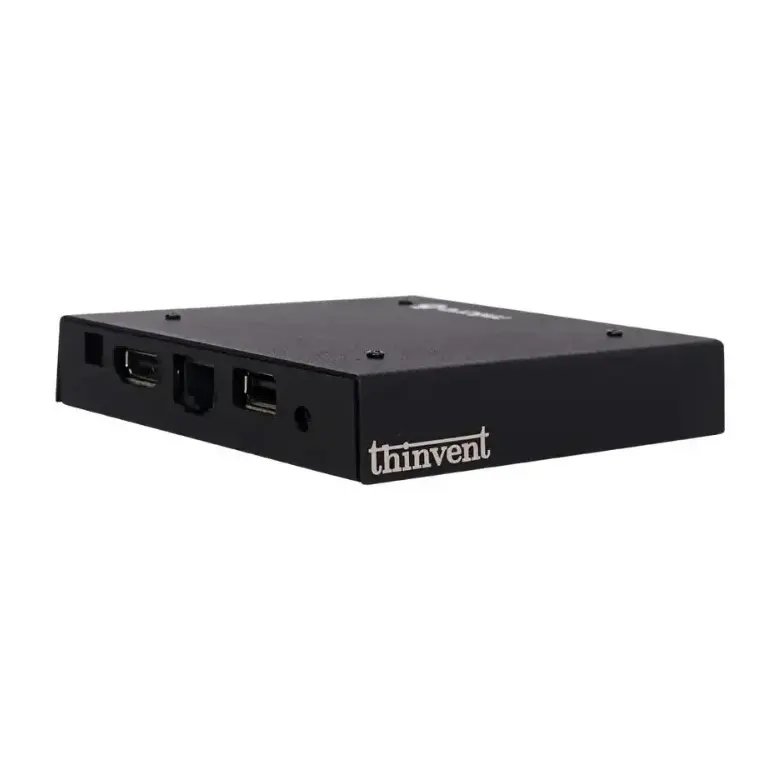
Thinvent's range of industrial mini PCs are excellent foundations for building a powerful and reliable NAS. Our fanless Aero Mini PC series, for example, features the efficient Intel processor N100, which provides ample processing power for file serving while consuming minimal power. With configurations offering up to 16GB of RAM, multiple high-speed USB ports, and Gigabit Ethernet, these compact systems are designed for continuous operation. They can run headless (without a monitor) and support various operating systems perfect for NAS software, including Ubuntu Linux and Windows IoT. Their robust, vented metal chassis ensures optimal passive cooling, making them a silent and dependable choice for your network storage needs.