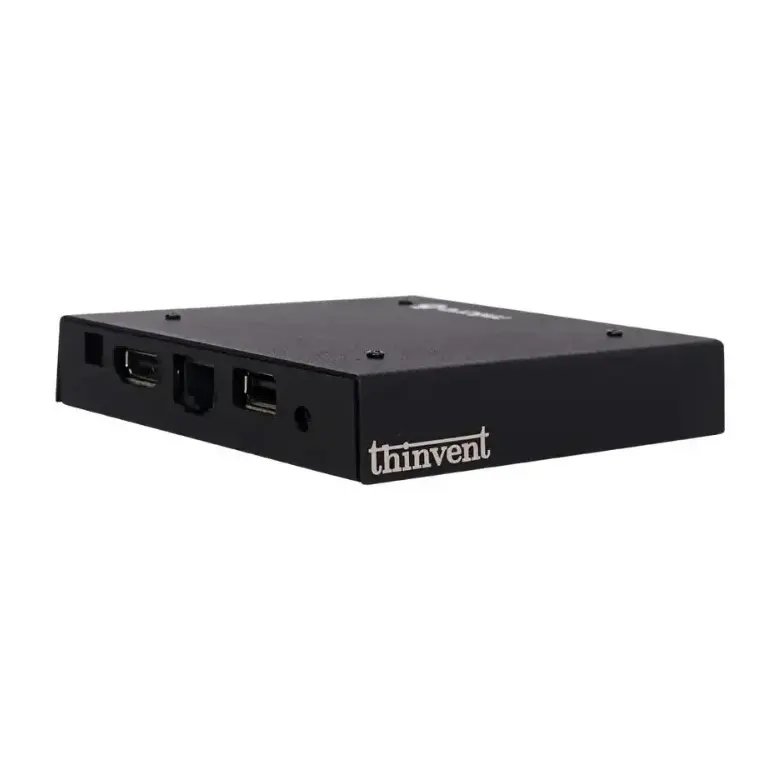
What is a Thin Client?
A thin client is a lightweight, network-dependent computer designed to offload most processing to a central server. It is a primary component in Virtual Desktop Infrastructure (VDI) and cloud computing environments. The query "Client Leger Wyse" refers to a "Wyse Thin Client," a well-known brand in the endpoint computing space. Modern thin clients are compact, energy-efficient devices that provide secure, reliable access to centralized applications and desktops.
Key Specifications for Modern Thin Clients
An ideal thin client for business and industrial use prioritizes reliability, low power consumption, and silent operation. Core specifications include:
-
Processor: Modern, efficient Intel processors like the N-series (e.g., Intel N100) provide ample performance for remote desktop protocols (RDP, Citrix, VMware) and web-based applications without generating excess heat.
-
Memory: 8GB to 16GB of RAM is standard, ensuring smooth multitasking within virtual sessions.
-
Storage: A modest SSD (128GB to 256GB) is sufficient for the host operating system and local caching.
-
Cooling: Fanless, solid-state design is critical for 24/7 operation in dusty or sensitive environments, ensuring zero noise and eliminating a common point of mechanical failure.
-
Connectivity: Multiple display outputs (HDMI), Gigabit Ethernet for stable network connections, and USB ports for peripherals are essential.
Use Cases and Applications
Thin clients are deployed across various sectors due to their manageability and security.
-
Corporate Offices: For standard office productivity, CRM, and ERP access via VDI.
-
Healthcare: In hospitals and clinics for accessing Electronic Health Records (EHR) systems, ensuring data remains centralized and secure.
-
Education: In computer labs and libraries, providing a consistent desktop experience that is easy to maintain and update.
-
Manufacturing & Retail: As point-of-sale (POS) terminals or kiosks, where their rugged, fanless design withstands demanding environments.
-
Call Centers: Providing agents with a standardized, secure workspace for telephony and customer management software.
Comparison: Traditional Thin Client vs. Modern Mini PC as Thin Client
| Feature | Traditional Thin Client (e.g., Wyse) | Modern Fanless Mini PC |
|---|---|---|
| Primary Role | Dedicated VDI/remote session endpoint | Versatile; can be a thin client, edge computer, or standalone PC |
| Processing | Often uses older or specialized, lower-power chips | Utilizes latest efficient processors (e.g., Intel 12th Gen N-series) |
| Upgradability | Typically very limited (soldered RAM/Storage) | Often allows RAM and SSD upgrades |
| Form Factor | Proprietary, often small | Standardized, compact (Mini PC) |
| Cooling | Often fanless | Designed for 100% fanless operation |
| OS Flexibility | May be locked to a specific thin OS | Supports Windows IoT/Pro, Linux, or thin client OS software |
Thinvent's Thin Client Solutions
Thinvent offers a range of industrial-grade fanless mini PCs that serve as excellent, high-performance thin client replacements. Devices like the Thinvent Aero Mini PC are engineered for this exact purpose. Featuring the efficient Intel N100 processor, up to 16GB of RAM, and silent fanless cooling, they provide a robust and reliable hardware platform. They support a wide array of operating systems—including Windows 11 IoT/Pro, Ubuntu Linux, and other embedded OS options—giving IT administrators the flexibility to deploy their preferred VDI client software or lightweight OS. Built for 24/7 operation in diverse environments, Thinvent's solutions deliver the durability, connectivity, and manageability required for modern thin client deployments worldwide.