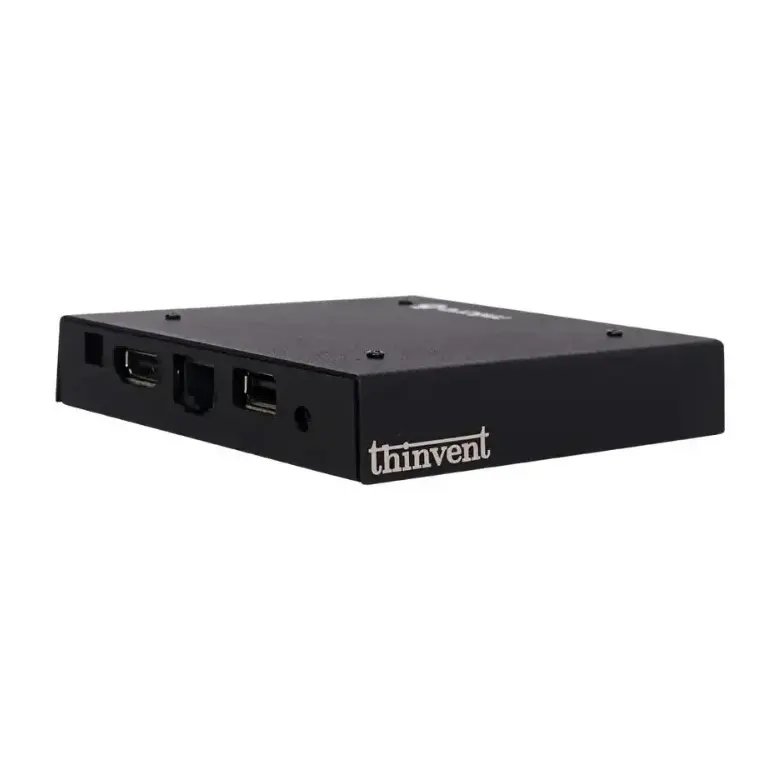
The Compaq Mini 110 is a 10.1-inch netbook built around an Intel Atom processor with 160 GB of storage, as listed in its published specifications. For organisations looking to replace legacy systems with a modern mini PC, the Thinvent Treo Mini PC range offers a current Intel or AMD processor platform with far more memory and storage headroom. The Thinvent Treo Mini PC with Intel Core i3-1215U is a strong starting point for that replacement.
Compaq Mini 110 vs Thinvent Treo Mini PC
| Compaq Mini 110 | Thinvent Treo Mini PC, Intel Core i3-1215U | Thinvent Treo Mini PC, AMD Ryzen 5 7430U | |
|---|---|---|---|
| Processor | Intel Atom | Intel Core i3-1215U | AMD Ryzen 5 7430U |
| Cores/Threads | Not stated | 6 cores | 6 cores |
| RAM | Not stated | Up to 64 GB | Up to 64 GB |
| Storage | 160 GB | 128 GB to 2 TB | 128 GB to 2 TB |
| Form Factor | Netbook (10.1-inch display) | Mini PC | Mini PC |
| Wireless | Not stated | No WiFi or Wi-Fi 5 (802.11ac), dual band | No WiFi or Wi-Fi 5 (802.11ac), dual band |
Key differences
-
Memory: Thinvent Treo Mini PCs support up to 64 GB of RAM, where the Compaq Mini 110 specifications do not state a memory capacity.
-
Storage: Thinvent Treo Mini PCs offer 128 GB to 2 TB of SSD storage, compared with the 160 GB listed for the Compaq Mini 110.
-
Processor generation: The Thinvent Treo range uses current Intel Core and AMD Ryzen processors with six or more cores, a step up from the Intel Atom in the Compaq Mini 110.
-
Wireless options: Thinvent Treo Mini PCs are available with dual band Wi-Fi 5 (802.11ac) or without WiFi, so you can match the configuration to your network.
-
Trade-off: The Compaq Mini 110 is a compact 10.1-inch netbook with a built-in display, whereas the Thinvent Treo is a mini PC that connects to your own monitor.
Which one should you choose?
If you need a portable, all-in-one device with a built-in screen for light tasks, the Compaq Mini 110 matches that use case. If you are replacing legacy systems and need more processing power, memory and storage for business applications, the Thinvent Treo Mini PC with Intel Core i3-1215U or AMD Ryzen 5 7430U is the better fit.