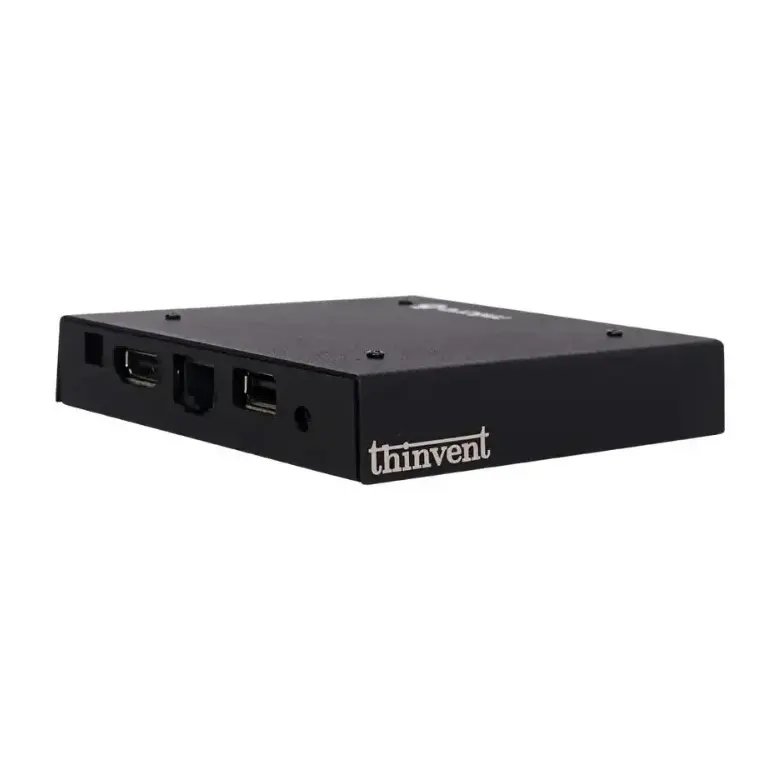
What is a Compact Mini PC?
A compact mini PC, often referred to as a NUC (Next Unit of Computing), is a small-form-factor computer that delivers full desktop functionality in a space-saving design. These systems are engineered for efficiency, offering a balance of performance, low power consumption, and reliability. They are ideal for environments where space is at a premium, noise must be minimized, or deployment needs to be streamlined, such as in digital signage, kiosks, office workstations, and industrial automation.
Key Specifications and Technical Details
Modern compact mini PCs, like those based on the Intel® N100 processor, pack significant capability into a tiny footprint. Key specifications typically include:
-
Processor: Energy-efficient CPUs like the Intel® N100 (4 cores, up to 3.4 GHz) provide ample power for everyday computing and specialized applications without generating excessive heat.
-
Memory & Storage: Configurations often feature 16GB of DDR4 RAM and fast SSD storage (e.g., 128GB) for responsive multitasking and quick boot times.
-
Form Factor: Their ultra-compact size allows for VESA-mount installation behind monitors or placement in tight spaces.
-
Power & Cooling: Designed with low Thermal Design Power (TDP), they often utilize fanless, silent cooling solutions for 24/7 reliability in dusty or noise-sensitive environments.
-
Connectivity: They offer a range of ports including multiple USB, HDMI/DisplayPort for multi-monitor setups, and Ethernet, with options for wireless connectivity.
Ideal Use Cases and Applications
The versatility of compact mini PCs makes them suitable for a wide array of business and industrial scenarios:
-
Digital Signage & Kiosks: Perfect for driving displays in retail, hospitality, and public information points due to their small size and reliability.
-
Office Productivity: Serve as efficient, low-profile workstations for general office tasks, web browsing, and communication applications.
-
Industrial Automation: Their ruggedness and ability to operate in wide temperature ranges make them suitable for factory floor control systems and HMI (Human-Machine Interface) panels.
-
Thin Client & VDI: Ideal as endpoints for virtual desktop infrastructure, centralizing management and security.
-
Edge Computing: Deploy at the network edge for data processing in IoT setups, surveillance, and retail analytics.
Comparison: Compact Mini PC vs. Traditional Desktop
| Feature | Compact Mini PC | Traditional Desktop Tower |
|---|---|---|
| Size & Footprint | Extremely small, often palm-sized. | Large, requires significant desk or floor space. |
| Power Consumption | Very low (e.g., ~10W-30W), energy-efficient. | Higher, varies significantly with components. |
| Noise Level | Often fanless and completely silent. | Typically has cooling fans that generate audible noise. |
| Deployment Flexibility | Can be mounted behind monitors or in confined spaces. | Limited placement options due to size and cables. |
| Performance Profile | Optimized for efficiency and reliable sustained operation. | Can offer higher peak performance for gaming/rendering. |
| Ideal For | Space-constrained, multi-unit deployments, 24/7 operation. | High-performance computing, easy internal upgrades. |
Thinvent's Compact Mini PC Solutions
Thinvent offers a robust lineup of compact mini PCs designed to meet the rigorous demands of business and industrial users. Our Thinvent® Aero Mini PC series exemplifies this commitment, featuring the efficient Intel® N100 processor. These systems are built for reliability with fanless cooling, support for multiple operating systems (Windows 11 IoT/Pro, Linux variants), and come in various configurations to suit specific needs, including bundles with keyboard and mouse. Thinvent mini PCs are engineered for seamless integration into digital signage networks, office environments, and industrial control systems, providing a dependable computing foundation worldwide.