What Makes the Best Computer Setup?
There is no single "best" computer setup — the right choice depends entirely on where the machine will run and what it must do. A setup that is ideal for a climate-controlled office may fail within months on a factory floor, while an over-specified gaming rig wastes budget on a shop-floor terminal. The best setup is the one whose cooling method, processor, memory, storage and operating system match the workload and the environment.
For most business, industrial and edge deployments, the practical answer is a compact, fanless computer built around a modern low-power Intel® processor. Fanless designs remove the single most common point of failure in a small PC — the cooling fan — so dust, grease, lint and vibration no longer shorten the machine's life. Processors such as the Intel® Core™ i3-1215U (6 cores, up to 4.4 GHz, 10 MB cache) deliver desktop-class responsiveness while drawing little power, which keeps enclosures cool without moving air.
Key Specifications to Match to Your Workload
| Requirement | Light Duty | Standard Business / Industrial | Demanding Edge |
|---|---|---|---|
| Processor | Intel® Celeron®, N95, N100, N150, J4125 | Intel® Core™ i3 (1215U, 1315U) | Intel® Core™ i5 (1335U, 1250P) |
| Cores | 4 | 6 | 10–12 |
| Memory | 4–8 GB | 16 GB | 32–64 GB |
| Storage | 128–256 GB SSD | 512 GB–1 TB SSD | 1 TB+ SSD |
| Typical OS | Linux, FreeDOS, Windows 11 | Windows 11 Pro, Ubuntu 24.04 LTS | Windows 11 Pro, Ubuntu 24.04 LTS |
| Cooling | Fanless | Fanless | Fanless or active, depending on load |
Also plan the physical and network side of the setup: 1000 Mbps Ethernet (dual ports where the machine bridges two networks or segments), one or two HDMI outputs for dual displays, USB 3.2 Gen 2 and USB-C for fast peripherals, and a wide-input DC adapter. A setup with no wireless radio is often preferred in secure plants because it removes an uncontrolled network path.
Use Cases and Applications
The best setup for one site is rarely the best for another. Common configurations include:
-
Industrial control and automation: a fanless industrial PC with multiple serial (DB9) ports talking to PLCs, weighbridges, barcode scanners and legacy equipment, running Windows 11 IoT or embedded Linux.
-
Thin client and VDI estates: low-power mini PCs and thin clients that connect to a central server, cutting per-desk cost, power draw and management effort.
-
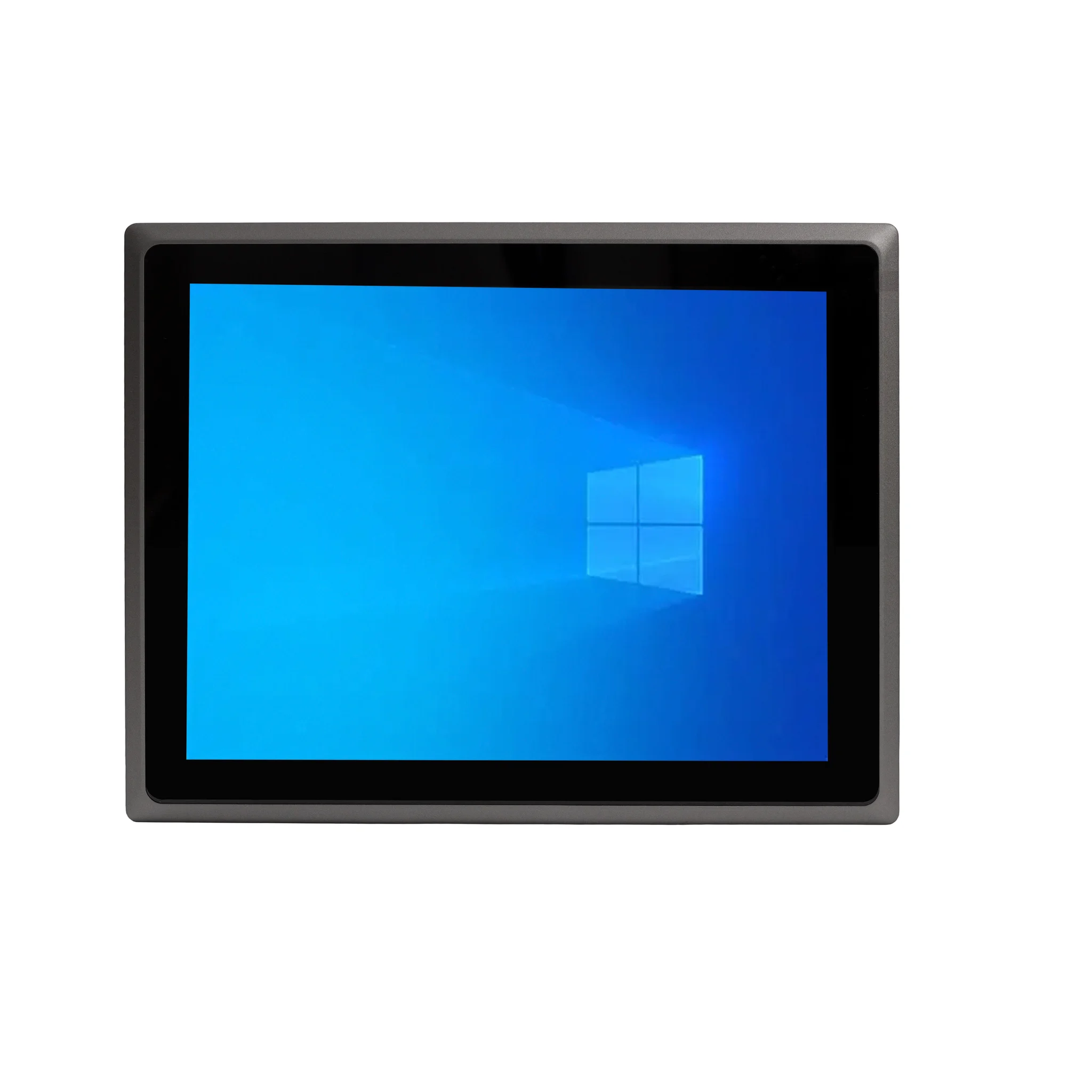
Point of sale and kiosk: all-in-one PCs with integrated 21.5" or 23.8" displays, sealed against dust and spillage.
-
Edge and gateway roles: dual-Ethernet mini PCs that collect data from machines and forward it to the cloud or an on-premise server.
-
Office and back-office: compact desktops with 16 GB RAM and SSD storage for ERP, billing, CAD viewers and multi-monitor work.
When specifying a setup, decide first on the environment (temperature, dust, vibration, mounting space), then on the I/O the application needs, and only then on processor and memory. Choosing the OS last — Windows 11 Pro for mainstream software, Ubuntu Linux 24.04 LTS or an embedded Linux for headless or licence-sensitive deployments, or no OS where you supply your own image — keeps the specification honest.
Thinvent's Products for Building the Right Setup
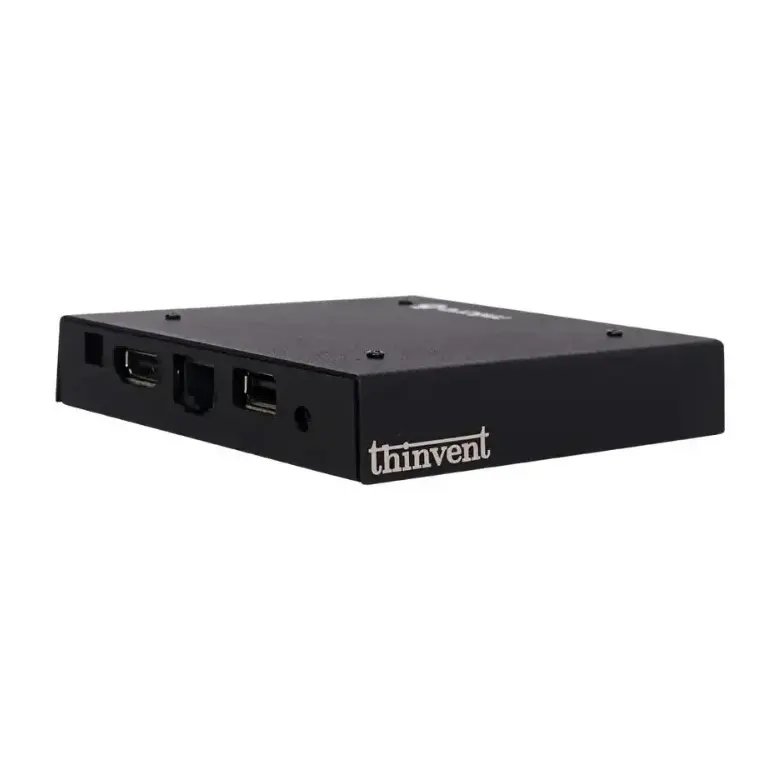
Thinvent manufactures industrial computers, mini PCs, thin clients and all-in-one PCs for customers worldwide, all built around the same principle: reliable, fanless operation with the I/O the application actually requires. The IPC3 industrial PC pairs an Intel® Core™ i3-1215U processor with 16 GB DDR4 RAM and 1 TB SSD, and can be ordered with quad DB9 serial ports, Windows 11 Professional, Windows 11 IoT Value, DOS or Thinux™ Embedded Linux. Lower-power models using Intel® Celeron®, N-series and J-series processors cover thin client, kiosk and gateway roles, while all-in-one units with 21.5" and 23.8" screens suit point-of-sale and reception desks. Every unit is available without a wireless radio where security policy demands it, and with 1000 Mbps Ethernet, HDMI, USB 3.2 Gen 2 and USB-C connectivity as standard.