Choosing the Right Computer for Your Workload
Shopping for a computer starts with one question: what will it actually do? A general-purpose desktop, a fanless mini PC bolted to the back of a monitor, a thin client in a call centre, and a rack-mounted industrial PC running a production line all look similar on a specification sheet — but they are engineered very differently. Matching form factor and thermal design to the environment matters far more than chasing the highest benchmark score.
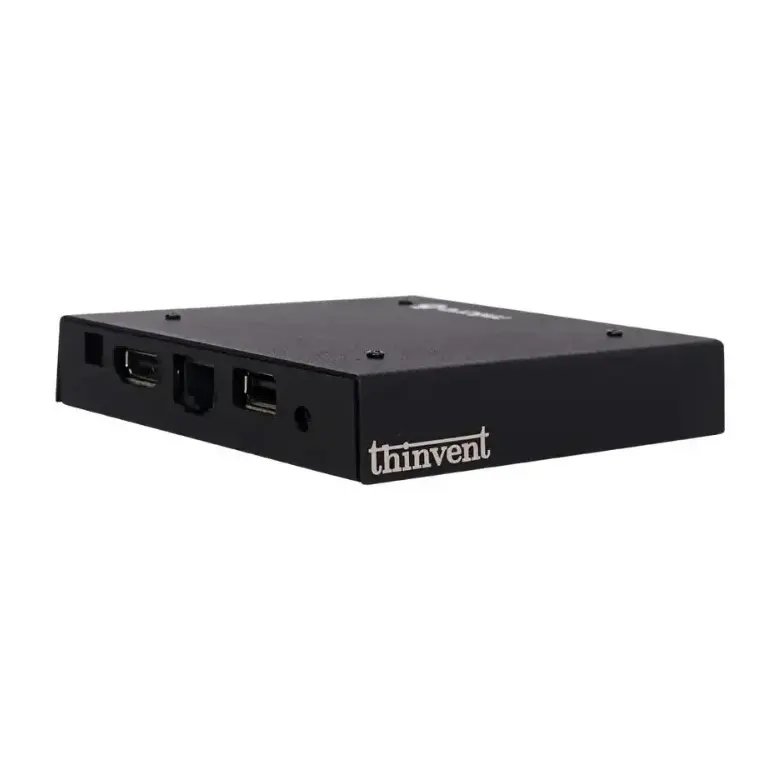
The main categories you will encounter are mini PCs (compact, low-power, often fanless, ideal for digital signage, kiosks and office desks), thin clients (lightweight endpoints that run a remote desktop session from a central server), all-in-one PCs (computer and display in a single unit, common at reception desks and point-of-sale counters), and industrial PCs (ruggedised chassis, wide-temperature components, wide-voltage DC input, and long-term availability for factory floors, control cabinets and outdoor cabinets).
Key Specifications Explained
Processor. Entry-tier Intel Celeron and N-series chips (N95, N100, N150) handle browsing, office suites, video playback and thin-client sessions while sipping power. Intel Core i3 and i5 processors (1215U, 1315U, 1335U) add more cores and threads for multitasking, virtualisation and light CAD. Core count and cache matter as much as clock speed in sustained workloads.
Memory and storage. 4–8 GB of RAM is adequate for basic kiosk or thin-client roles; 16 GB is the comfortable office and industrial default; 32–64 GB suits virtual machines, databases and imaging workloads. For storage, 128–256 GB SSDs cover operating systems and applications, while 512 GB–1 TB is typical where local data or logs are kept on the device.
Connectivity and I/O. Dual Gigabit Ethernet enables network redundancy or separate control and IT networks. HDMI outputs drive one or two displays. USB 3.2 Gen 2 and USB-C ports handle fast peripherals, cameras and instrument interfaces. Legacy serial (DB9/RS-232) ports remain essential for PLCs, scales, barcode equipment and industrial instrumentation.
| Category | Typical Use | Cooling | Mounting |
|---|---|---|---|
| Mini PC | Office, signage, kiosk | Fanless or active | VESA, desk |
| Thin Client | VDI, call centre, education | Fanless | VESA, desk |
| All-in-One | Reception, POS, retail | Fanless or active | Stand, wall |
| Industrial PC | Factory, control cabinet, outdoor | Fanless | DIN rail, wall, rack |
Matching Hardware to Environment
Temperature, dust, vibration and power quality decide reliability. Fanless designs remove the single most common failure point — the cooling fan — and prevent dust from being pulled into the chassis, which is why they dominate dusty workshops and food-processing areas. Wide-input DC power supplies (for example 12 V with a locking connector) tolerate the voltage sag and surges common on industrial rails better than consumer ATX supplies.
Operating system choice also follows the deployment. Microsoft Windows 11 Pro covers standard business software and remote management. Windows 11 IoT Value adds a longer servicing lifecycle for embedded appliances. Ubuntu Linux 24.04 LTS and embedded Linux builds suit kiosks, gateways and