What is a CPU in an Industrial Computer?
The Central Processing Unit (CPU) is the primary component of any industrial computer, responsible for executing instructions and processing data. In industrial environments, the CPU must deliver reliable performance under demanding conditions such as wide temperature ranges, constant operation, and exposure to dust or vibration. Unlike consumer-grade processors, those used in industrial PCs are often selected for their efficiency, thermal characteristics, and long-term availability to ensure system stability over many years.
Key Specifications and Technical Details
Industrial computer CPUs are defined by several critical specifications that impact performance and suitability for specific tasks. Key metrics include:
-
Core Count: Determines how many tasks the processor can handle simultaneously. Quad-core processors are common for basic automation, while higher core counts are needed for complex data processing.
-
Clock Speed (GHz): The speed at which a core executes instructions. Higher speeds benefit single-threaded applications.
-
Thermal Design Power (TDP): Indicates heat generation and power consumption. Low-TDP processors (e.g., Intel N-series) enable fanless, silent operation ideal for enclosed spaces.
-
Instruction Set & Architecture: Modern Intel processors support advanced instruction sets for efficient data handling, virtualization, and security features crucial for industrial applications.
Use Cases and Applications
The choice of CPU directly dictates the computer's application scope:
-
Low-Power Edge Computing: Processors like the Intel N100 are perfect for digital signage, kiosks, and thin clients, offering fanless operation and low energy use.
-
Factory Automation & Control: Multi-core Intel Core i3/i5 processors handle Programmable Logic Controller (PLC) systems, Human-Machine Interfaces (HMI), and machine vision tasks.
-
Rugged Environments: Fanless CPUs with wide operating temperature ranges are deployed in transportation, outdoor monitoring, and mining.
-
High-Performance Workstations: For design, simulation, and AI inference at the edge, higher-tier processors with more cores and cache are essential.
Comparison of Common Industrial CPU Types
| Feature | Intel N-Series (e.g., N100) | Intel Core i3/i5 (e.g., i3-1215U) | Application Focus |
|---|---|---|---|
| Cores/Threads | 4 cores / 4 threads | 6-10 cores / 8-12 threads | Parallel task handling |
| TDP | Very Low (~6W) | Low to Moderate (15-28W) | Power efficiency & cooling |
| Typical Use | Basic computing, IoT gateways | Automation, HMIs, entry-level workstations | Required processing power |
| Key Benefit | Fanless design, minimal heat | Balanced performance for complex tasks | Versatility and capability |
Thinvent Industrial Computers with Intel CPUs
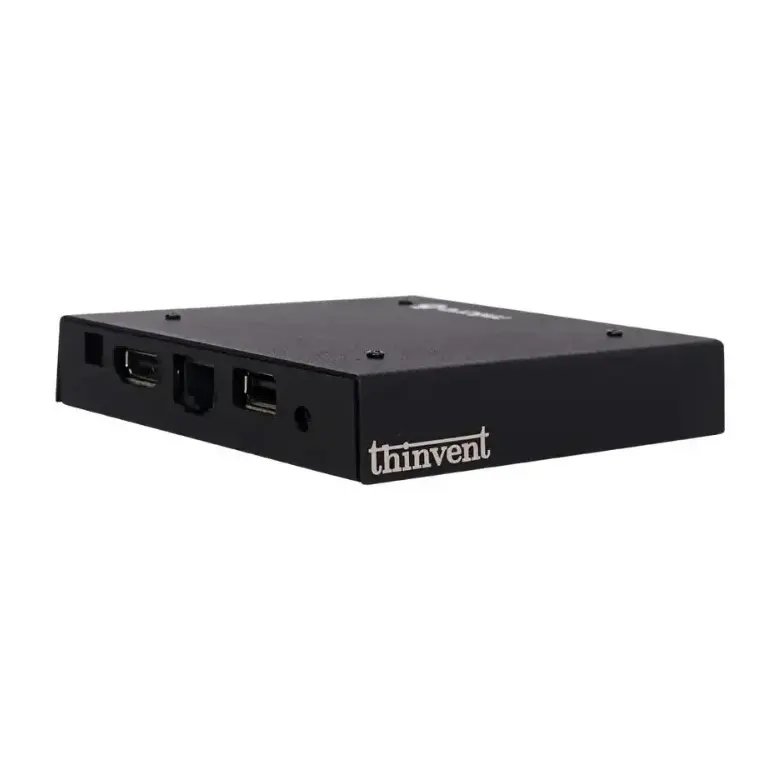
Thinvent offers a comprehensive range of industrial computing solutions powered by various Intel processors to meet diverse operational demands. Our product lines include compact Aero Mini PCs utilizing efficient Intel N-series CPUs for space-constrained and silent applications. For more demanding tasks, our industrial-grade mini PCs and All-in-One systems feature powerful Intel Core i3, i5, and i7 processors from the latest generations, providing the necessary performance for control systems, data acquisition, and edge analytics. All Thinvent systems are built for 24/7 reliability, featuring robust construction, wide voltage input, and support for industrial operating systems, ensuring they perform consistently in challenging environments worldwide.