What is a 4-Core CPU?
A 4-core CPU (Central Processing Unit) is a microprocessor that contains four independent processing units, or "cores," on a single chip. This architecture allows the processor to handle multiple tasks simultaneously, significantly improving multitasking performance and efficiency over single or dual-core designs. In industrial computing, 4-core processors provide an optimal balance of performance, power efficiency, and thermal management, making them ideal for a wide range of embedded and edge applications.
Key Specifications and Technical Details
Modern 4-core industrial CPUs, such as Intel's N-series (e.g., N100) and certain Celeron or Core i3 models, offer advanced features crucial for reliable operation. Key specifications include:
-
Core Count: 4 physical cores enable parallel processing.
-
Clock Speed: Base frequencies typically range from 1.8 GHz to over 3.0 GHz, with Turbo Boost capabilities for demanding tasks.
-
Cache Memory: Integrated cache (e.g., 6 MB) stores frequently accessed data for faster processing.
-
Thermal Design Power (TDP): Often designed with low TDP (e.g., 6W-15W), enabling fanless, silent operation perfect for dust-sensitive or noise-restricted environments.
-
Integrated Graphics: Most feature Intel UHD Graphics for supporting multiple displays without a dedicated GPU.
-
Memory Support: Compatibility with DDR4 or DDR5 RAM, supporting configurations from 8GB to 32GB or more.
Use Cases and Applications
4-core industrial computers are versatile workhorses suited for numerous applications:
-
Digital Signage & Kiosks: Powering vibrant displays in retail, hospitality, and public information systems.
-
Factory Automation: Acting as controllers for PLCs, HMIs, and machine vision systems on the shop floor.
-
Thin Clients & VDI: Providing secure, centralized desktop access for office and call center environments.
-
Edge Computing Gateways: Collecting, processing, and transmitting data from IoT sensors in smart cities, agriculture, and energy.
-
Network Appliances: Serving as firewalls, routers, or network-attached storage (NAS) devices.
Processor Comparison for Industrial 4-Core CPUs
| Feature | Intel Processor N100 (Alder Lake-N) | Intel Core i3-1215U (Alder Lake) | Intel Celeron J4125 (Gemini Lake) |
|---|---|---|---|
| Cores / Threads | 4 / 4 | 6 (2P+4E) / 8 | 4 / 4 |
| Max Turbo Frequency | Up to 3.4 GHz | Up to 4.4 GHz | Up to 2.7 GHz |
| Cache | 6 MB Intel Smart Cache | 10 MB Intel Smart Cache | 4 MB |
| Integrated Graphics | Intel UHD Graphics (24 EU) | Intel UHD Graphics (64 EU) | Intel UHD Graphics 600 |
| Typical TDP | 6W | 15W | 10W |
| Ideal For | Fanless mini PCs, basic edge nodes | Higher-performance thin clients, workstations | Legacy-friendly, cost-sensitive embedded systems |
Thinvent's 4-Core Industrial Computing Solutions
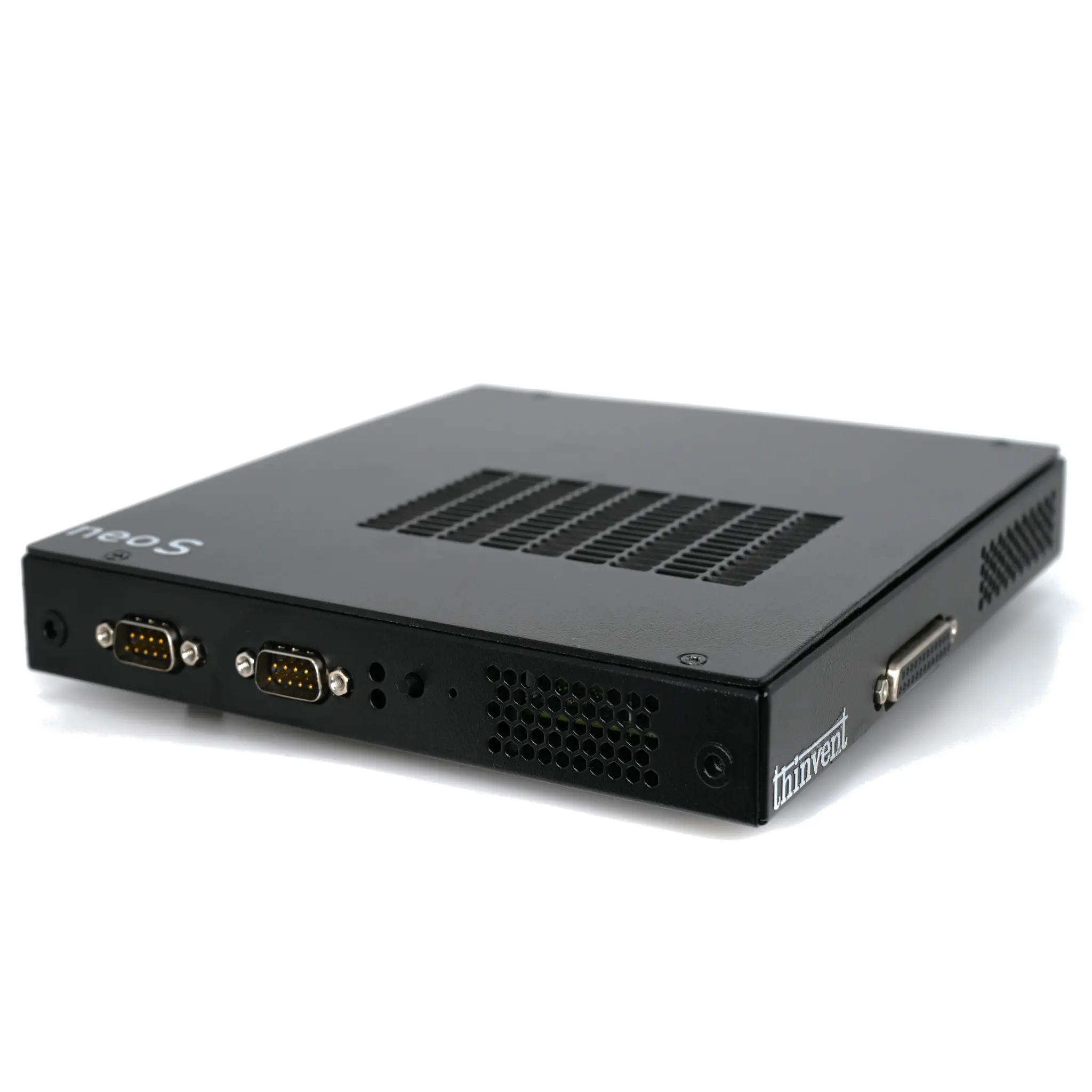
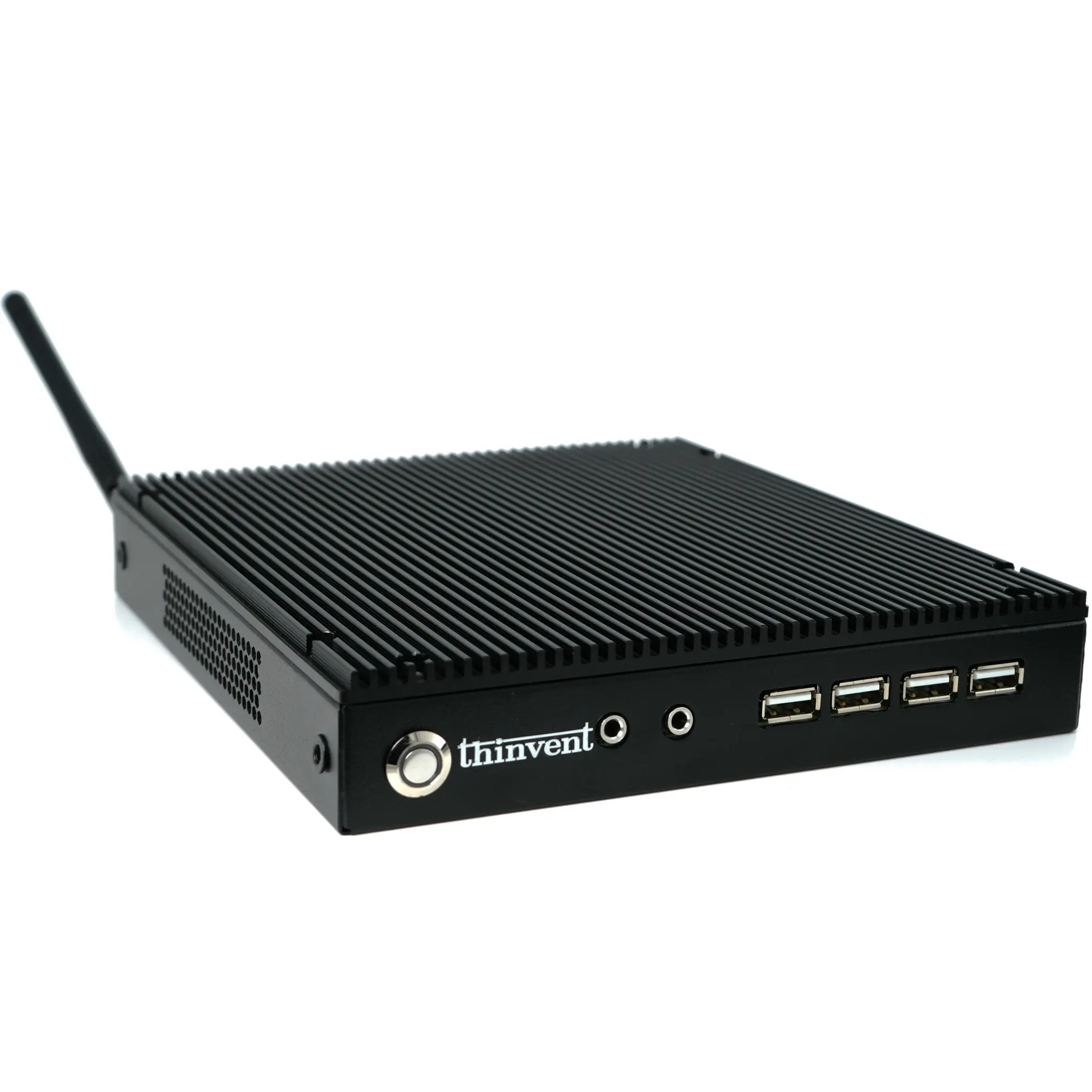
Thinvent offers a robust portfolio of industrial computers powered by efficient 4-core Intel processors. Our Aero Series Mini PCs exemplify this, featuring the Intel N100 processor in a compact, fanless chassis designed for 24/7 reliability. These systems are built to withstand demanding environments with wide temperature tolerance and support for multiple operating systems, including Windows 11 IoT, Ubuntu Linux, and our proprietary Thinux™ Embedded Linux. Whether you need a solution for digital signage, a thin client, or an edge gateway, Thinvent's 4-core computers deliver the perfect blend of performance, durability, and energy efficiency for global industrial deployments.