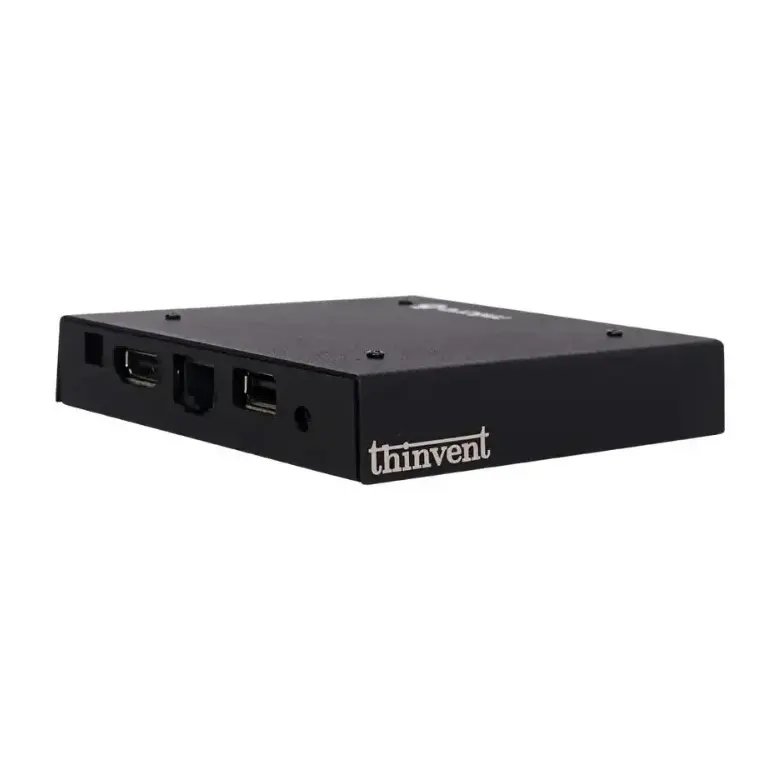
Fanless Mini PCs are compact, sealed computing systems designed for reliability in demanding environments. By eliminating moving parts like fans, they achieve silent operation, reduced maintenance, and superior resistance to dust, moisture, and extreme temperatures. These systems leverage efficient, low-power processors—from ARM-based chips to Intel Core and N-series CPUs—that generate minimal heat, allowing for passive cooling through robust aluminum heatsinks and chassis designs. This makes them ideal for 24/7 operation in settings where traditional computers would fail.
Key Specifications and Technical Advantages
The core advantage of fanless design is enhanced durability. Key specifications that enable this include:
-
Processor Efficiency: Ranging from ARM Cortex (A53, A55) for basic tasks to Intel Core i3/i5 and N100/N200 for higher performance, all selected for optimal thermal design power (TDP).
-
Rugged Construction: Fully sealed metal enclosures with wide operating temperature ranges (often -20°C to 60°C or beyond).
-
Reliable Storage: Use of eMMC or solid-state drives (SSDs) with no moving parts.
-
Flexible Power: Support for wide-range DC input (e.g., 9V-36V) for industrial power stability.
-
Rich I/O: Multiple display outputs (HDMI, DP), serial ports (COM), USB, and LAN ports for industrial peripherals.
Primary Use Cases and Applications
Fanless Mini PCs are deployed in environments where reliability is non-negotiable:
-
Industrial Automation: As PLCs, HMIs, and machine controllers on factory floors.
-
Digital Signage & Kiosks: For public spaces, retail, and transportation hubs requiring silent, always-on operation.
-
Edge Computing & IoT Gateways: Processing data locally in smart cities, agriculture, and energy grids.
-
Thin Client & VDI: Secure, low-maintenance endpoints for virtual desktop infrastructure.
-
Transportation & In-Vehicle Computing: Withstanding vibrations and temperature swings in buses, trains, and fleet vehicles.
Comparing ARM vs. Intel Fanless Solutions
The choice between ARM and Intel architectures depends on the application's performance and software requirements.
| Feature | ARM-Based Mini PCs (e.g., Cortex A55) | Intel-Based Mini PCs (e.g., Core i5, N100) |
|---|---|---|
| Core Strength | Ultra-low power, minimal heat, cost-effective | Higher performance, x86 compatibility |
| Typical Use | Thin clients, basic kiosks, simple IoT gateways | Industrial PCs, advanced automation, edge AI, digital signage |
| OS Support | Linux, Android, RTOS | Windows, Linux, Ubuntu |
| Performance Profile | Excellent for lightweight, dedicated tasks | Suitable for multitasking and heavier workloads |
| Thermal Output | Very low, enabling extremely compact designs | Managed by advanced passive cooling systems |
Thinvent's Range of Fanless Industrial Computing Solutions
Thinvent offers a comprehensive portfolio of fanless mini PCs and industrial computers designed for global deployment. Our solutions span from entry-level to high-performance tiers:
-
Micro Series: Feature ARM Cortex processors (A53, A55) with onboard RAM and eMMC storage. These are perfect for lightweight, embedded applications like digital signage and thin clients, running on our Thinux™ Embedded Linux for optimized performance.
-
Treo & IPC Series: Powered by efficient Intel processors like the N100, i3-1215U, and i5-1240P. These models balance performance with fanless reliability for more demanding tasks in automation, edge computing, and kiosks, available with Ubuntu Linux or Windows IoT.
-
Aero Series: Equipped with the latest Intel Core processors, such as the 14th Gen Core 5 120U, delivering high performance in a fanless format. Designed for intensive industrial computing, AI at the edge, and advanced control systems, supporting Windows 11 Pro.
All Thinvent fanless systems are built for 24/7 operation, featuring rugged metal chassis, wide-temperature components, and flexible mounting options to integrate seamlessly into any industrial ecosystem worldwide.