What is the Microsoft Pluton Security Processor?
Microsoft Pluton is a dedicated hardware security processor (HSP) designed to provide chip-to-cloud security for modern Windows PCs. Developed in collaboration with leading silicon partners like Intel, AMD, and Qualcomm, Pluton is integrated directly into the system-on-a-chip (SoC). Its primary function is to create a secure, hardware-based vault that stores sensitive data—such as encryption keys, user credentials, and biometric information—within the processor package itself. This architecture makes it significantly harder for attackers to physically extract this data, even if they have direct access to the hardware.
Key Specifications and Technical Details
Pluton is not a separate, discrete chip but a security core embedded within the main CPU. It operates independently, with its own dedicated firmware and cryptographic engine. Key technical aspects include:
-
Hardware-Rooted Security: Replaces the traditional Trusted Platform Module (TPM) by integrating its security functions directly into the CPU silicon, eliminating the attack surface of a separate, external communication bus.
-
Secure Firmware Updates: Pluton's firmware can be updated securely via Windows Update, ensuring protection against newly discovered vulnerabilities without requiring user intervention or physical hardware changes.
-
Chip-to-Cloud Protection: It enables a zero-trust authentication model for accessing cloud services, verifying the integrity of the device from the hardware level up to the cloud service.
Use Cases and Applications
The Pluton security processor is designed for environments where data integrity and device identity are paramount. Its primary applications include:
-
Enterprise and Business Computing: Protecting corporate credentials, encryption keys for BitLocker, and sensitive intellectual property on business laptops and desktops.
-
High-Security Workstations: For government, financial, and research institutions that require the highest assurance of hardware-based security for critical data and access controls.
-
Future-Proofing IoT and Edge Devices: While initially for Windows PCs, the technology (pioneered in Xbox and Azure Sphere) is poised to enhance security for intelligent edge devices and industrial systems requiring secure, remote management.
Comparison: Pluton vs. Traditional TPM 2.0
| Feature | Microsoft Pluton | Discrete TPM 2.0 |
|---|---|---|
| Integration | Embedded directly into the CPU/SoC. | A separate chip on the motherboard. |
| Physical Attack Resistance | High. Sensitive data is stored within the CPU package. | Moderate. Data is transmitted over an external bus (like SPI). |
| Firmware Updates | Seamless, secure updates via Windows Update. | Often requires manual BIOS/UEFI updates or is not updatable. |
| Primary Goal | Chip-to-cloud security, hardware identity. | Hardware-based key storage and cryptographic operations. |
Thinvent Products Featuring Advanced Security
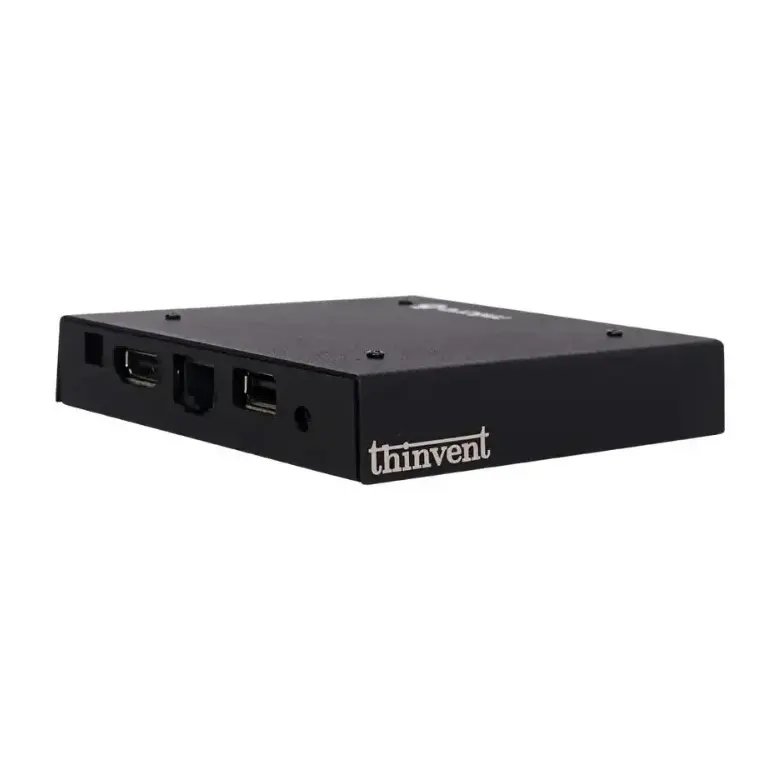
While Thinvent's current industrial computer and mini PC portfolio emphasizes reliability, fanless cooling, and robust performance for demanding environments, we prioritize security through other proven enterprise-grade features. Our systems support robust security implementations compatible with modern standards, including:
-
Hardware TPM 2.0 Support: Many of our industrial PCs and mini PCs are equipped with or support discrete TPM 2.0 modules for secure key generation and storage.
-
Secure Boot & BIOS/UEFI Security: Our devices feature comprehensive firmware security options to ensure only trusted software loads during startup.
-
Trusted Computing for Industrial IoT: For applications in digital signage, factory automation, and edge computing, our platforms provide the hardware foundation for building secure, managed device fleets. We continuously evaluate emerging security technologies like Pluton to integrate them into future product lines where they meet the stringent reliability and longevity requirements of our industrial customers.