What is a Dedicated Graphics Card PC?
A dedicated graphics card PC is a computer system equipped with a separate, discrete Graphics Processing Unit (GPU) that is not integrated into the main processor. Unlike integrated graphics, which share system memory and resources, a dedicated GPU has its own dedicated video memory (VRAM), cooling system, and power circuitry. This architecture provides significantly higher graphical performance, making it essential for compute-intensive visual tasks. For industrial applications, this translates to reliable, high-fidelity rendering in demanding environments.
Key Specifications and Technical Details
The primary advantage of a dedicated GPU lies in its parallel processing power and dedicated resources. Key specifications to consider include:
-
GPU Model & VRAM: Determines rendering power and ability to handle complex textures. Common industrial-grade GPUs include NVIDIA Quadro, AMD Radeon Pro, and certain Intel Arc models.
-
Thermal Design Power (TDP): Higher-performance GPUs generate more heat, requiring robust cooling solutions like large heatsinks or fans, which must be factored into the industrial chassis design.
-
Interface: Modern dedicated GPuses PCIe (Peripheral Component Interconnect Express) slots, with PCIe 4.0 or 5.0 offering the highest bandwidth for data transfer between the CPU and GPU.
-
Outputs: Multiple high-resolution outputs (DisplayPort, HDMI) are standard, supporting multi-monitor setups crucial for control rooms and digital signage.
Use Cases and Applications
Dedicated graphics are indispensable in professional and industrial sectors where graphical fidelity and processing are critical.
-
Industrial Design & CAD/CAM: Running software like AutoCAD, SolidWorks, or Siemens NX for 3D modeling and simulation.
-
Digital Signage & Video Walls: Driving multiple 4K/8K displays in retail, transportation hubs, and command centers.
-
Machine Vision & AI Inference: Accelerating image processing for quality control, robotic guidance, and object recognition.
-
Medical Imaging: Rendering detailed 3D models from CT or MRI scans for diagnostic and surgical planning.
-
Broadcast & Media: Real-time video editing, encoding, and broadcast graphics.
Integrated vs. Dedicated Graphics: A Comparison
| Feature | Integrated Graphics | Dedicated Graphics |
|---|---|---|
| Processing Unit | Part of the CPU (iGPU) | Separate GPU on a card |
| Memory | Shares system RAM (slower) | Dedicated VRAM (faster) |
| Power Consumption | Low | Moderate to High |
| Thermal Output | Low | Higher, requires active cooling |
| Performance | Suitable for basic display & light tasks | Essential for 3D rendering, complex simulations, multi-4K displays |
| Typical Use Case | Office PCs, Thin Clients, Basic HMIs | CAD Workstations, AI Servers, Digital Signage Controllers |
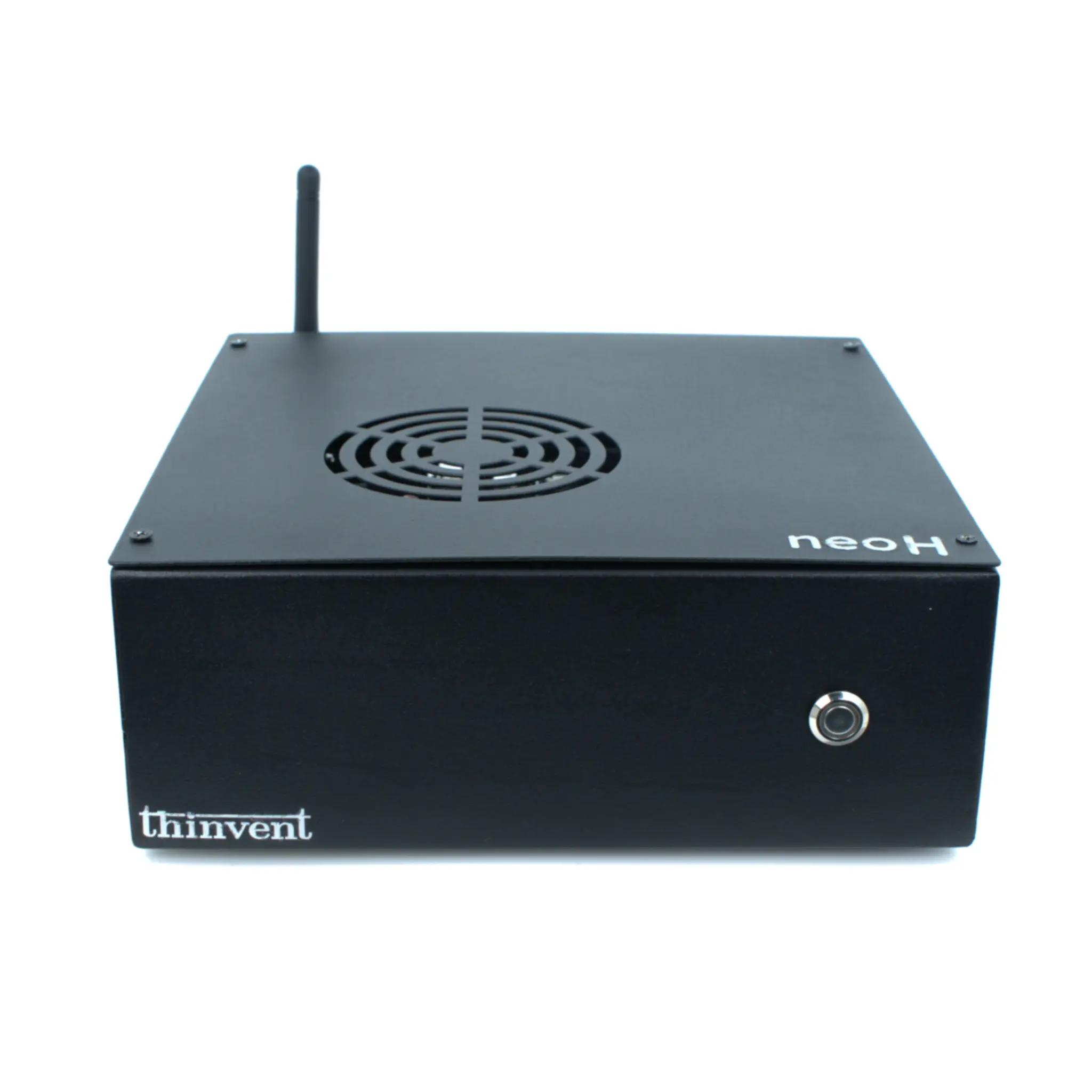
Thinvent Industrial PCs with Dedicated Graphics
Thinvent offers a range of robust industrial computing solutions designed to accommodate dedicated graphics cards for demanding visual workloads. Our industrial PCs feature:
-
Rugged Chassis: Built to withstand harsh environments with superior thermal management to support high-TDP components.
-
Expandable Architecture: Provision for full-size or low-profile PCIe slots to install professional-grade GPUs.
-
High-Performance Platforms: Systems powered by Intel Core i5 and i7 processors, paired with ample RAM and fast SSD storage, create a balanced platform that prevents GPU bottlenecking.
-
Flexible Deployment: Whether it's for a compact edge AI inference station, a multi-screen digital signage controller, or a CAD workstation on the factory floor, Thinvent configures systems to meet specific power, connectivity, and reliability requirements.