What Are Industrial Computers?
An industrial computer is a specialized computing system engineered for reliable operation in harsh, demanding, and mission-critical environments. Unlike standard consumer PCs, these systems are built with durability, longevity, and stability as core principles. They are designed to withstand extreme temperatures, dust, moisture, vibration, and electromagnetic interference, ensuring continuous operation in settings where a typical computer would fail.
Key Specifications and Technical Details
Industrial computers are defined by their robust construction and specialized components. Key features include:
-
Ruggedized Enclosures: Often fanless for silent, dust-proof operation, using passive cooling via aluminum heat sinks. Enclosures are typically made of heavy-duty steel or aluminum.
-
Wide Operating Temperature Ranges: Certified to function reliably in temperatures from well below freezing (e.g., -20°C) to high heat (e.g., 60°C).
-
Extended Component Lifecycle: Industrial-grade motherboards, processors, and memory are selected for long-term availability and support, crucial for multi-year deployments.
-
Enhanced Connectivity: Feature a rich I/O set with multiple serial ports (RS-232/485), PoE (Power over Ethernet) LAN ports, and industrial expansion slots (PCI/PCIe) for specialized data acquisition or control cards.
-
Power Supply Stability: Utilize wide-range voltage input (e.g., 9-36V DC) to handle power fluctuations and include protection against surges and spikes.
Use Cases and Applications
Due to their reliability, industrial computers are the backbone of automation and digital infrastructure across numerous sectors:
-
Factory Automation & Control: Serving as PLCs (Programmable Logic Controllers), HMI (Human-Machine Interface) stations, and machine vision systems on manufacturing floors.
-
Digital Signage & Kiosks: Powering interactive displays, wayfinding systems, and self-service terminals in retail, transportation hubs, and public spaces, operating 24/7.
-
Transportation & Logistics: Embedded in fleet management systems, railway control units, and automated warehouse robotics.
-
Energy & Utilities: Monitoring and controlling equipment in power plants, oil & gas refineries, and renewable energy installations.
-
Healthcare & Laboratory: Used in medical imaging devices, diagnostic equipment, and laboratory automation where consistent performance is non-negotiable.
Comparison: Industrial vs. Consumer Computers
| Feature | Industrial Computer | Consumer Desktop PC |
|---|---|---|
| Operating Environment | Harsh (temp, dust, vibration) | Controlled office/home |
| Reliability & MTBF | Very High (100,000+ hours) | Standard |
| Cooling System | Often fanless (passive) | Active fans |
| Component Lifecycle | Long-term (5-10+ years) | Short (1-3 years) |
| I/O & Expansion | Rich industrial ports (COM, GPIO) | Standard consumer ports |
| Power Input | Wide-range DC (e.g., 9-36V) | Standard AC |
| Primary Goal | Stability & Uptime | Performance & Cost |
Thinvent's Range of Industrial Computing Solutions
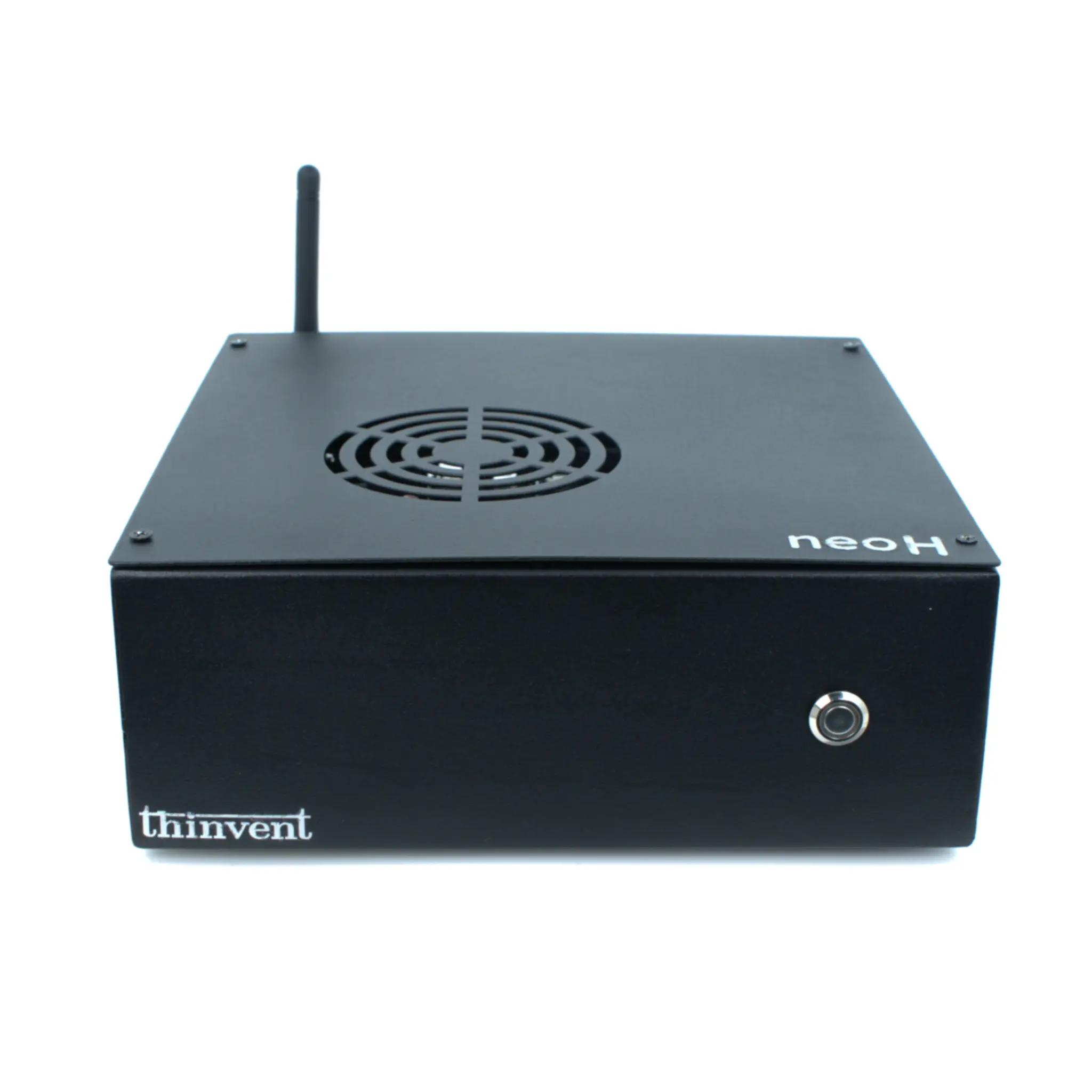
Thinvent specializes in manufacturing a comprehensive portfolio of industrial-grade computing hardware designed for global deployment. Our product lines include compact Fanless Mini PCs ideal for space-constrained and dirty environments, versatile Industrial Panel PCs and All-in-Ones for interactive control stations, and powerful Rackmount Industrial Computers for data-intensive processing tasks. Each system is built with the core industrial principles of durability, wide-temperature operation, and long-term component support, ensuring your operations run smoothly in the most challenging conditions.