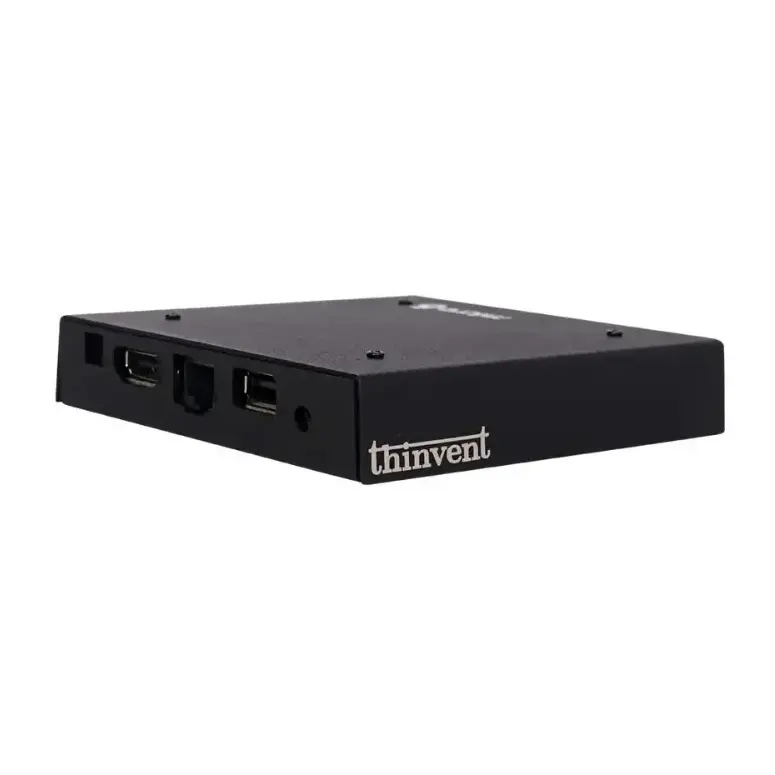
Understanding Industrial Mini PCs with Intel Processors
The query "Dell CPU Price Flipkart" appears to be a search for a specific brand's processor pricing on a retail platform. However, for industrial and commercial applications, the focus shifts from retail consumer parts to complete, reliable computing systems. Industrial Mini PCs are compact, robust computers designed for 24/7 operation in demanding environments like factories, digital signage, and kiosks. Unlike consumer-grade components, these systems are built for longevity, stability, and often feature fanless designs for silent, dust-resistant operation.
Key Specifications and Technical Details
Industrial Mini PCs are defined by their core components, which determine performance, efficiency, and suitability for specific tasks. A critical component is the processor (CPU). Modern industrial systems often utilize efficient Intel processor families like the N-series (e.g., Intel N100) or Core i-series. Key specifications to consider include:
-
Processor Cores and Threads: Determines multitasking capability (e.g., 4 cores for efficient multi-threaded workloads).
-
Clock Speed and Turbo Boost: Affects single-threaded performance for responsive applications.
-
Thermal Design Power (TDP): Lower TDP (e.g., 6W) enables fanless, silent operation crucial for noise-sensitive environments.
-
Memory and Storage: Configurations like 16GB DDR4 RAM and 128GB SSD provide a balance of speed and capacity for embedded applications.
-
Connectivity: Multiple USB ports, Gigabit Ethernet, and HDMI outputs are standard for peripheral and display connectivity.
Applications and Use Cases
These compact powerhouses are deployed across various sectors due to their reliability and small form factor.
-
Digital Signage & Kiosks: Driving displays in retail, hospitality, and public information points.
-
Industrial Automation: Acting as a controller for PLCs, HMIs, and monitoring systems on the factory floor.
-
Thin Client & VDI: Providing secure, centralized desktop access in corporate and educational settings.
-
Edge Computing: Processing data locally in IoT networks, reducing latency and bandwidth usage.
-
Embedded Systems: Used in transportation, medical devices, and telecommunications for dedicated functions.
Comparison of Common Intel Processor Series for Industrial Use
| Feature | Intel N-Series (e.g., N100) | Intel Core i-Series (e.g., i3, i5) |
|---|---|---|
| Primary Use | Basic computing, digital signage, thin clients, embedded IoT | General productivity, multi-tasking, light CAD, entry-level workstations |
| Power & Heat | Very low TDP (6W); ideal for fanless designs | Moderate TDP; may require active cooling in compact designs |
| Performance | Efficient for everyday tasks and light multi-tasking | Significantly higher performance for more demanding applications |
| Typical Cores | 4 cores, 4 threads | 4-10+ cores with Hyper-Threading |
| Ideal For | Cost-sensitive, space-constrained, always-on deployments | Scenarios requiring more processing power without a large desktop footprint |
Thinvent's Range of Industrial Computing Solutions
Thinvent specializes in manufacturing robust industrial computers that incorporate the latest Intel processor technology. Our product lines, such as the Aero Mini PC series, are engineered for reliability in commercial environments. They feature fanless cooling for silent operation, wide operating temperature ranges, and multiple mounting options for flexible deployment. We offer a variety of configurations with processors like the Intel N100, alongside choices in RAM, storage, and operating systems (including Windows 11 IoT/Pro, Ubuntu Linux, and our own Thinux™ Embedded Linux) to match specific project requirements. For professionals seeking durable, application-ready computing solutions beyond standard retail components, Thinvent provides tested and supported systems built for the long term.