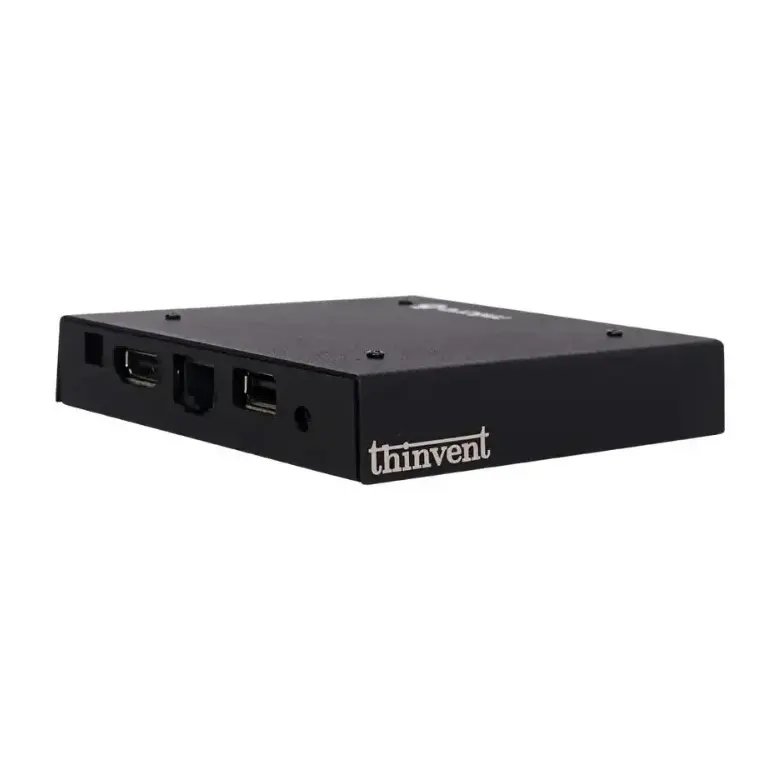
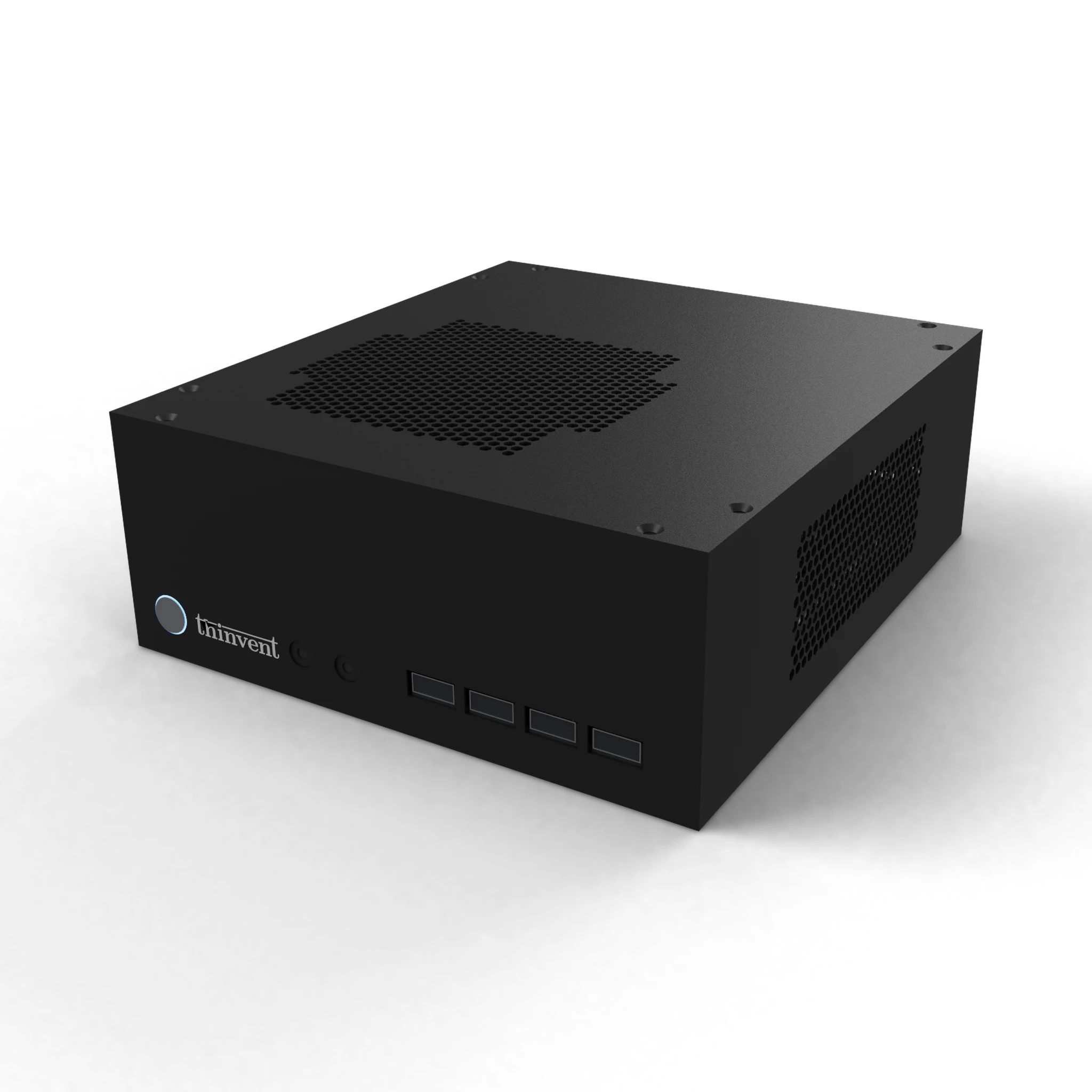
Dell OptiPlex is a family of business desktops sold in Micro, Small Form Factor (SFF) and Mini Tower (MT) chassis, with Intel Core processors and up to 128GB of DDR5 memory on the OptiPlex 7010 Small Form Factor. The closest Thinvent alternative is the Thinvent Aero Mini PC, a compact mini PC line available with Intel Core and AMD Ryzen processors and up to 64 GB of RAM.
Dell OptiPlex vs Thinvent Aero Mini PC Alternatives
| Feature | Dell OptiPlex (7010 Small Form Factor) | Thinvent Aero Mini PC, Intel Core i3 to i7 | Thinvent Aero Mini PC, AMD Ryzen 5 7430U |
|---|---|---|---|
| Processor | 13th Gen Intel Core | Intel Core i3-1315U to Core i7-1255U | AMD Ryzen 5 7430U |
| Cores/Threads | Not stated | 6 to 12 cores | 6 cores |
| RAM | Up to 128 GB DDR5 | Up to 64 GB | Up to 64 GB |
| Storage | Not stated | 32 GB to 2 TB SSD | 32 GB to 2 TB SSD |
| Form Factor | Small Form Factor | Mini PC | Mini PC |
| Wireless | Not stated | No WiFi or Dual Band Wi-Fi 5 | No WiFi or Dual Band Wi-Fi 5 |
Key differences
-
Thinvent Aero Mini PCs offer a choice of Intel Core and AMD Ryzen processors, while the OptiPlex range is based on Intel platforms.
-
Thinvent Aero Mini PCs offer RAM up to 64 GB, while the OptiPlex 7010 Small Form Factor lists up to 128 GB, so Dell offers the higher memory ceiling.
-
Thinvent Aero Mini PCs are offered with optional Dual Band Wi-Fi 5 (802.11ac) on many configurations.
-
The Dell OptiPlex Small Form Factor offers more expansion room for PCIe cards, drive bays and power supply options than a compact mini PC, which suits projects that need add-in cards.
-
The Thinvent Aero Mini PC is a smaller footprint for space-limited desks and kiosks.
Which one should you choose?
Choose a Dell OptiPlex if you need the highest memory capacity, PCIe expansion or a tower-style chassis for a standard office or business deployment. Choose a Thinvent Aero Mini PC if you want a compact desktop with a choice of Intel or AMD processors, up to 64 GB of RAM and optional Wi-Fi.