The Central Processing Unit (CPU) is the primary component determining a desktop computer's performance, efficiency, and suitability for specific tasks. Modern desktop computers, including compact mini PCs and industrial systems, utilize CPUs from two primary architectures: Intel x86 and ARM. The choice between them, and within their respective model families, dictates the machine's capabilities for everything from basic office work to demanding industrial automation.
Key CPU Specifications and What They Mean
When evaluating a desktop computer CPU, several core specifications are critical:
-
Cores & Threads: Cores are individual processing units. More cores allow a CPU to handle multiple tasks simultaneously, improving multitasking and performance in parallelized applications like video editing or software compilation. Threads represent virtual cores that further enhance multitasking efficiency, especially in Intel Core processors with Hyper-Threading.
-
Clock Speed (GHz): Measured in gigahertz, this indicates how many cycles a core can execute per second. A higher clock speed generally means faster performance for single-threaded tasks. Many modern CPUs feature a "base" clock for efficiency and a "turbo" or "max" clock for burst performance.
-
Cache (MB): This is the CPU's onboard high-speed memory. A larger cache allows the processor to store more frequently accessed data close at hand, significantly reducing latency and improving overall responsiveness.
-
Thermal Design Power (TDP): Expressed in watts, TDP indicates the heat generated under load, which correlates with power consumption. Lower-TDP CPUs (e.g., Intel N-series, ARM) enable fanless, silent, and energy-efficient designs ideal for 24/7 operation in digital signage or kiosks.
Intel vs. ARM: Choosing the Right Architecture
| Feature | Intel Processors (x86) | ARM Processors |
|---|---|---|
| Performance Profile | High single & multi-thread performance. Ideal for Windows applications, virtualization, and heavy computing. | Excellent power efficiency. Optimized for lightweight, embedded tasks and Linux-based environments. |
| Common Use Cases | Industrial workstations, CAD, digital signage servers, virtualization hosts, general-purpose office PCs. | Thin clients, kiosks, digital signage players, lightweight point-of-sale systems, network appliances. |
| Typical Series | Core i3/i5/i7 (Performance), Celeron/N-series (Efficiency) | Cortex-A series (e.g., A53, A55) |
| OS Compatibility | Windows, Linux, other x86-compatible OS. | Primarily Linux-based and embedded OS (e.g., Thinux™). |
Applications Matched to CPU Type
-
Basic Computing & Thin Clients: ARM-based CPUs or Intel's efficient N-series (e.g., N100) are perfect. They deliver ample power for web browsing, office suites, and remote desktop sessions with minimal energy use.
-
General Business & Industrial PCs: Intel Core i3 or i5 processors (e.g., 12th/14th Gen) offer the perfect balance. They handle business software, multi-monitor setups, and moderate data processing reliably.
-
High-Performance Workstations: For engineering, media creation, or server applications, Intel Core i5/i7 processors with higher core counts (e.g., 12+ cores) and turbo frequencies above 4.0 GHz are necessary to manage complex calculations and multitasking.
Thinvent Desktop Computers: Engineered for Your Needs
Thinvent's diverse range of desktop computers is built around selecting the optimal CPU for each application. Our product lines demonstrate this tailored approach:
-
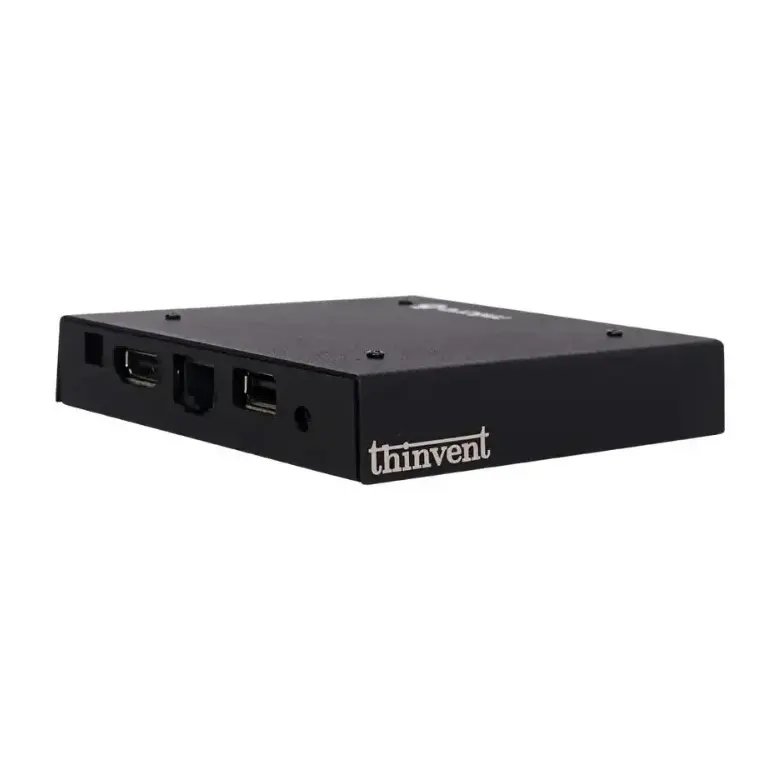
Thinvent Micro Series: Utilizing power-efficient ARM Cortex processors, these devices are ideal for silent, fanless operation as thin clients or digital signage players.
-
Thinvent Treo & IPC Series: Featuring Intel's efficient N100 processor, these mini and industrial PCs provide robust x86 compatibility in a low-power footprint for edge computing and kiosks.
-
Thinvent Aero & Industrial IPC Series: Powered by Intel Core i3, i5, and i7 processors from the 12th and 14th generations, these systems deliver desktop-grade performance for demanding industrial automation, CAD workstations, and multi-tasking office environments. Every Thinvent computer is designed for reliability, with options for fanless cooling and wide operating temperature ranges to ensure stability in challenging conditions.