Desktop PCs For Students: Affordable Performance for Learning and Beyond
Choosing the right desktop PC for a student involves balancing performance, reliability, and budget. The ideal student computer should handle everyday academic tasks—such as research, word processing, spreadsheet work, browsing, and video conferencing—without unnecessary complexity or high cost. Modern mini PCs deliver exactly this, offering a compact footprint that saves valuable desk space in dorm rooms or study areas while providing sufficient power for both online and offline coursework.
Key Specifications for Student Desktops
For most student workloads, a balanced configuration is more important than raw power. An Intel® N100 processor with 4 cores and burst speeds up to 3.4 GHz excels at multitasking between web browsers, office applications, and streaming media. Combined with 16GB of DDR4 RAM, the system can handle multiple open tabs and productivity suites without slowdowns. A 128GB SSD ensures quick boot times and responsive application loading, which is critical for maintaining focus during study sessions.
The following table outlines how these specifications match common student use cases:
| Use Case | Recommended Spec | Benefit |
|---|---|---|
| Research & Browsing | 4+ core processor | Smooth multitasking with many tabs |
| Word Processing & Spreadsheets | 16GB RAM | Handles large documents and complex formulas |
| Video Lectures & Streaming | 128GB+ SSD | Fast loading and ample storage for files |
| Virtual Classrooms | Ethernet connectivity | Stable, low-latency internet connection |
| Programming (beginner) | Intel N100 (4 cores) | Sufficient for lightweight coding environments |
Why a Mini PC is Ideal for Students
The mini PC form factor offers distinct advantages over traditional towers. Its small size (typically less than 1 liter in volume) fits easily on a desk or can be mounted behind a monitor, reducing clutter. These systems consume very little power—often under 25W under load—which translates to lower electricity costs in shared housing or dormitories. Additionally, fanless or low-noise cooling designs ensure silent operation during late-night study sessions. Many models include multiple USB ports and dual display outputs (HDMI + VGA or USB-C), enabling connection to existing monitors or projectors for group work.
Thinvent’s Student-Ready Desktop Solutions
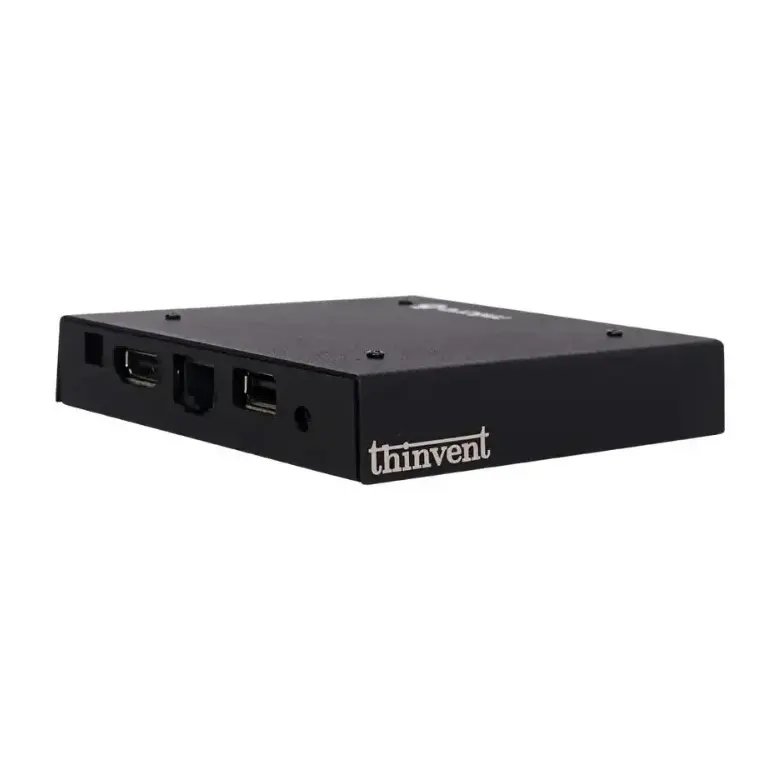
Thinvent’s Aero Mini PC series is purpose-built for students seeking reliable, space-saving desktop performance. Powered by the Intel® N100 processor with 16GB DDR4 RAM and a 128GB SSD, these compact systems deliver snappy responsiveness for all standard academic software. Available with Windows 11 Pro, Ubuntu Linux, or DOS for flexibility, they include essential ports like dual Ethernet for stable campus network connections, HDMI output for external displays, and multiple USB 3.2 ports for peripherals. With optional keyboard and mouse bundles, Thinvent provides a complete, ready-to-use solution that fits any student budget.