Understanding Desktop PC Specifications and Rates
The term "desktop rates" typically refers to the pricing and specifications of desktop computers, which vary based on performance, form factor, and intended use. For business and industrial applications, key factors influencing cost include the processor, memory, storage, operating system, and the computer's physical design. A modern desktop PC for professional use balances processing power, reliability, and energy efficiency to deliver value over its lifecycle.
Key Specifications for Industrial Desktops
When evaluating desktop PCs, core technical details define their capability and suitability. Key specifications include:
-
Processor (CPU): The brain of the computer. Modern options range from efficient Intel N-series processors (e.g., N100) for basic tasks and digital signage to powerful Intel Core i-series chips (i3, i5) for demanding workloads.
-
Memory (RAM): Critical for multitasking. 8GB is standard for office use, while 16GB or 32GB is recommended for data processing, virtualization, or design software.
-
Storage (SSD): Solid-state drives offer fast boot and load times. Capacities from 128GB to 1TB are common, with higher capacities needed for large applications and data sets.
-
Form Factor: Desktops come in traditional towers, compact Mini PCs, and space-saving All-in-One designs. Industrial and embedded environments often favor fanless, rugged Mini PCs for durability in harsh conditions.
-
Operating System: Choices include Windows 11 Pro for business software compatibility, or lightweight Linux distributions like Ubuntu for cost-effective, secure kiosk or server applications.
Common Use Cases and Applications
Different desktop configurations serve distinct purposes:
-
General Office & Productivity: Systems with Intel N-series or Celeron processors, 8GB RAM, and 256GB SSD are cost-effective for word processing, email, and web browsing.
-
Digital Signage & Kiosks: Fanless Mini PCs with low-power processors are ideal for 24/7 operation in public spaces, driving displays reliably without moving parts.
-
Industrial Automation & Control: Rugged, fanless desktops with wide operating temperature ranges and multiple I/O ports are used on factory floors for machine control and data acquisition.
-
Professional Workstations: For engineering, design, or data analysis, systems with Intel Core i5/i7 processors, 16GB+ RAM, and large SSDs provide the necessary performance.
Desktop PC Comparison Guide
| Use Case | Recommended Processor | Recommended RAM | Recommended Storage | Ideal Form Factor |
|---|---|---|---|---|
| Basic Office / Thin Client | Intel N100, Celeron | 4GB - 8GB | 128GB SSD | Mini PC, Thin Client |
| Advanced Office / Point of Sale | Intel i3, i5 (10th-12th Gen) | 8GB - 16GB | 256GB - 512GB SSD | Mini PC, All-in-One |
| Digital Signage / Kiosk | Intel N-series (Fanless) | 8GB | 128GB - 256GB SSD | Fanless Industrial Mini PC |
| Light Industrial / Edge Computing | Intel i5, N-series (Rugged) | 16GB | 512GB SSD | Fanless Industrial PC |
Thinvent Desktop PC Solutions
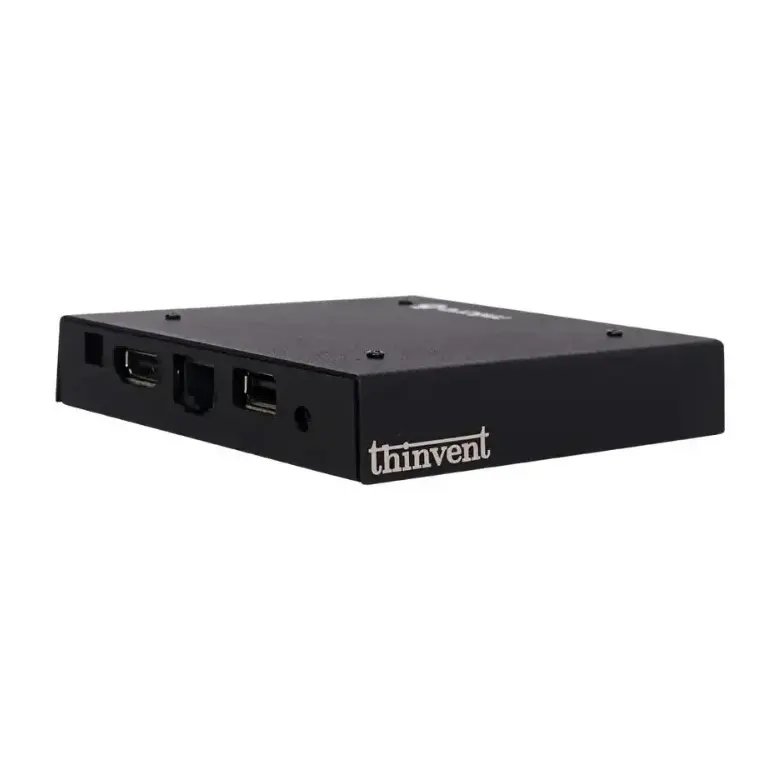
Thinvent offers a comprehensive range of industrial-grade desktop computers designed for reliability across diverse environments. Our product lineup includes compact Aero Mini PCs featuring efficient Intel processors like the N100, perfect for digital signage and office tasks. For more demanding applications, we provide systems with higher-performance Intel Core i-series processors. A key strength of our desktops is the fanless cooling technology used in many models, which ensures silent operation, prevents dust ingress, and enhances longevity—making them ideal for 24/7 industrial use. All Thinvent desktops are built with industrial components, support multiple operating systems, and are engineered for global deployment in commercial and challenging settings.