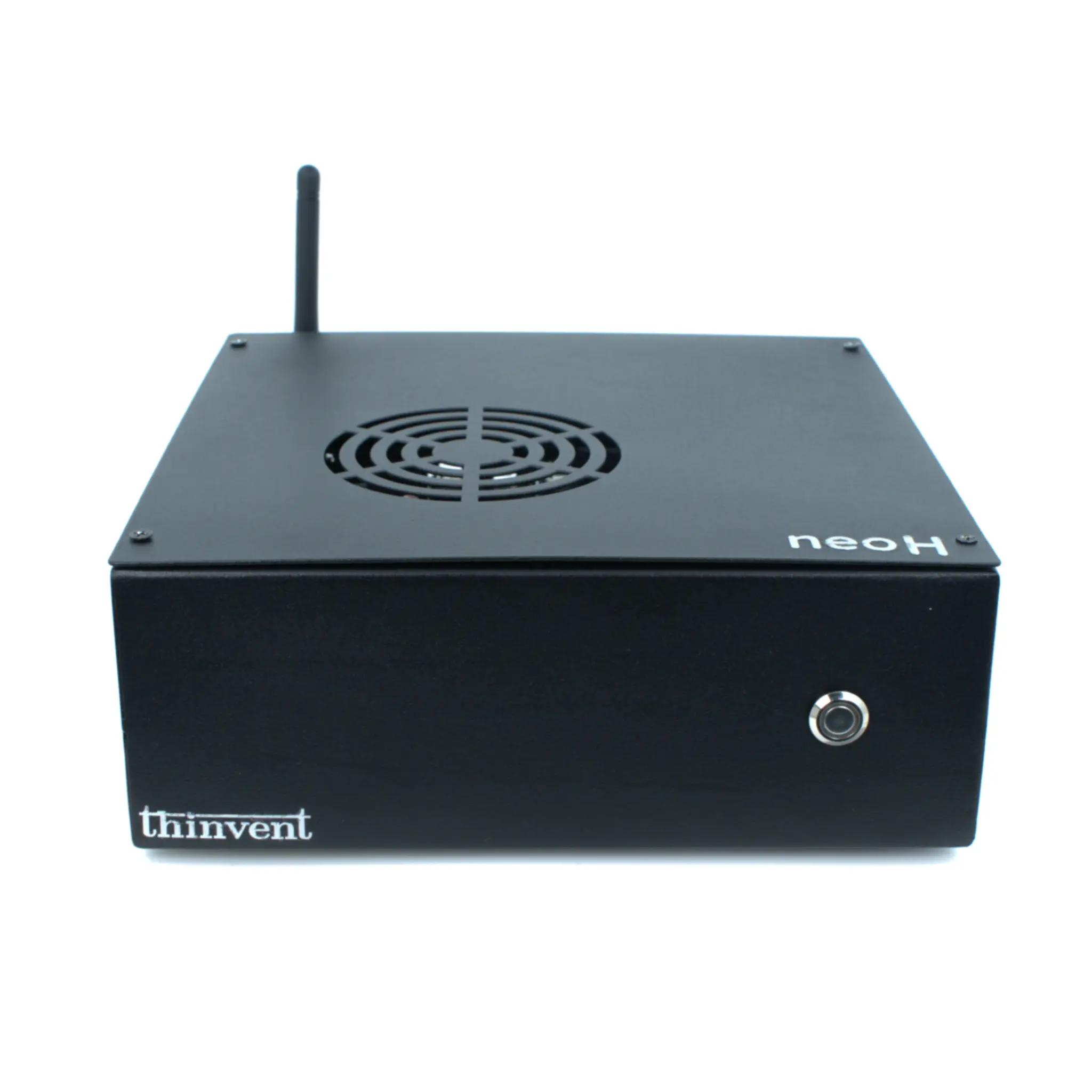
Compact Desktop Computers for Printing Solutions
When setting up a printing station, the desktop computer you choose plays a crucial role in ensuring smooth operation, especially in environments where reliability and space efficiency are paramount. Compact desktop computers—such as mini PCs and thin clients—are ideal for printing solutions because they occupy minimal desk space, consume less power, and can be easily mounted behind monitors or under desks. These systems are designed to handle print queue management, driver installations, and document processing without the bulk of a traditional tower PC.
Key Specifications for Printing Workstations
For most printing applications, you don't need a high-end gaming or workstation processor. Instead, focus on:
-
Processor: An Intel N100 or ARM Cortex-A series (4 cores, up to 3.4 GHz) is sufficient for handling print spooling, driver communications, and basic office tasks. For higher-volume printing environments, an Intel Core i3 (6 cores) provides extra headroom.
-
Memory: 4GB to 8GB of RAM is adequate for managing print queues and running multiple applications simultaneously. For heavy graphics or large-format printing, 16GB ensures smooth multitasking.
-
Storage: 128GB SSD is the minimum for the operating system, printer drivers, and temporary files. Larger SSDs (256GB or 512GB) are recommended if you store print templates or frequently process large files.
-
Connectivity: At least one USB port for the printer and an Ethernet port for network printing are essential. HDMI or DisplayPort for connecting to a monitor is also important.
Use Cases and Applications
Compact desktops for printing solutions are widely used in:
-
Office Environments: Managing multiple networked printers, handling print queues, and running document management software.
-
Retail and Point-of-Sale: Connecting receipt printers, label printers, and barcode printers in retail stores or warehouses.
-
Healthcare: Running patient record printing, prescription labels, and administrative document printing in clinics and hospitals.
-
Education: Supporting classroom printers and administrative printing in schools.
-
Small Business: Powering a single printer or a small print server without dedicating large desk space.
Comparison: Compact Desktop Options for Printing
| Feature | Entry-Level (Thin Client) | Mid-Range (Mini PC) | Performance (Industrial PC) |
|---|---|---|---|
| Processor | ARM Cortex A53/A55 (4 cores) | Intel N100 (4 cores) | Intel Core i3-1215U (6 cores) |
| RAM | 2GB - 4GB | 4GB - 8GB | 8GB - 16GB |
| Storage | 16GB - 64GB eMMC | 128GB SSD | 256GB SSD or larger |
| Best For | Single printer, basic tasks | Multiple printers, office use | High-volume printing, heavy documents |
| Power Consumption | Very low (5-10W) | Low (10-20W) | Moderate (20-40W) |
Thinvent's Products for Printing Solutions
Thinvent offers a range of compact desktop computers perfectly suited for printing solutions. For budget-conscious setups, the Thinvent Micro 5 Wifi Thin Client (ARM Cortex A53, 2GB RAM, 16GB eMMC) provides a low-power, silent printing terminal. For a balance of performance and affordability, the Thinvent Treo Mini PC (Intel N100, 4GB RAM, 128GB SSD) offers fanless operation and reliable handling of print queues. For demanding environments, the Thinvent Aero Mini PC (Intel Core i3-1215U, 8GB RAM, 256GB SSD) delivers the processing power needed for large-format printers or multi-printer networks. All Thinvent compact desktops feature durable construction, multiple USB ports, and Ethernet connectivity, ensuring seamless integration with any printer setup.