What Is an Industrial PC?
An industrial PC is a computer engineered for continuous operation in factories, kiosks, control rooms, and outdoor cabinets — environments where dust, heat, vibration, and 24/7 duty cycles would quickly strain an office desktop. Unlike consumer machines, industrial computers typically use fanless cooling, wide-temperature components, watchdog timers, and industrial I/O such as RS-232/RS-485 serial ports, GPIO, and dual Gigabit Ethernet. They are built to be mounted inside a panel, on a DIN rail, or on a machine frame, and to keep running for years with minimal servicing.
Key Specifications to Evaluate
When comparing industrial PCs, the processor, memory, storage, cooling method, and I/O set matter more than raw clock speed alone. Modern Intel® Core™ and Intel® N-series processors deliver strong performance per watt, letting a sealed, fanless chassis handle workloads that once required a fan-cooled box. Look for DDR4 or DDR5 memory support, industrial-grade SSD storage, a wide DC input range, and protection ratings that match your environment.
| Specification | Typical Options | Why It Matters |
|---|---|---|
| Processor | Intel® N95/N100/N150, Core™ i3/i5 (12th–14th gen) | Balances performance, power draw, and heat output |
| Cores / Threads | 4 to 12 cores | Parallel workloads, virtualization, multi-app kiosks |
| Memory | 4 GB to 64 GB DDR4/DDR5 | Headroom for SCADA, HMI, and database software |
| Storage | 128 GB to 1 TB industrial SSD | Shock resistance and long write endurance |
| Cooling | Fanless (passive) or active | Fanless suits dusty, oily, or washdown areas |
| Serial I/O | DB9 RS-232/RS-485, up to quad ports | Connects PLCs, meters, scales, and legacy equipment |
| Networking | Dual Gigabit Ethernet | Network segmentation and redundancy |
| Operating System | Windows 11 Pro/IoT, Ubuntu Linux, FreeDOS, embedded Linux | Matches your application stack and licensing needs |
Where Industrial PCs Are Used
Industrial computers appear across manufacturing and infrastructure. On a production line they run SCADA and HMI software, log machine data, and bridge legacy serial equipment to modern networks. In retail and hospitality they drive self-service kiosks, digital signage, and point-of-sale terminals. In logistics they power warehouse terminals and fleet telematics. In building automation they act as gateways for HVAC, access control, and energy monitoring. Because these deployments often sit in unattended locations, fanless designs with solid-state storage and watchdog timers are preferred — fewer moving parts means fewer failure points.
Choosing the Right Form Factor
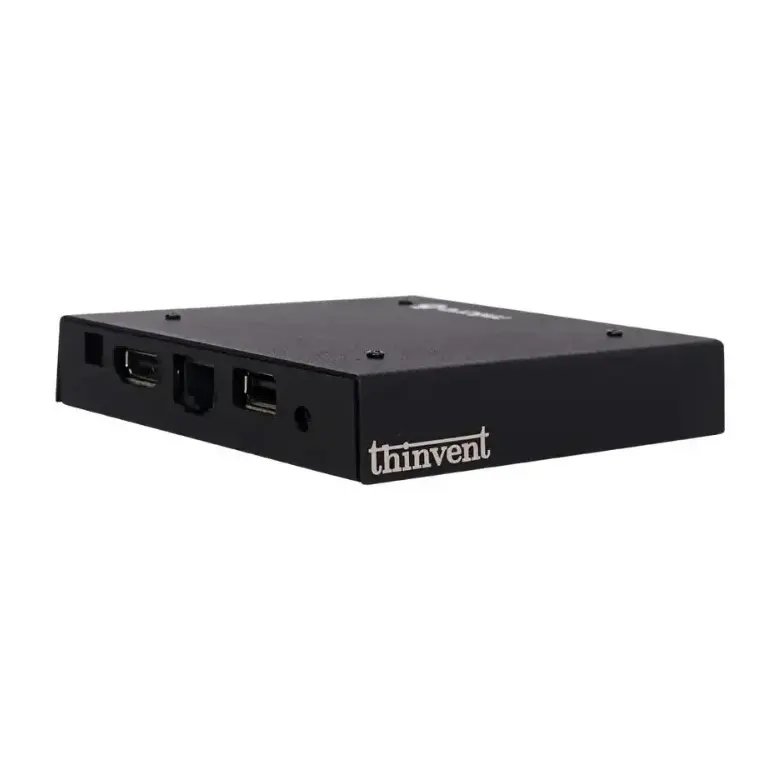
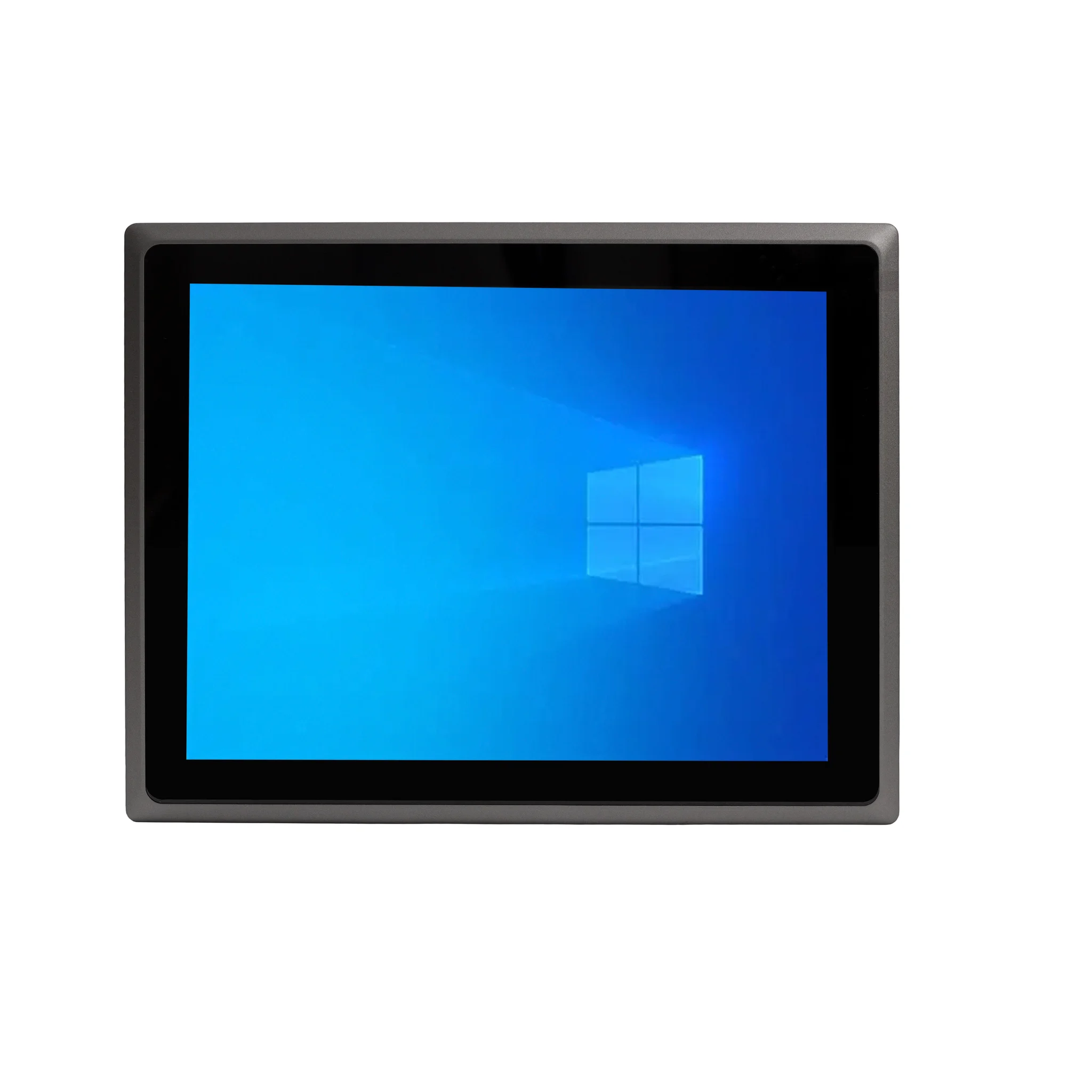
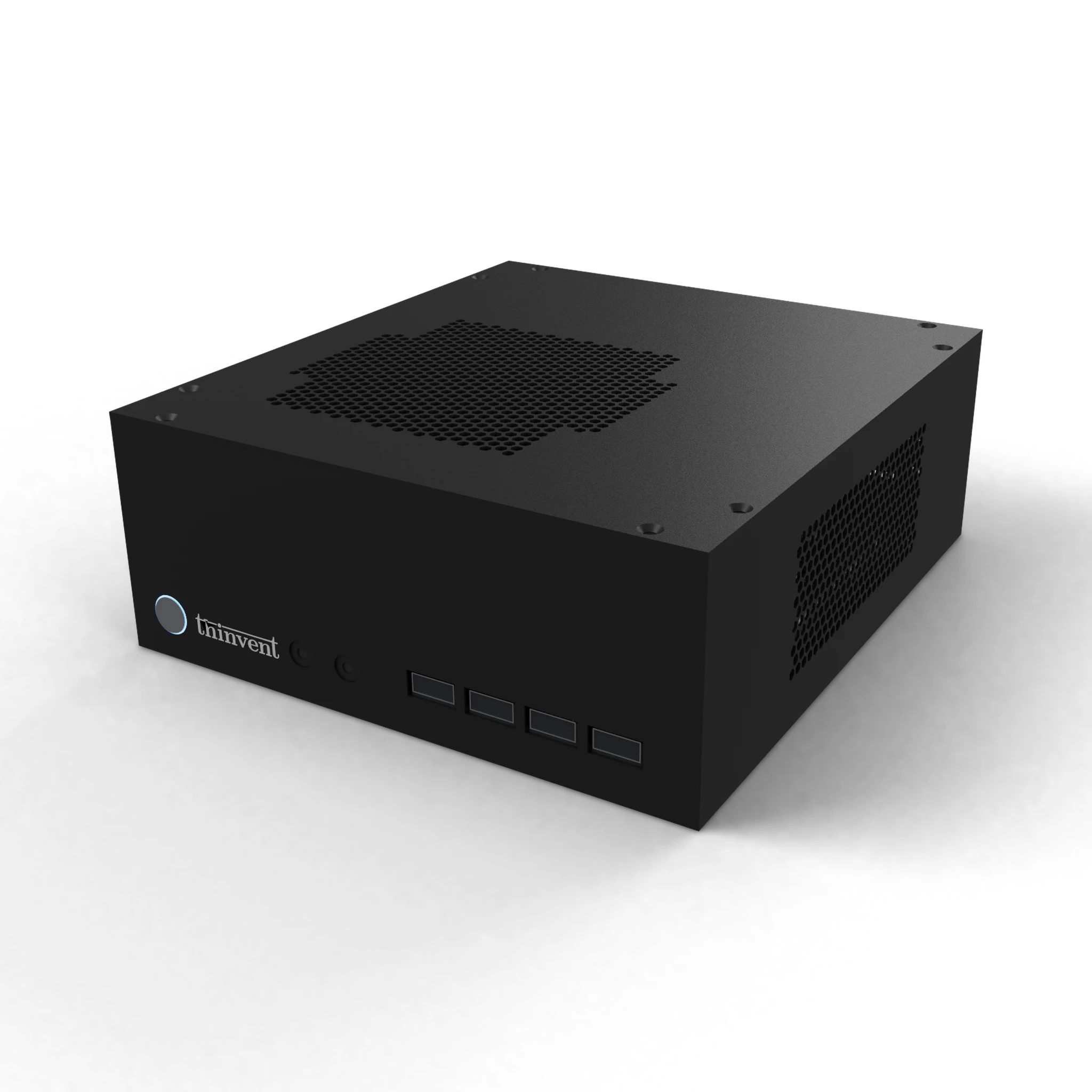
Industrial computing spans several form factors. A mini PC offers a compact, low-power node for edge data collection. A thin client centralises management and reduces on-device maintenance for multi-seat deployments. An all-in-one PC integrates the display and computer for panel-mount HMI and kiosk use. A boxed industrial PC provides the widest I/O expansion and mounting flexibility for control cabinets. Matching the form factor to the physical space and the number of connected devices is the first step in specifying a reliable system.
Thinvent's Industrial Computing Range
Thinvent designs and manufactures fanless industrial computers, mini PCs, thin clients, and all-in-one PCs built for round-the-clock operation. The IPC series pairs Intel® Core™ and Intel® N-series processors with DDR4/DDR5 memory, industrial SSD storage, dual Gigabit Ethernet, and configurable serial I/O including quad DB9 ports. Operating system options cover Windows 11 Pro, Windows 11 IoT, Ubuntu Linux, embedded Linux, and FreeDOS, so the same hardware platform can serve a Windows-based SCADA stack or a locked-down Linux edge gateway. Every unit is engineered for dust, heat, and continuous duty, making Thinvent systems a practical fit for factory floors, kiosks, and remote installations worldwide.