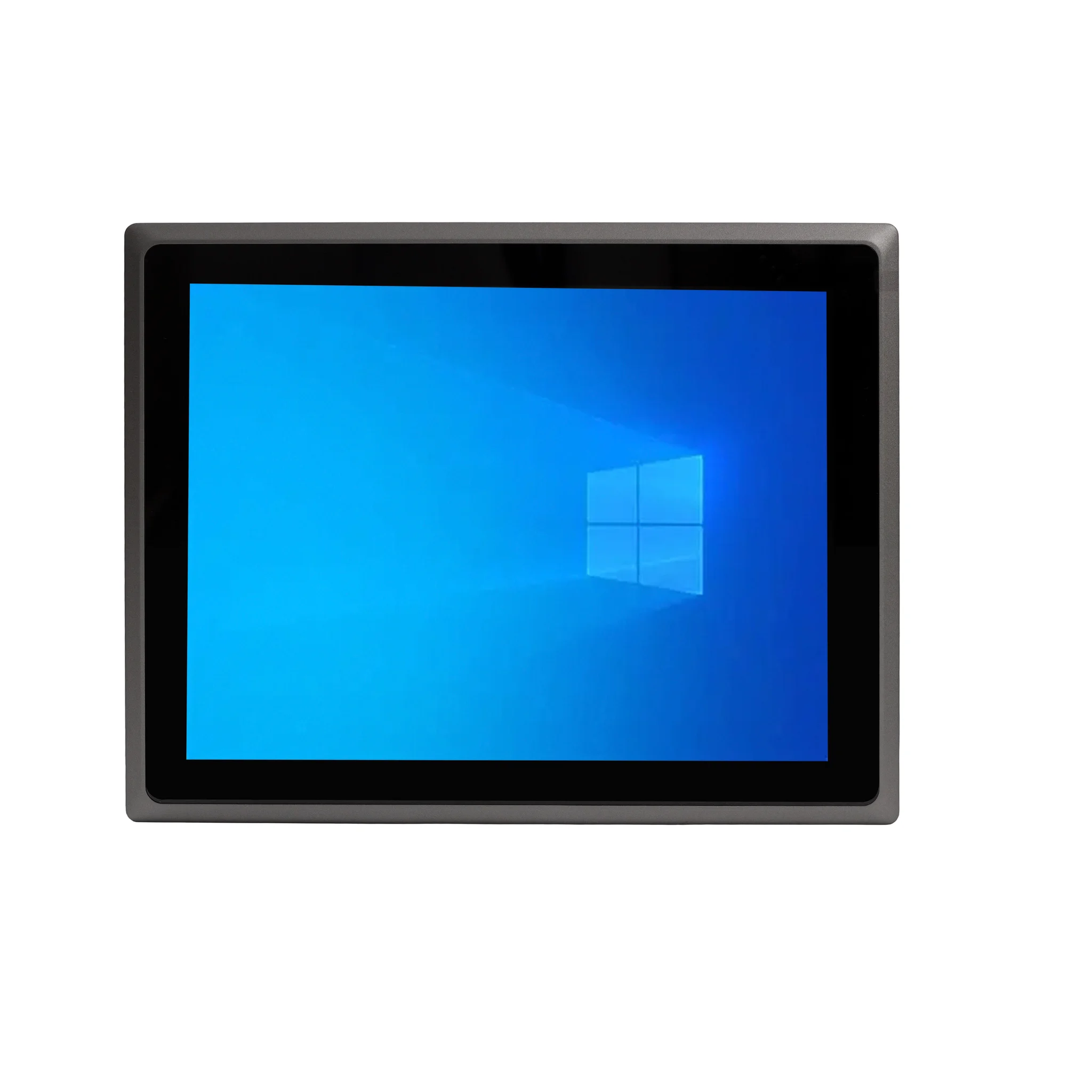
What Is a Fanless Industrial Mini PC?
A fanless industrial mini PC is a compact, vent-free computer that cools its processor through a passive heatsink and the chassis itself, with no spinning fan and no intake vents. Because there are no moving parts in the cooling path, there is nothing to draw in dust, and nothing to wear out. These systems are built to run continuously — on a shop floor, in a kiosk, in a control cabinet, or on a desk — where a conventional desktop would clog with dust within months.
The trade-off is thermal design. Passive cooling works best with power-efficient processors, which is why most fanless mini PCs use Intel's low-power N-series, Celeron, and U-series chips rather than high-wattage desktop parts. A well-designed chassis spreads heat across its entire surface, so the enclosure itself becomes the heatsink.
Key Specifications to Look For
| Specification | Typical Range | Why It Matters |
|---|---|---|
| Processor | Intel N95 / N100 / N150, Celeron, i3/i5 U-series | Determines responsiveness and multitasking headroom |
| Cores | 4 to 12 | More cores help with virtual machines, POS, and multi-app workloads |
| Memory | 4 GB to 64 GB DDR4/DDR5 | 8 GB is a practical floor for Windows 11; 16 GB+ for VMs |
| Storage | 128 GB to 1 TB SSD | SSDs have no moving parts, matching the fanless philosophy |
| Ethernet | Gigabit, often dual-port | Dual NICs enable network separation and edge routing |
| Video outputs | 1–2 × HDMI | Dual displays suit reception desks, dashboards, and billing counters |
| Mounting | VESA, DIN rail, wall bracket | Lets the PC disappear behind a monitor or inside a panel |
Where Fanless Mini PCs Are Used
The most common deployments are point-of-sale terminals, digital signage players, hospital and clinic workstations, library and campus thin-client fleets, factory HMI panels, CCTV and access-control front ends, and edge gateways that sit in unairconditioned rooms. In each case the appeal is the same: a small box that can be tucked away, powered from a modest 12 V adapter, and left running for years without a maintenance visit to clean a fan.
For thin-client and VDI deployments, the local machine only needs to render a session, so a 4-core processor with 8–16 GB of RAM is usually ample. For standalone industrial control or local databases, choose more cores, more RAM, and dual Gigabit Ethernet.
Operating System and Software Choices
These systems are typically offered with Microsoft Windows 11 Pro or Windows 11 IoT, Ubuntu Linux 24.04 LTS, a lightweight embedded Linux image, FreeDOS, or with no operating system at all for customers who image their own. Windows 11 IoT and Pro both support long-term servicing and remote management, which matters when devices are spread across many sites. Linux options give full control over the boot process and are popular for kiosks and gateways.
Thinvent's Fanless Mini PCs, Thin Clients, and All-in-Ones
Thinvent builds fanless computing hardware for exactly these environments. The Aero Mini PC family pairs a 4-core Intel processor with 16 GB DDR4 RAM and a 128 GB SSD in a vent-free chassis, offered with Windows 11 Pro, Windows 11 IoT, DOS, or Thinux Embedded Linux, and with or without a keyboard and mouse set. Alongside the Aero line, Thinvent manufactures industrial PCs, thin clients, and all-in-one systems with 21.5-inch and 23.8-inch displays, dual Gigabit Ethernet options, and VESA-friendly mounting — so the same reliable, dust-tolerant platform can be deployed at a counter, on a wall, or inside a machine enclosure.