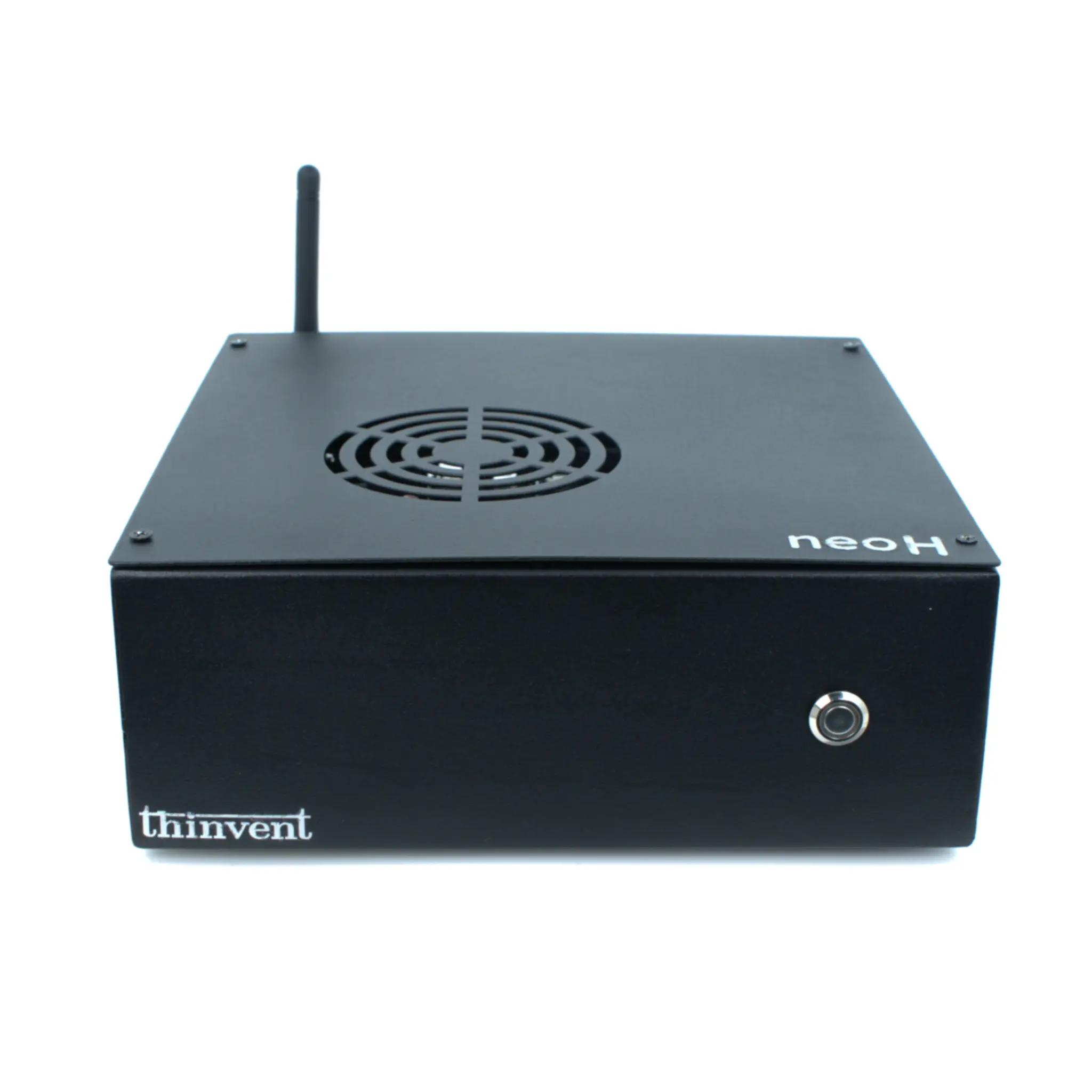
What is a Zero Client for Secure VDI?
A zero client is the most stripped-down endpoint device in desktop virtualization, designed specifically for Virtual Desktop Infrastructure (VDI). Unlike thin clients, zero clients have no operating system, local storage, or moving parts. They are "zero" management endpoints that boot directly into a connection broker to access a centralized virtual desktop hosted on a server. This architecture provides maximum security because no data resides locally on the device, making it immune to local malware or data theft. Zero clients are purpose-built for environments where security, centralized management, and low power consumption are paramount.
Key Specifications and Technical Details
Zero clients are defined by their minimal but specialized hardware. They typically use a dedicated processor (like the Teradici TERA2321 found in EVGA models) designed to handle the PCoIP (PC-over-IP) protocol. This protocol compresses, encrypts, and transmits the desktop experience from the host server to the client in real-time. Key specifications include:
-
Processor: Dedicated PCoIP processor (e.g., TERA2321) with no local general-purpose CPU
-
Memory: Typically 512MB to 1GB of dedicated RAM (used for protocol processing, not local applications)
-
Storage: None (or minimal flash for firmware only)
-
Connectivity: 1-2 Gigabit Ethernet ports, USB 2.0/3.0, DVI/DisplayPort video output
-
Power Consumption: Extremely low, often under 10W
-
Form Factor: Ultra-compact, often smaller than a paperback book
Use Cases and Applications
Zero clients excel in environments where data security and centralized management are critical. Common applications include:
| Use Case | Benefit of Zero Client |
|---|---|
| Healthcare (HIPAA compliance) | No patient data on endpoint; secure access from any workstation |
| Financial Services | Prevents data leakage; centralized compliance controls |
| Government/Military | Highest security clearance; no local attack surface |
| Call Centers | Low cost, low power, easy swap-out if a unit fails |
| Education | Simple deployment; students can't install software or alter settings |
| Remote Work | Secure access from home without local data exposure |
Comparison: Zero Client vs. Thin Client vs. Mini PC
| Feature | Zero Client | Thin Client | Mini PC |
|---|---|---|---|
| Local OS | None (firmware only) | Embedded Linux/Windows | Full OS (Windows/Linux) |
| Local Storage | None | 8-64GB eMMC/SSD | 128GB+ SSD |
| Processing | Protocol processor only | Low-power CPU | Full CPU (N100 to i7) |
| Security | Maximum (no local data) | High | Moderate (local data exists) |
| Management | Zero-touch (auto-connect) | Centralized | Standard PC management |
| Power | 5-10W | 10-25W | 15-65W |
| Cost per seat | Lowest | Low | Moderate |
Thinvent's Zero Client and VDI-Ready Solutions
Thinvent offers a range of ultra-thin endpoints purpose-built for secure VDI environments. Our zero client-class devices feature fanless, low-power designs with dedicated protocol support for seamless connection to VMware Horizon, Citrix, and Microsoft RDS. For customers needing slightly more local capability, Thinvent's ARM-based thin clients (like the Micro 5 and Micro 6 Pro) provide a secure, low-cost alternative with Thinux™ Embedded Linux—a lightweight, hardened OS that can be configured for kiosk-mode VDI access. These devices offer:
-
Fanless, silent operation with no moving parts for maximum reliability
-
Ultra-low power consumption (5-10W) reducing energy costs and heat output
-
Compact form factors that can be mounted behind monitors or under desks
-
Centralized management via cloud or on-premises tools
-
Enterprise-grade security with no local data persistence
For high-performance VDI scenarios requiring local processing for media or 3D applications, Thinvent's Intel-based mini PCs (Treo and Aero series) can be configured as thin clients running Ubuntu Linux or Windows 11 IoT, providing the flexibility of a managed endpoint with the security of centralized desktop delivery.