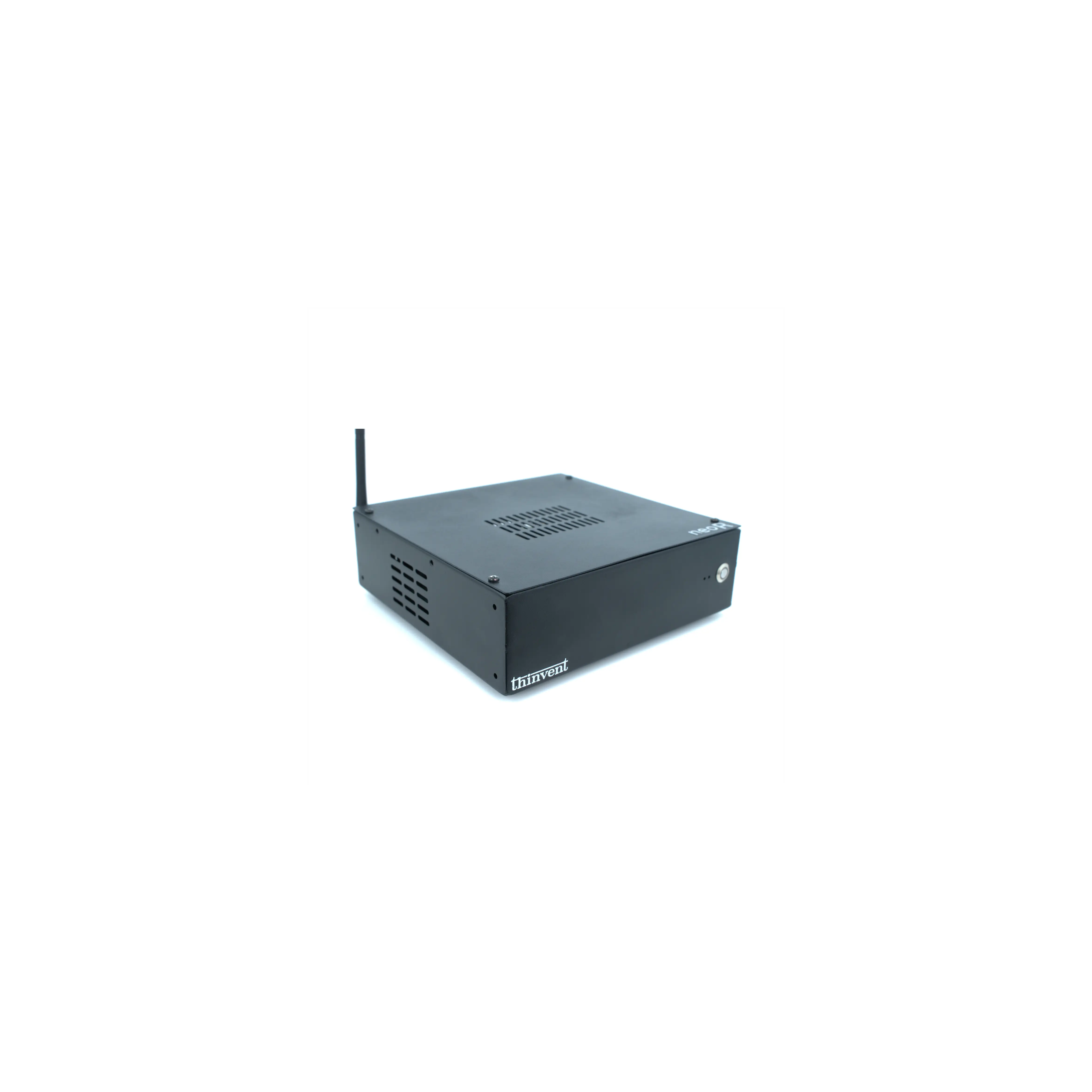
What Are Fanless Mini PCs?
Fanless Mini PCs are compact, solid-state computing systems designed to operate without internal cooling fans. This design eliminates moving parts, making them exceptionally reliable, silent, and resistant to dust and particulate ingress. They are engineered for environments where traditional computers with fans would fail due to contamination, vibration, or noise restrictions. These systems leverage passive cooling solutions, such as advanced heat sinks and chassis designs, to dissipate heat efficiently.
Key Specifications and Technical Details
The core of a modern fanless mini PC is a low-power, high-efficiency processor, such as the Intel® N-series. Key specifications typically include:
-
Processor: Energy-efficient Intel® processors (e.g., N100) with 4 or more cores.
-
Memory: Configurations from 4GB to 16GB of DDR4 RAM for smooth multitasking.
-
Storage: Solid-state drives (SSD) ranging from 128GB to 1TB for fast boot times and data access.
-
Connectivity: Multiple Gigabit Ethernet ports, USB 3.2, HDMI/DisplayPort outputs, and optional Wi-Fi.
-
Power: Low-voltage DC input (e.g., 12V), ideal for PoE (Power over Ethernet) or vehicle/mobile installations.
-
Operating Temperature: Wide operating ranges (often -20°C to 60°C) for harsh industrial settings.
Use Cases and Applications
The rugged and silent nature of fanless mini PCs makes them ideal for embedded and edge computing applications:
-
Digital Signage & Kiosks: Silent operation for public spaces, retail, and hospitality.
-
Industrial Automation: Reliable control units for manufacturing floors, resistant to dust and vibration.
-
Thin Clients & VDI: Centralized computing endpoints for offices, call centers, and healthcare.
-
IoT Gateways: Data aggregation and processing at the network edge in smart city and agricultural projects.
-
In-Vehicle Computing: Power-efficient systems for fleet management, public transportation, and mobile retail.
Comparison: Fanless vs. Traditional Mini PCs
| Feature | Fanless Mini PC | Traditional Mini PC (with Fan) |
|---|---|---|
| Cooling | Passive (Heat Sink) | Active (Fan) |
| Noise | Silent | Audible fan noise |
| Dust Resistance | High (Sealed Design) | Low (Air Intakes) |
| Reliability | Higher (No moving parts) | Lower (Fan is a point of failure) |
| Typical Use Case | Industrial, Embedded, Silent Zones | Office, Home, General Computing |
| Power Consumption | Generally Lower | Generally Higher |
Thinvent Fanless Mini PC Solutions
Thinvent offers a robust range of fanless industrial mini PCs designed for demanding environments. Our Aero series, for example, features the efficient Intel® N100 processor in a compact, rugged chassis. These systems come pre-configured with options for 16GB RAM and 128GB SSD, supporting a variety of operating systems including Windows 11 IoT, Windows 11 Pro, and Linux distributions like Ubuntu. Built for 24/7 operation, Thinvent fanless PCs provide the durability, silent performance, and connectivity required for industrial automation, digital signage, and edge computing deployments worldwide.