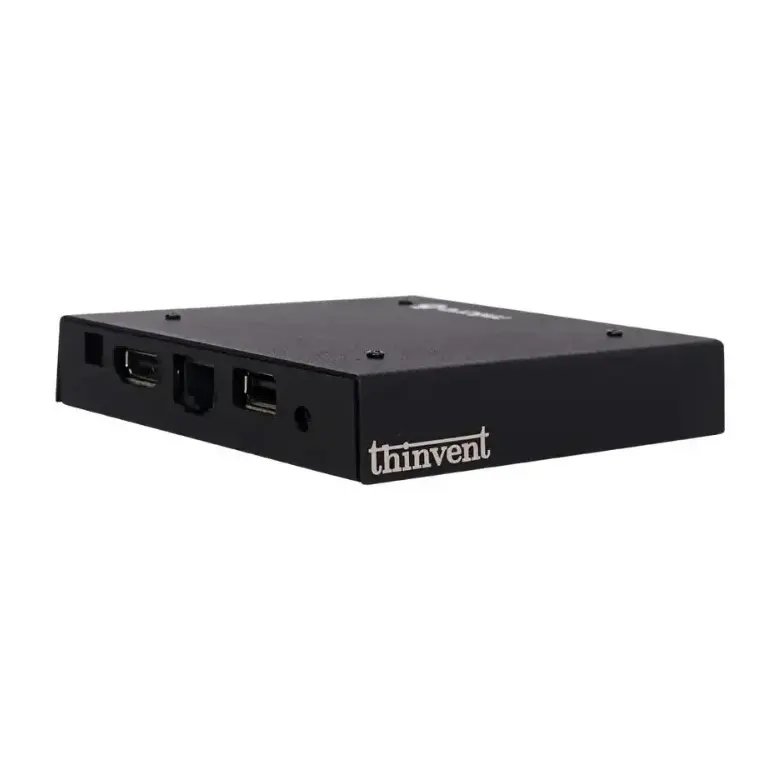
What Are Factor PCs?
The term "Factor PC" typically refers to a computer defined by its Form Factor—the physical size, shape, and configuration of the system. In industrial computing, the form factor is a critical specification that determines where and how a PC can be deployed, impacting its suitability for space-constrained, embedded, or specialized applications. Common industrial form factors include Mini PCs, Thin Clients, All-in-Ones, and ruggedized Industrial PCs, each offering distinct advantages in size, power consumption, and connectivity.
Key Specifications and Technical Details
Industrial Factor PCs are engineered for reliability and longevity in demanding environments. Key specifications to consider include:
-
Processor: Modern options range from efficient Intel N-series processors (e.g., N100) for low-power tasks to higher-performance Intel Core i3/i5/i7 CPUs for more compute-intensive applications.
-
Memory & Storage: Configurations typically include 4GB to 64GB of RAM and solid-state storage from 128GB to 1TB or more, ensuring smooth operation and ample data handling.
-
Cooling: Many models feature fanless cooling systems, which eliminate moving parts to prevent dust ingress and reduce failure points, making them ideal for 24/7 operation in harsh conditions.
-
Connectivity: Robust I/O is standard, with multiple Gigabit Ethernet ports, USB 3.2/Type-C, HDMI/DisplayPort outputs, and often expansion slots for additional serial, digital I/O, or wireless modules.
Applications and Use Cases
Due to their compact, robust, and versatile designs, Factor PCs are deployed across numerous industries:
-
Digital Signage & Kiosks: Powering interactive displays in retail, hospitality, and public spaces.
-
Industrial Automation: Serving as controllers for PLCs, HMIs, and machine vision systems on the factory floor.
-
Thin Client & VDI: Providing secure, centralized desktop access in corporate and healthcare environments.
-
Transportation & Logistics: Embedded in fleet management, ticketing systems, and warehouse automation.
-
Edge Computing: Processing data locally in IoT networks for smart cities, agriculture, and energy management.
Comparison of Common Industrial Form Factors
| Form Factor | Typical Size | Key Advantages | Ideal For |
|---|---|---|---|
| Mini PC | Ultra-compact (e.g., 150 x 150 x 50mm) | Space-saving, low power, fanless options, easy mounting. | Embedded systems, digital signage, space-constrained offices. |
| Thin Client | Small, often fanless | High security, centralized management, low TCO, energy efficient. | Virtual Desktop Infrastructure (VDI), call centers, secure workstations. |
| All-in-One | Integrated display & computer | Clean installation, reduced cabling, touchscreen options. | Point-of-Sale, interactive kiosks, control room operator panels. |
| Industrial PC | Ruggedized chassis, various sizes | Extreme durability, wide temperature range, extensive I/O expansion. | Factory automation, outdoor installations, harsh environments. |
Thinvent's Range of Factor PCs
Thinvent specializes in manufacturing reliable, high-performance industrial computers across multiple form factors. Our product lines include robust Mini PCs like the Aero series, featuring efficient Intel processors and fanless designs for silent, maintenance-free operation. We also offer versatile Thin Clients for secure cloud computing and durable All-in-One panels for interactive applications. Each system is built with industrial-grade components, tested for stability, and can be configured with a range of operating systems, including Windows 11, Ubuntu Linux, and our own Thinux™ Embedded Linux, to meet the precise demands of global industrial and commercial deployments.