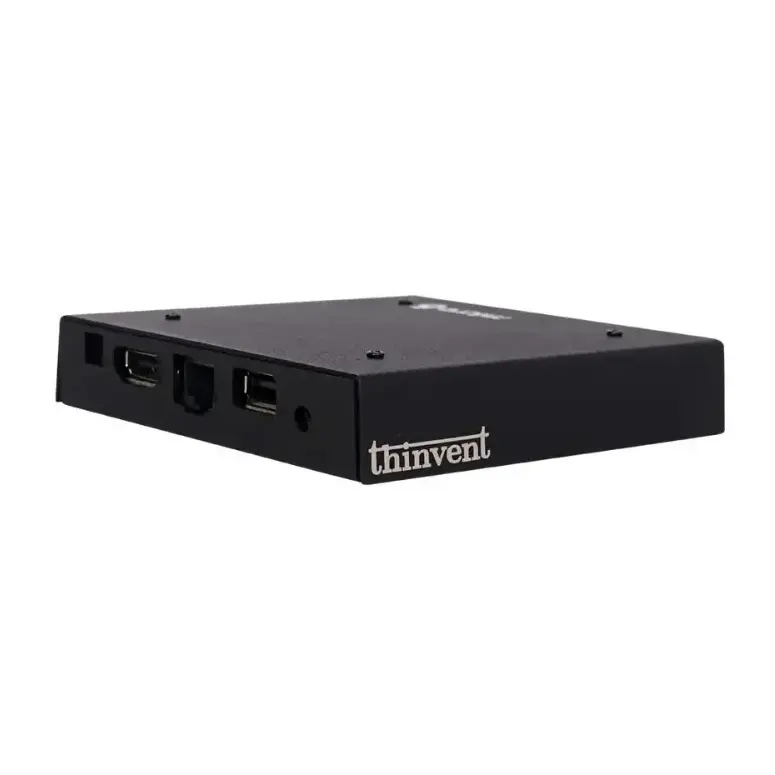
What is a Fanless Mini PC?
A fanless mini PC is a compact, solid-state computer designed without moving parts like fans or spinning hard drives. It uses passive cooling techniques, such as heat sinks and heat pipes integrated into its chassis, to dissipate heat generated by the processor and other components. This design is fundamental for environments where reliability, silence, and resistance to dust and particulate matter are critical. These systems are built for 24/7 operation and are ideal for embedded applications where maintenance access is difficult.
Key Specifications and Technical Advantages
The core advantage of a fanless design is its enhanced reliability. By eliminating the fan—a common point of failure—these PCs offer a significantly longer Mean Time Between Failures (MTBF). They are typically powered by efficient, low-TDP (Thermal Design Power) processors from Intel's N-series or Celeron series, which generate minimal heat. Common specifications include:
-
Processor: Intel processors like the N100, N95, or J4125 (4 cores, up to 3.4 GHz).
-
Memory: 8GB to 16GB of soldered or SODIMM DDR4 RAM for stability.
-
Storage: 128GB to 512GB M.2 SATA or NVMe SSDs for fast, shock-resistant data access.
-
Connectivity: Multiple Gigabit Ethernet ports, USB 3.2, HDMI/DisplayPort outputs, and optional Wi-Fi/Bluetooth.
-
Power: Low-voltage DC input (e.g., 12V), making them suitable for vehicular or industrial power systems.
Use Cases and Applications
Fanless mini PCs excel in harsh or sensitive environments where traditional computers would fail. Their robust, sealed design makes them perfect for:
-
Industrial Automation: As PLCs, HMIs, or gateways on the factory floor, resistant to dust, vibrations, and temperature fluctuations.
-
Digital Signage & Kiosks: Reliable operation in retail, hospitality, and public transportation systems, often in enclosed spaces.
-
Thin Clients & VDI: Silent, low-power endpoints for office and call center environments.
-
Edge Computing & IoT Gateways: Deploying AI inference, data acquisition, and network routing in field locations.
-
Medical & Laboratory Equipment: Where silent operation and clean air flow are mandatory.
Comparison: Fanless vs. Traditional Mini PCs
| Feature | Fanless Mini PC | Traditional Mini PC (with Fan) |
|---|---|---|
| Cooling | Passive (Heat Sink) | Active (Fan) |
| Noise | Silent | Audible fan noise |
| Dust Resistance | Excellent (Sealed Chassis) | Poor (Requires air intake) |
| Reliability (MTBF) | Very High | Standard |
| Typical Use Case | Harsh/Embedded Environments | Office/Home/General Computing |
| Processor TDP | Low (e.g., <15W) | Can be Low to High |
Thinvent Fanless Computing Solutions
Thinvent specializes in robust, fanless industrial computers designed for mission-critical applications. Our product range includes compact Aero Mini PCs powered by efficient Intel processors like the N100, offering a balance of performance and ultra-low power consumption in a completely silent package. These systems are pre-configured with various operating system options, including Windows 11 IoT, Windows 11 Pro, and Linux distributions, to provide a turnkey solution for digital signage, industrial control, and edge computing. Built for durability and 24/7 operation, Thinvent fanless PCs are engineered to deliver unwavering performance in the most demanding environments worldwide.