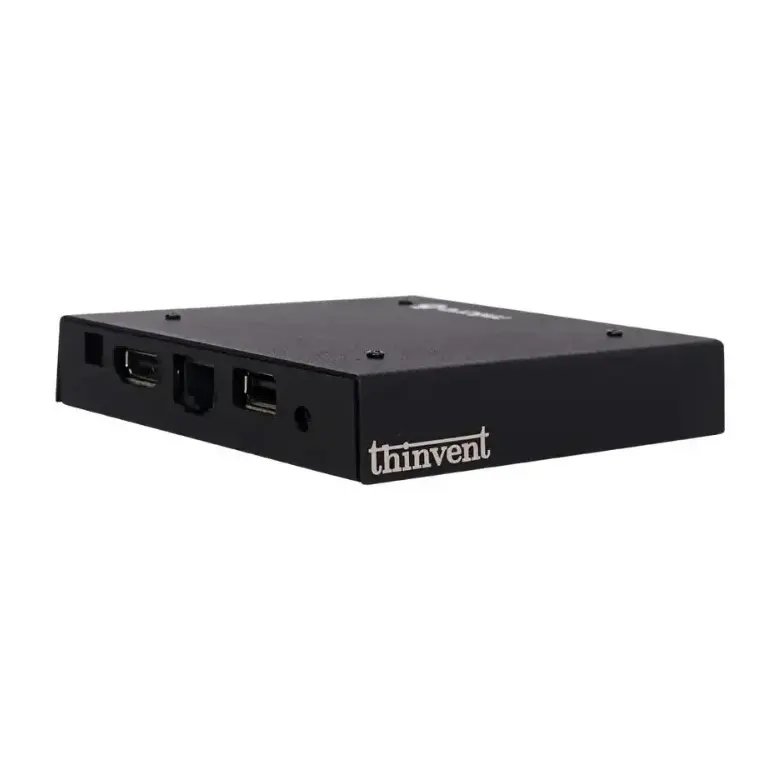
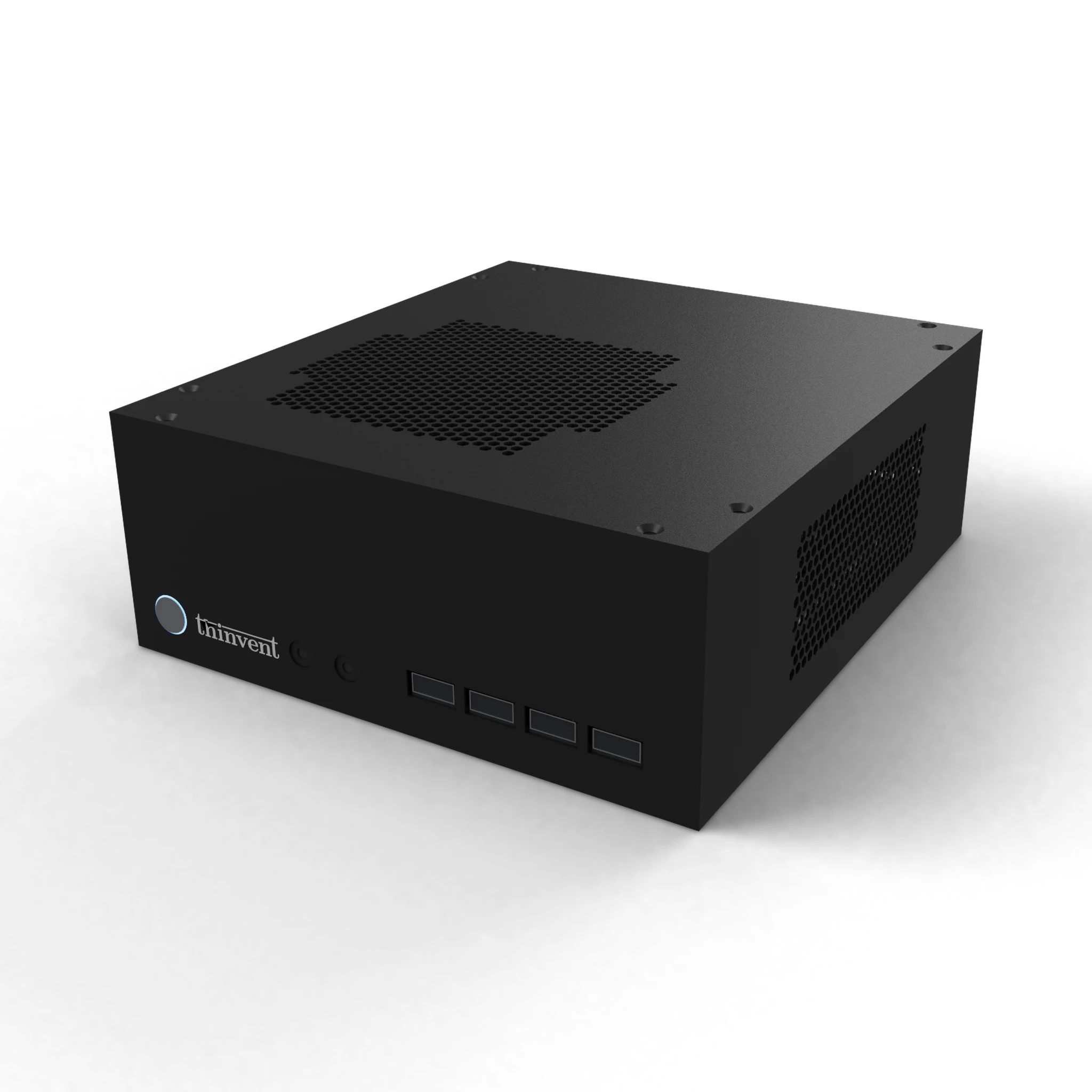
The Fujitsu ESPRIMO line is a range of compact business desktops, including the C720, D958, D556, P7013, D738 and D9010 models. The Thinvent Treo Mini PC is the closest alternative for buyers who want a small form factor PC with Intel Core or AMD Ryzen processors, up to 64 GB of RAM and up to 2 TB of SSD storage.
Fujitsu PC vs Thinvent Treo Mini PC
| Fujitsu ESPRIMO (D958 and related models) | Thinvent Treo Mini PC, Intel Core i3 to i7 (12th to 14th Gen) | Thinvent Treo Mini PC, AMD Ryzen 5 7000 Series | |
|---|---|---|---|
| Processor | Intel Core (9th Gen supported on D958); other models vary | Intel Core i3-1215U to i7-1255U, Core i5-1335U, Core Ultra 5 125U | AMD Ryzen 5 7430U, Ryzen 5 7530U |
| Cores/Threads | Not stated | Up to 12 cores (Intel Core Ultra 5 125U, Core i5-1240P) | 6 cores |
| RAM | Up to 64 GB UDIMM DDR4-2666 (D958) | 4 GB to 64 GB (8 GB to 64 GB on Core Ultra 5) | 4 GB to 64 GB |
| Storage | Five SATA ports and one M.2 socket (D958) | 128 GB to 2 TB SSD | 128 GB to 2 TB SSD |
| Form Factor | Small form factor desktop (ESPRIMO line) | Mini PC | Mini PC |
| Wireless | Wi-Fi and Bluetooth combo slot (D958) | Dual band Wi-Fi or no Wi-Fi, depending on configuration | Dual band Wi-Fi or no Wi-Fi, depending on configuration |
| Power Supply | 280 W PSU (D958) | 12V adapter (7A, 5A or 10A depending on configuration) | 12V adapter (7A, 5A or 10A depending on configuration) |
| LAN | Not stated | Dual LAN on selected configurations | Not stated |
Key differences
-
Thinvent Treo Mini PCs offer a RAM range of 4 GB to 64 GB across most configurations, and 64 GB is also the maximum listed for the Fujitsu D958.
-
Thinvent Treo Mini PCs are available with 12th, 13th and 14th Gen Intel Core processors and with AMD Ryzen 5 7000 Series processors, giving a choice of processor maker.
-
Thinvent Treo Mini PCs support up to 2 TB of SSD storage, while the D958's storage is described as five SATA ports plus one M.2 socket.
-
Some Thinvent Treo configurations include dual LAN, which is useful for network-heavy tasks.
-
The Fujitsu D958 is a desktop with a 280 W power supply and room for PCIe upgrades, while the Thinvent Treo is a compact mini PC with a smaller external adapter.
Which one should you choose?
Choose a Fujitsu ESPRIMO if you need a desktop with a larger power supply, several SATA drive bays and an established business platform with Intel vPro options. Choose the Thinvent Treo Mini PC if you need a compact system with a choice of Intel Core or AMD Ryzen processors, up to 2 TB of SSD storage and optional dual LAN.