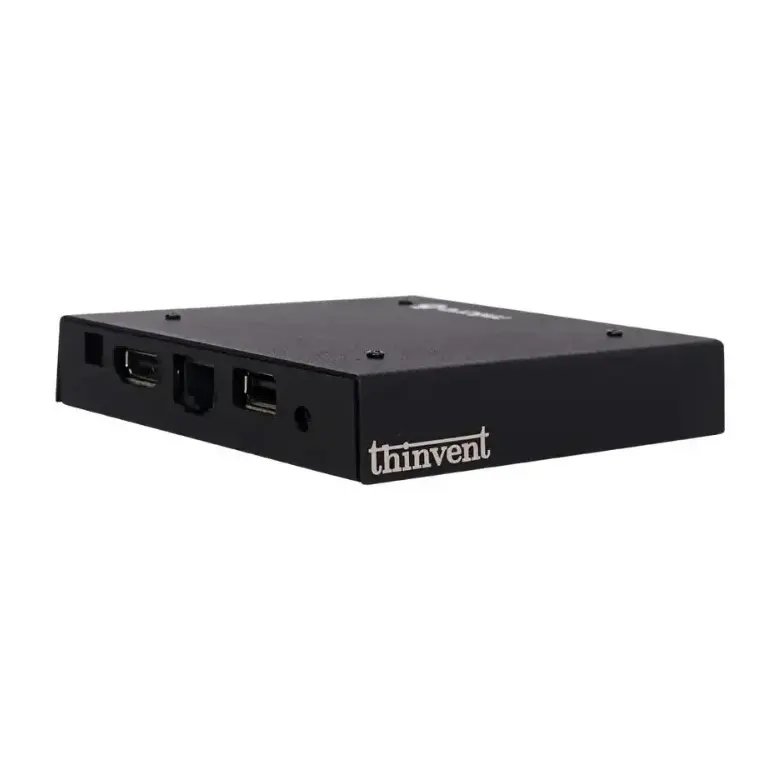
A future proof desktop is a computer whose hardware, connectivity and software support remain viable for years of service without forced replacement. In practice this means a modern multi-core processor, expandable memory and storage, long-life industrial components, a current operating system with a long support window, and enough I/O to absorb new peripherals and sensors as needs grow. Buying for longevity costs little more than buying for today, and it avoids the disruption of re-qualifying a new platform every few years.
The most important ingredient is the processor platform. Recent-generation Intel® Core™ and Intel® N-series chips bring more cores, higher efficiency and newer instruction sets than older silicon, which keeps them useful for longer as software requirements creep upward. A 12th generation Intel® Core™ i3-1215U, for example, offers 6 cores (2 performance + 4 efficient), frequencies up to 4.4 GHz and 10 MB of cache — a configuration that handles office productivity, browser-heavy workloads, point-of-sale, digital signage and light industrial control comfortably. Newer generations such as 13th and 14th gen, and efficient N-series parts like the N100 and N150, extend that runway further.
Memory and storage headroom matter just as much. A system with 16 GB of DDR4 RAM and a 1 TB SSD has room for larger datasets, virtual machines, local databases and years of log files, and can often be upgraded further. Equally important is the operating system: Windows 11 Pro, Windows 11 IoT and long-term Linux distributions such as Ubuntu 24.04 LTS all receive security updates for years, so the software layer stays supported even as the hardware ages.
| Longevity Factor | What to Look For | Why It Matters |
|---|---|---|
| Processor | 12th–14th gen Intel® Core™ or N-series | Newer instruction sets and more cores stay relevant longer |
| Memory | 16 GB DDR4 or more, upgradeable | Absorbs heavier applications and multitasking |
| Storage | 512 GB–1 TB SSD | Room for data growth and local services |
| Operating System | Windows 11 Pro/IoT, Ubuntu 24.04 LTS | Multi-year security and feature updates |
| Build & Cooling | Fanless industrial chassis, wide-temperature components | Fewer moving parts, longer service life, dust tolerance |
| Connectivity | Dual Gigabit Ethernet, multiple HDMI, USB 3.2 Gen 2, USB-C | Supports new peripherals and network changes |
Use cases for a future proof desktop span both office and industrial settings: engineering workstations running CAD viewers, factory-floor terminals driving HMI and SCADA software, kiosks and digital signage that must run unattended for years, edge gateways collecting sensor data, and thin client fleets that will be re-imaged and repurposed over time. In each case, a fanless industrial design with solid-state storage and a long-support operating system reduces maintenance visits and extends the replacement cycle.
Thinvent's Future Proof Desktop Range
Thinvent builds fanless industrial computers, mini PCs, thin clients and all-in-one PCs designed around exactly these principles. Configurations pair 12th, 13th and 14th generation Intel® Core™ processors — including the i3-1215U, i5 and efficient N-series options — with up to 16 GB or 32 GB of DDR4 memory and 1 TB SSDs, running Windows 11 Pro, Windows 11 IoT, Ubuntu Linux 24.04 LTS, Thinux™ Embedded Linux or DOS. Dual Gigabit Ethernet, multiple HDMI outputs, USB 3.2 Gen 2 and USB-C ports, and optional quad DB9 serial interfaces give the headroom to add devices and networks later. With no fans to wear out and industrial-grade components throughout, a Thinvent system is a practical, long-service foundation for a desktop that stays useful for years.