What Is a GeekPC?
"GeekPC" is an informal, colloquial term that shoppers use for compact, high-performance mini PCs built for enthusiasts, hobbyists and power users — the kind of small-form-factor machine that delivers desktop-class computing in a chassis you can hold in one hand. The phrase is often used loosely alongside brand names such as GEEKOM, a company that specialises in the production and sale of mini PCs and launched its first flagship model, the Mini IT8, in November 2021. In other words, a "geek PC" is not a single standardised product category — it describes a class of compact computers aimed at people who want serious performance, quiet operation and a small footprint.
What Defines This Class of Computer
Enthusiast-grade mini PCs typically share a common set of characteristics. They use low-power mobile or embedded processors from Intel or AMD, paired with soldered or SO-DIMM memory and M.2 solid-state storage, all packed into a fanless or near-silent chassis. Because there is no room for large expansion cards, connectivity is concentrated on the rear and front panels: multiple HDMI or DisplayPort outputs, Gigabit Ethernet, several USB 3.2 Gen 2 ports and often a USB-C port. The trade-off is deliberate — you give up internal expansion in exchange for a machine that draws very little power, runs cool, mounts behind a display, and keeps running for years with almost no maintenance.
| Attribute | Typical Enthusiast Mini PC | Traditional Tower Desktop |
|---|---|---|
| Footprint | 0.5–1.5 litres, VESA-mountable | 20–40 litres, floor or desk |
| Cooling | Fanless or single low-noise fan | Multiple case and CPU fans |
| Power draw | 12–65 W | 250–600 W |
| Expansion | M.2 storage, SO-DIMM memory | Full PCIe slots, 3.5" bays |
| Best for | Kiosks, digital signage, edge compute | Gaming rigs, heavy GPU work |
Where These Machines Are Used
The compact, quiet, low-power profile of this class makes it a natural fit for environments where a full tower is impractical. Common deployments include retail point-of-sale terminals, interactive kiosks, digital signage players, laboratory and test-bench instrumentation, factory-floor data collection, thin-client virtual desktop endpoints, and home theatre or media-server duties. In industrial settings the same formula is extended further: wide-temperature components, watchdog timers, legacy serial ports such as DB9 RS-232, and long-lifecycle supply commitments so that a machine purchased today can still be reordered in five years.
Choosing the Right Configuration
When comparing options in this category, work backwards from the workload rather than from the headline clock speed. Office, kiosk and signage workloads are comfortably served by 4–6 core processors with 8–16 GB of memory and a 256–512 GB SSD. Virtual desktop endpoints benefit from dual Gigabit Ethernet and a modest 4–8 GB of memory. Edge analytics, multi-camera video and light CAD work call for 6–10 cores, 16–32 GB and 512 GB–1 TB of NVMe storage. Operating system choice matters too: Windows 11 Pro for manageability, Windows 11 IoT for fixed-function appliances, Ubuntu or embedded Linux for headless deployments, or no OS at all when you supply your own image.
Thinvent's Products Featuring This Technology
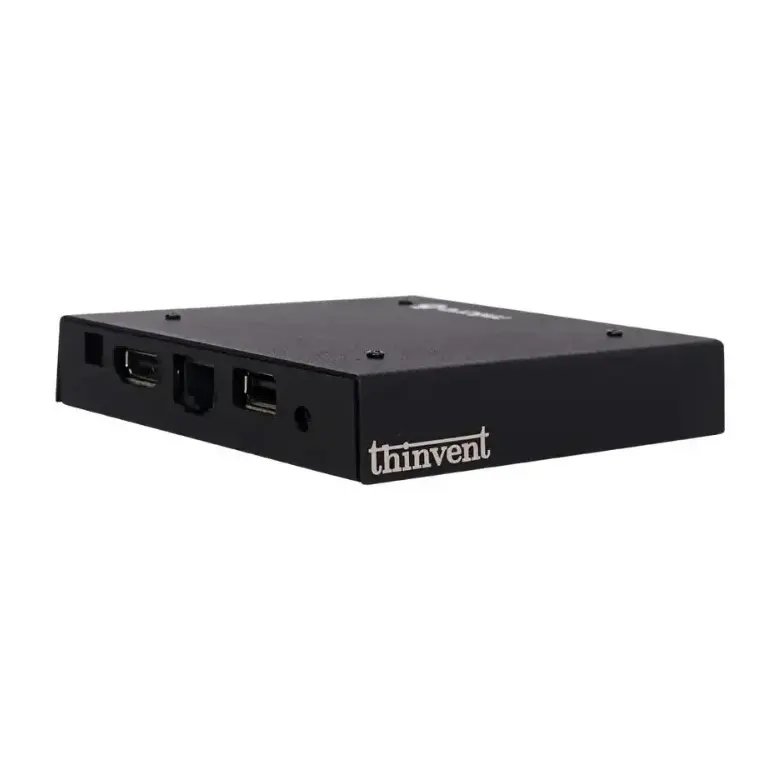
Thinvent builds exactly this class of machine, engineered for reliability rather than novelty. The Thinvent IPC3 industrial PC pairs an Intel Core i3-1215U processor (6 cores, up to 4.4 GHz, 10 MB cache) with 16 GB DDR4 memory and a 1 TB SSD in a compact, rugged enclosure that handles dust and heat without complaint. It is available with Windows 11 Pro, Windows 11 IoT Value, DOS or Thinux embedded Linux, and with options such as quad DB9 serial ports for legacy industrial equipment. Alongside the IPC3, Thinvent's range spans mini PCs, thin clients, all-in-one PCs and industrial computers — all sharing the same design philosophy of quiet, dependable, long-life computing.