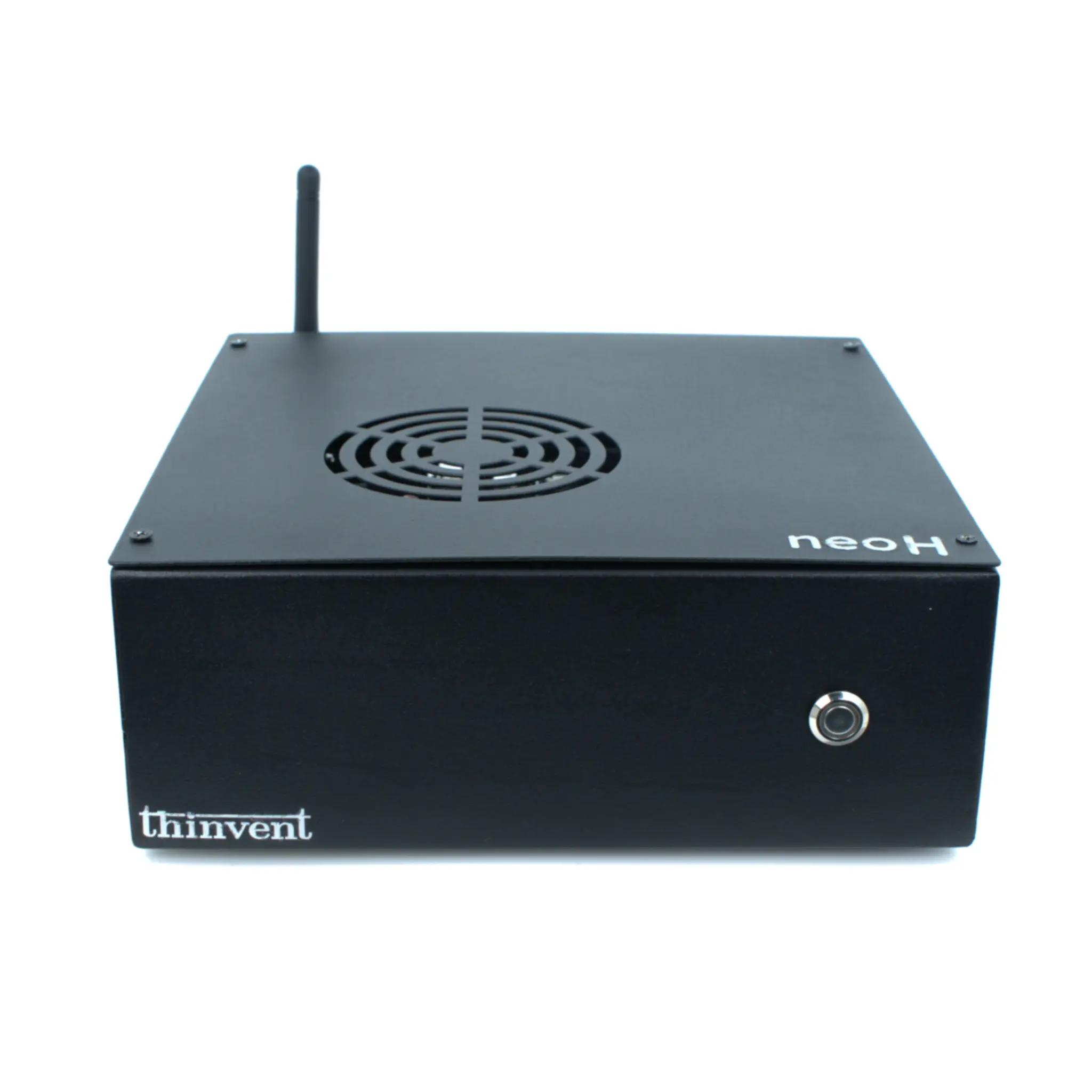
A home server is a dedicated computer that provides data, media, or application services to other devices on a home network. For a reliable and efficient setup, modern compact industrial PCs are an ideal choice, offering low power consumption, silent fanless operation, and robust 24/7 reliability in a small form factor.
Key Specifications for a Home Server
The core requirements for a home server include a capable low-power processor, sufficient RAM for multitasking, and flexible storage options. Modern Intel processors like the N-series (e.g., N100) are excellent, offering 4 efficient cores, integrated graphics, and a thermal design power (TDP) as low as 6W. For memory, 8GB to 16GB of DDR4 RAM is typically sufficient for services like file sharing, media streaming, and home automation. Storage is critical; look for systems with an M.2 SSD for the operating system and applications, plus support for additional 2.5" SATA drives or external storage for data redundancy. Essential connectivity includes Gigabit Ethernet for fast network transfers and multiple USB ports for peripherals and backup drives.
Common Home Server Applications
A well-configured home server can handle multiple roles simultaneously:
-
Media Server: Stream movies, music, and photos to TVs, phones, and tablets using software like Plex, Jellyfin, or Emby.
-
Network-Attached Storage (NAS): Create a centralized, always-available file repository for backups, document sharing, and data synchronization across all household devices.
-
Home Automation Hub: Host platforms like Home Assistant or OpenHAB to control smart lights, thermostats, and security cameras from a single, local interface.
-
Personal Cloud & Backup: Run Nextcloud or similar software for private cloud storage, calendar, and contacts, replacing reliance on commercial services.
-
Development & Learning Environment: Host web servers, databases, or game servers in a controlled, low-cost environment.
Choosing the Right Hardware
The best hardware depends on your intended workload. For light to moderate use (basic file sharing, a single media stream), an efficient 4-core processor like the Intel N100 with 8GB RAM is perfect. For more demanding tasks (multiple 4K transcodes, running several virtual machines, or hosting a large database), consider a more powerful processor like an Intel Core i3 or i5 with more cores and 16GB+ of RAM. The table below provides a quick comparison:
| Use Case | Recommended Processor | Recommended RAM | Storage Priority |
|---|---|---|---|
| Light NAS / Basic Services | Intel N100 / N95 | 8 GB | SSD for OS, HDD for data |
| Media Streaming (1-2 streams) | Intel N100 / N150 | 8-16 GB | Fast SSD for OS & metadata |
| Heavy Multi-tasking / VMs | Intel Core i3 / i5 (10th Gen+) | 16-32 GB | NVMe SSD for performance |
Thinvent Products for Your Home Server
Thinvent's range of industrial mini PCs are engineered for durability and continuous operation, making them superior foundations for a home server. Our fanless designs ensure silent operation in any room, while robust construction guarantees long-term stability. Models like the Aero Mini PC feature the efficient Intel N100 processor, support for dual storage drives, and multiple connectivity options. For more demanding setups, our systems with Intel Core i-series processors provide the necessary power for virtualization and intensive applications. With flexible operating system support—from Windows and Ubuntu Linux to headless server distributions—you can tailor the software environment to your exact needs.