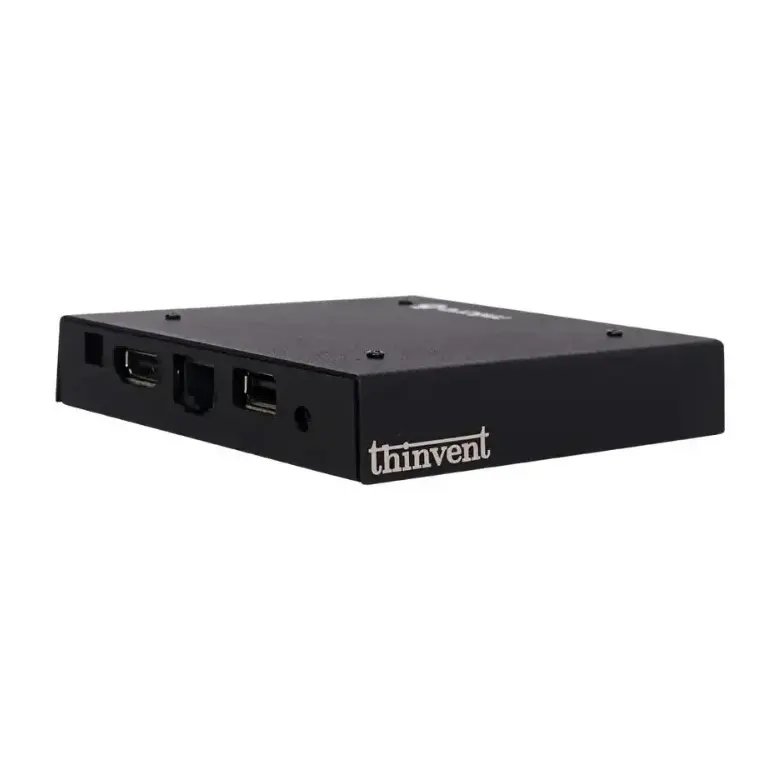
When "Hot" Is the Operating Condition, Not the Anecdote
Searching for "hot" in the context of industrial computing usually points to one practical concern: what happens to a computer when the environment around it is hot. Factory floors, foundries, glass plants, rooftop cabinets, desert kiosks, food-processing lines and non-air-conditioned warehouses all push ambient temperatures well past the 25–30 °C range that office-grade desktops are designed around. The result is a familiar failure pattern — a fan clogs with dust, CPU clock speeds drop through thermal throttling, and the machine reboots or shuts down mid-shift.
The engineering answer is not a bigger fan. It is a system designed from the start around heat as a first-class constraint: a fanless chassis that conducts heat into a ribbed aluminium or steel body, a wide-temperature component selection, a storage device with no moving parts, and firmware that manages throttling gracefully rather than crashing. That is the difference between a commercial mini PC and an industrial computer.
How Heat Is Actually Removed
| Cooling approach | Moving parts | Typical dust sensitivity | Suitable ambient range | Notes |
|---|---|---|---|---|
| Passive / fanless (heat-spreader chassis) | None | Low | Wide, often 0–50 °C or better with rated parts | Silent, sealed against dust; requires careful mounting and airflow clearance |
| Single small fan + heatsink | Yes | Moderate to high | Narrower | Lowest cost; fan is usually the first component to fail |
| Dual fan / active blower | Yes | High | Narrow | Higher airflow, more intake area to filter |
| Sealed cabinet with air conditioner | Yes (external) | Low inside cabinet | Very wide | Highest cost and power draw; used where ambient is extreme |
Two details matter more than the marketing wording. First, "wide temperature" must apply to the whole bill of materials — CPU, DRAM, SSD, capacitors and the power adapter — not just the processor. Second, thermal design power (TDP) has to be matched to the enclosure: a 15 W class processor in a properly designed fanless case will hold its rated clock far more consistently than a 65 W