Understanding the HP Compaq DX2300 Microtower and Modern Alternatives
The HP Compaq DX2300 Microtower was a business-class desktop computer from the late 2000s, typically featuring Intel Core 2 Duo or Pentium Dual-Core processors, DDR2 memory, and integrated graphics. It was designed for general office productivity, running legacy operating systems like Windows XP or Vista. Today, users seeking to replace or upgrade from such a system require modern computing solutions that offer significantly improved performance, energy efficiency, and reliability for contemporary business and industrial software.
Key Specifications and Technical Evolution
Modern industrial and business PCs have evolved dramatically from systems like the DX2300. Key advancements include:
-
Processors: Transition from 65nm dual-core CPUs to modern, efficient architectures like Intel's 12th Gen Alder Lake-N series (e.g., Intel N100), offering 4 cores, higher clock speeds, and integrated Intel UHD Graphics.
-
Memory: Shift from DDR2 (e.g., 2-4GB) to faster DDR4 or DDR5 RAM, with 8GB or 16GB becoming standard for smooth multitasking.
-
Storage: Replacement of mechanical HDDs with solid-state drives (SSDs), offering vastly faster boot times, application loading, and overall system responsiveness with capacities starting at 128GB.
-
Form Factor: The bulky microtower is often replaced by compact, fanless Mini PCs or sleek All-in-Ones, saving space and reducing noise.
-
Connectivity: Modern systems feature Gigabit Ethernet, multiple USB 3.2/Type-C ports, and HDMI/DisplayPort outputs, a significant upgrade from older VGA/DVI and USB 2.0 standards.
Modern Use Cases and Applications
Contemporary PCs built for business and industrial environments excel in applications where the DX2300 was once deployed:
-
General Office Productivity: Running modern office suites, email clients, and web-based applications efficiently.
-
Digital Signage & Kiosks: Reliable, always-on operation for displaying content in retail, hospitality, or public spaces.
-
Light Industrial Control: Hosting HMIs (Human-Machine Interfaces) for monitoring and controlling machinery in manufacturing.
-
Thin Client / Terminal Services: Acting as endpoints for virtual desktop infrastructure (VDI) to access centralized applications and data.
-
Edge Computing: Processing data locally in IoT deployments, thanks to their small size and robust construction.
Comparison: Legacy vs. Modern Industrial PC
| Feature | HP Compaq DX2300 Microtower (Legacy) | Modern Industrial Mini PC (Example) |
|---|---|---|
| Era | Late 2000s | 2020s |
| Typical CPU | Intel Core 2 Duo (65nm) | Intel Processor N100 (10nm, 4 cores) |
| Typical RAM | 2-4 GB DDR2 | 8-16 GB DDR4 |
| Typical Storage | 80-160 GB HDD | 128-512 GB SSD |
| Form Factor | Bulky Microtower | Compact, Fanless Mini PC |
| Power Consumption | High | Very Low |
| Noise | Audible fan noise | Silent (fanless) |
| Modern OS Support | No (Legacy OS only) | Yes (Windows 11, Linux) |
Thinvent's Modern Industrial Computing Solutions
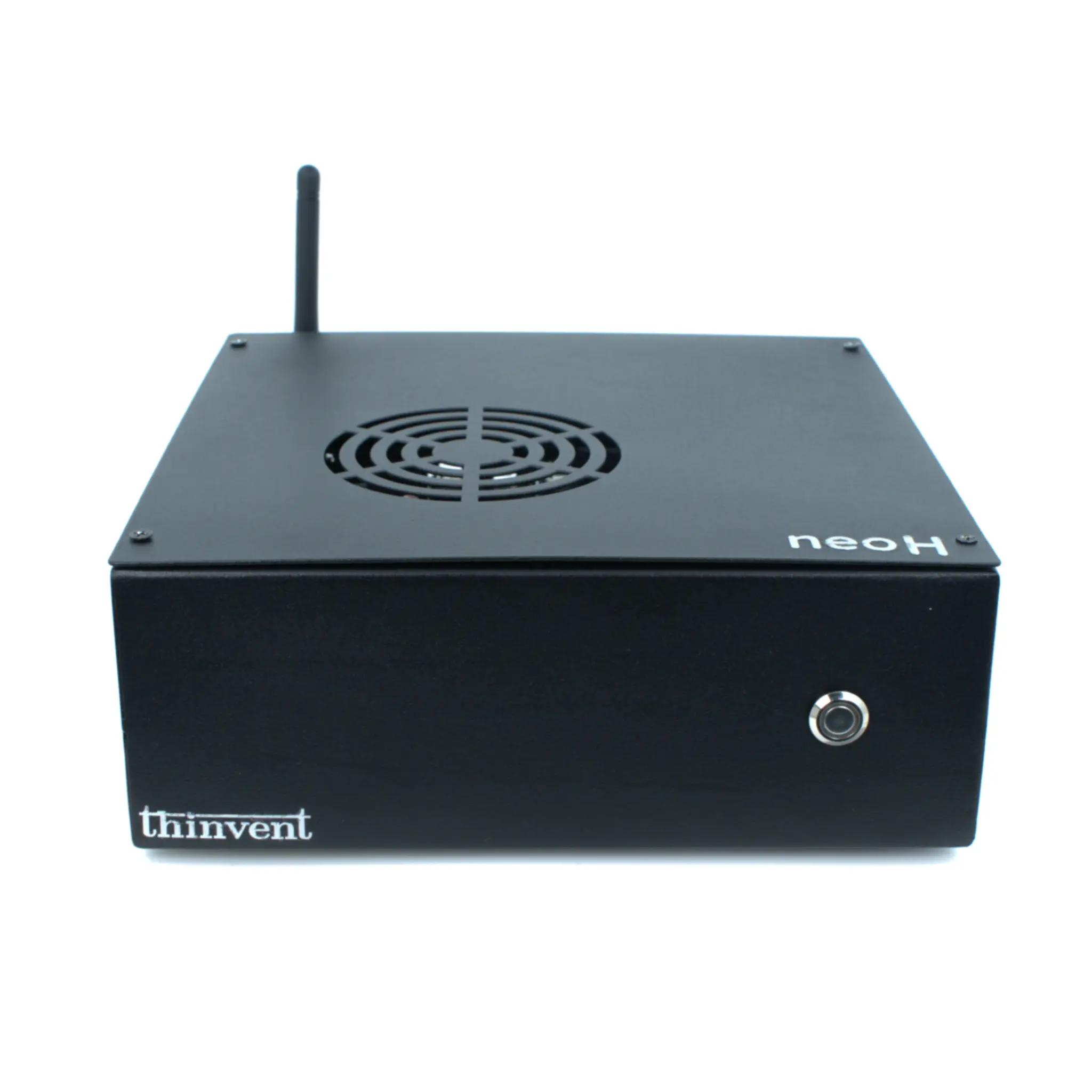
Thinvent specializes in manufacturing robust, modern industrial computers that serve as ideal successors to legacy business desktops like the DX2300. Our product range emphasizes reliability, silent fanless operation, and compact designs suitable for diverse global deployments. For users seeking an upgrade path, our Aero Mini PC series, powered by efficient Intel processors like the N100, provides a powerful, space-saving, and energy-efficient solution. These systems come configured with ample DDR4 RAM and fast SSD storage, supporting a variety of operating systems including Windows 11 IoT/Pro, Ubuntu Linux, and our own Thinux™ Embedded Linux to meet specific application needs. Built for 24/7 operation in challenging environments, Thinvent PCs deliver the performance and durability required for today's business and industrial computing tasks.