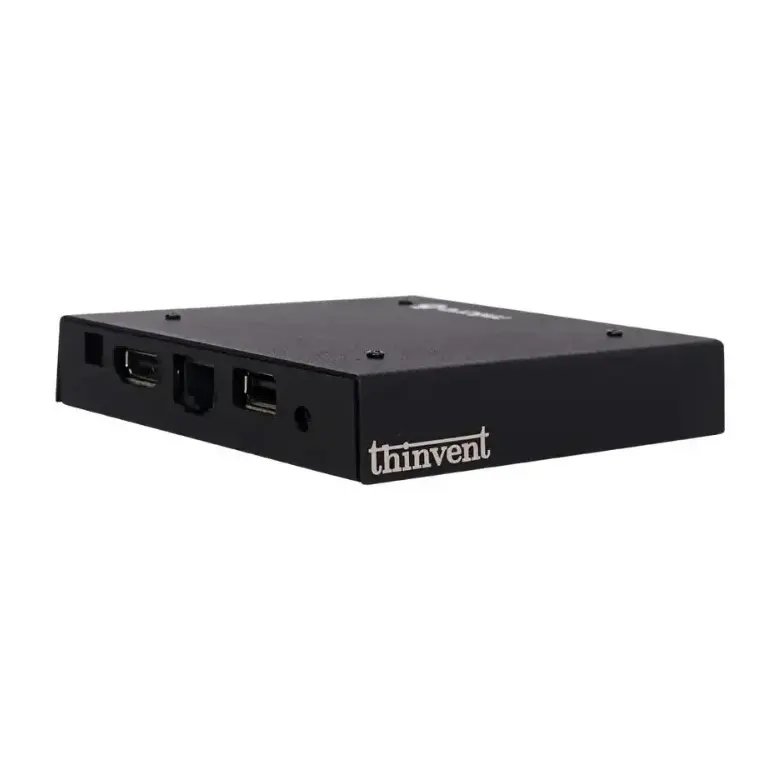
What is a Thin Client?
A thin client is a lightweight, network-dependent computer designed primarily to connect to a centralized server or cloud environment where the actual computing and data storage occur. Unlike traditional desktop PCs, thin clients have minimal local processing power, storage, and software. Their primary function is to provide a secure, reliable endpoint for accessing virtual desktops, applications, and data hosted on a server, typically through Virtual Desktop Infrastructure (VDI) or Desktop-as-a-Service (DaaS) solutions.
Key Specifications and Technical Details
Modern thin clients are engineered for efficiency and security. Key specifications often include low-power processors (like Intel Celeron or ARM-based chips), modest amounts of RAM (4GB to 8GB is common), and small solid-state drives (SSDs) or even flash storage just for the operating system. They are fanless for silent, reliable operation in office environments and feature essential connectivity such as Gigabit Ethernet for stable network performance, multiple USB ports for peripherals, and display outputs like HDMI or DisplayPort. Their operating systems are typically locked-down, secure, and optimized for remote connection protocols like Citrix HDX, VMware Blast, or Microsoft RDP.
Use Cases and Applications
Thin clients are ideal for any scenario requiring centralized management, enhanced security, and reduced total cost of ownership. Common applications include:
-
Corporate Offices & Call Centers: Providing standardized, secure desktops to hundreds of employees from a central IT dashboard.
-
Healthcare: Accessing Electronic Health Records (EHR) systems from nursing stations or kiosks without storing sensitive patient data locally.
-
Education: Deploying computer labs where students access virtualized software and files, simplifying maintenance and licensing.
-
Manufacturing & Retail: Running point-of-sale (POS) systems or shop floor applications on durable, low-maintenance hardware.
Comparison: Thin Client vs. Zero Client
While often used interchangeably, there is a technical distinction. A Thin Client runs a small, full operating system (like a lightweight Linux or Windows IoT) that manages the connection to the server. A Zero Client is an even more stripped-down device with firmware instead of an OS; it has no local storage and boots directly to a connection broker. The query "HP Zero Client Tc 293D" references this latter, ultra-specialized type.
| Feature | Thin Client | Zero Client |
|---|---|---|
| Local OS | Lightweight OS (e.g., ThinLinux, Windows IoT) | Firmware only |
| Local Storage | Small SSD for OS & cache | None |
| Management | Managed via software/group policies | Managed via connection broker/firmware updates |
| Flexibility | Can sometimes run local apps | Purely a connection endpoint |
| Security | High (minimal local attack surface) | Very High (almost no local attack surface) |
| Example Use | General VDI, task workers | High-security environments, fixed-function tasks |
Thinvent's Modern Endpoint Solutions
While Thinvent does not manufacture devices branded as "zero clients," we offer a superior alternative: our range of fanless Industrial Mini PCs configured as high-performance, secure thin clients. Our devices, like the Aero Mini PC series, provide the connectivity and reliability required for VDI, with the added benefits of industrial-grade durability, flexible operating system choices (Windows, Linux, or without OS), and powerful modern Intel processors. This approach gives IT administrators a robust, manageable, and future-proof endpoint that can handle demanding remote protocols and multimedia redirection with ease, all within a compact, silent, and fanless design perfect for any workspace.