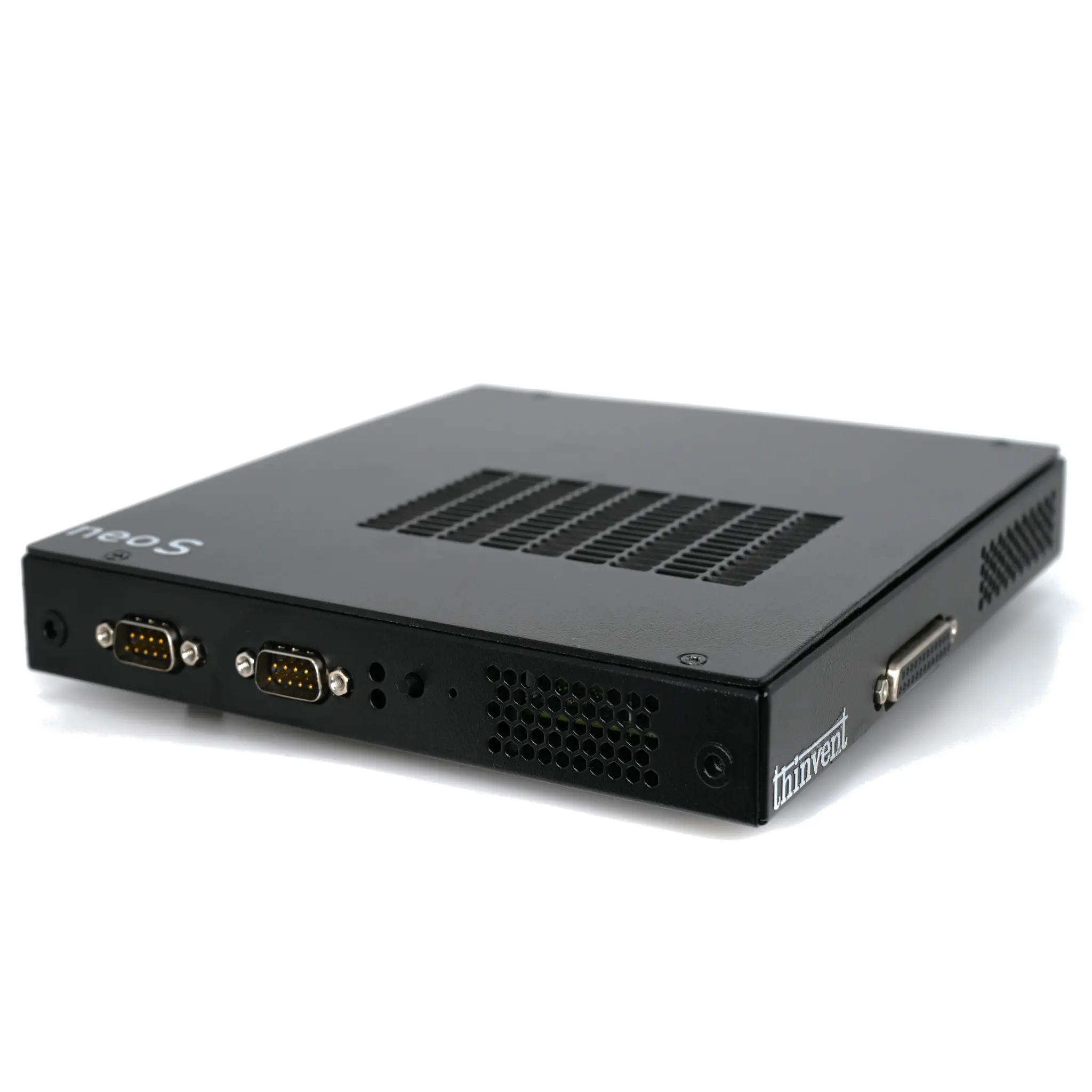
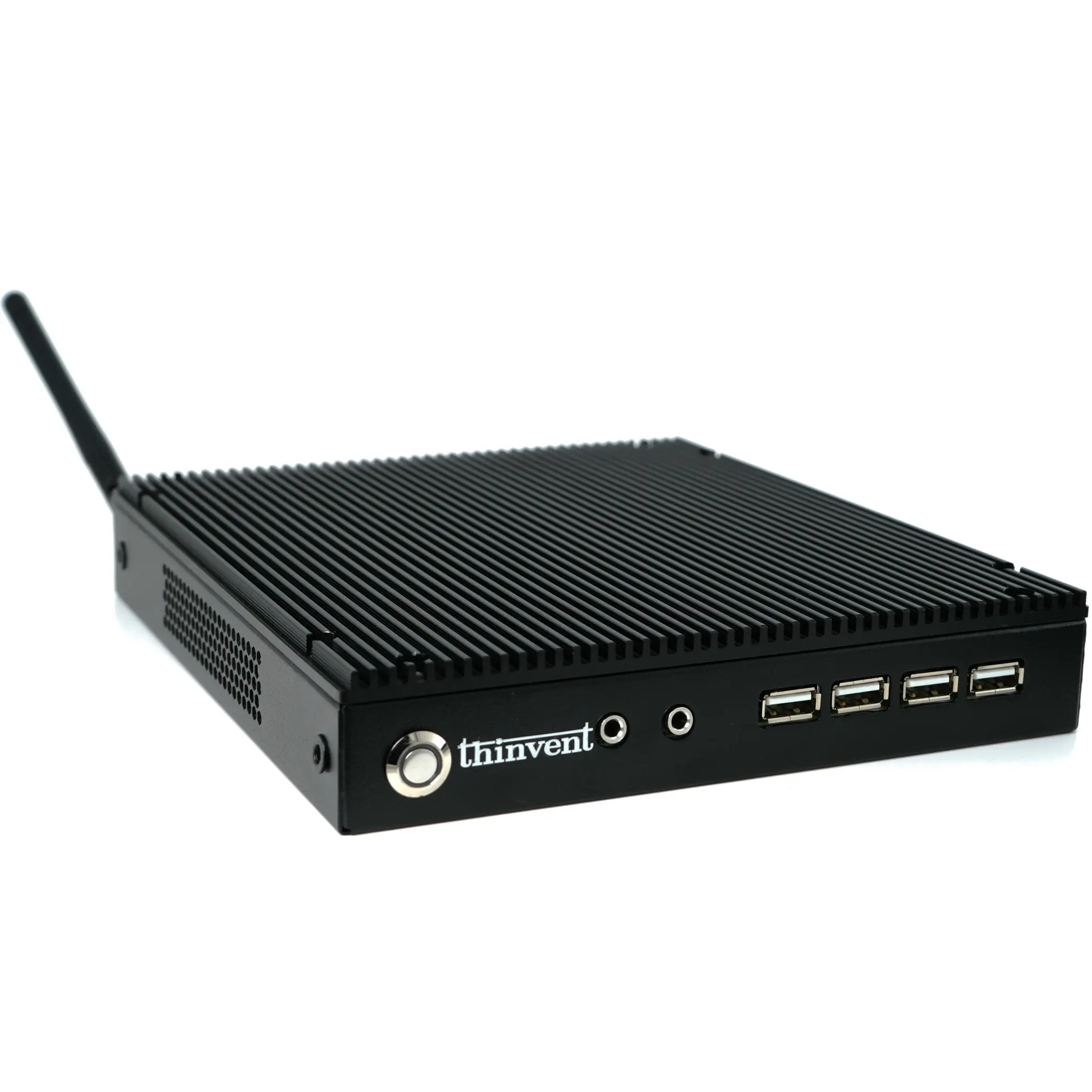
A thin client PC is a lightweight, network-dependent computing device designed to connect to a centralized server or cloud environment where the primary processing and data storage occur. It is engineered for specific tasks like accessing virtual desktops, running web applications, and managing digital signage, offering a secure, manageable, and cost-effective alternative to traditional desktop PCs. Key characteristics include low power consumption, fanless designs for silent operation, compact form factors, and robust security features, as local data storage is typically minimal or non-existent.
Key Specifications and Technical Details
Modern thin clients are built around efficient processors from Intel's N-series (like the N100) or ARM architectures, balancing adequate performance with minimal thermal output. They typically feature 4GB to 16GB of RAM, solid-state storage from 64GB to 256GB for the host OS, and a rich set of connectivity options including multiple Gigabit Ethernet ports, USB 3.2, and display outputs like HDMI. Their operating systems are often streamlined versions of Windows IoT, Linux distributions (e.g., Ubuntu, Thinux™), or specialized thin client software, all optimized for remote connectivity protocols such as RDP, Citrix, and VMware.
Primary Use Cases and Applications
Thin clients are ideal for environments requiring centralized management, enhanced security, and consistent user experiences.
-
Virtual Desktop Infrastructure (VDI): The most common application, providing employees with secure access to corporate desktops and applications from any location.
-
Digital Signage & Kiosks: Reliably powering displays in retail, hospitality, and public spaces due to their small size and 24/7 operational capability.
-
Call Centers & Office Workstations: Offering a standardized, easily deployable endpoint for task-based workers using cloud-based CRM and productivity suites.
-
Industrial & Embedded Computing: Used in manufacturing and logistics for their durability, wide operating temperature ranges, and ability to interface with machinery in harsh environments.
Comparison: Thin Client vs. Traditional Desktop
| Feature | Thin Client PC | Traditional Desktop PC |
|---|---|---|
| Primary Role | Network terminal / Access device | Standalone workstation |
| Processing Power | Moderate, optimized for efficiency | High, for local applications |
| Data Storage | Minimal local storage (for OS) | Significant local storage (HDD/SSD) |
| Security | High (data resides on server) | Variable (data on local device) |
| Management | Centralized, easy to update & deploy | Individual, more complex |
| Total Cost of Ownership | Lower (less hardware, easier IT) | Higher (more hardware, more IT labor) |
| Ideal For | Standardized tasks, VDI, kiosks | Graphics design, engineering, gaming |
Thinvent Thin Client Solutions
Thinvent offers a robust range of industrial-grade thin client PCs designed for reliability in demanding settings. Our solutions, like the Aero Mini PC series, feature fanless Intel® processors (e.g., N100), durable construction, and support for multiple operating systems including Windows 11 IoT, Windows 11 Pro, and various Linux distributions. Built for 24/7 operation, Thinvent thin clients provide the perfect balance of performance, connectivity, and manageability for enterprise VDI deployments, digital signage networks, and industrial automation projects worldwide.