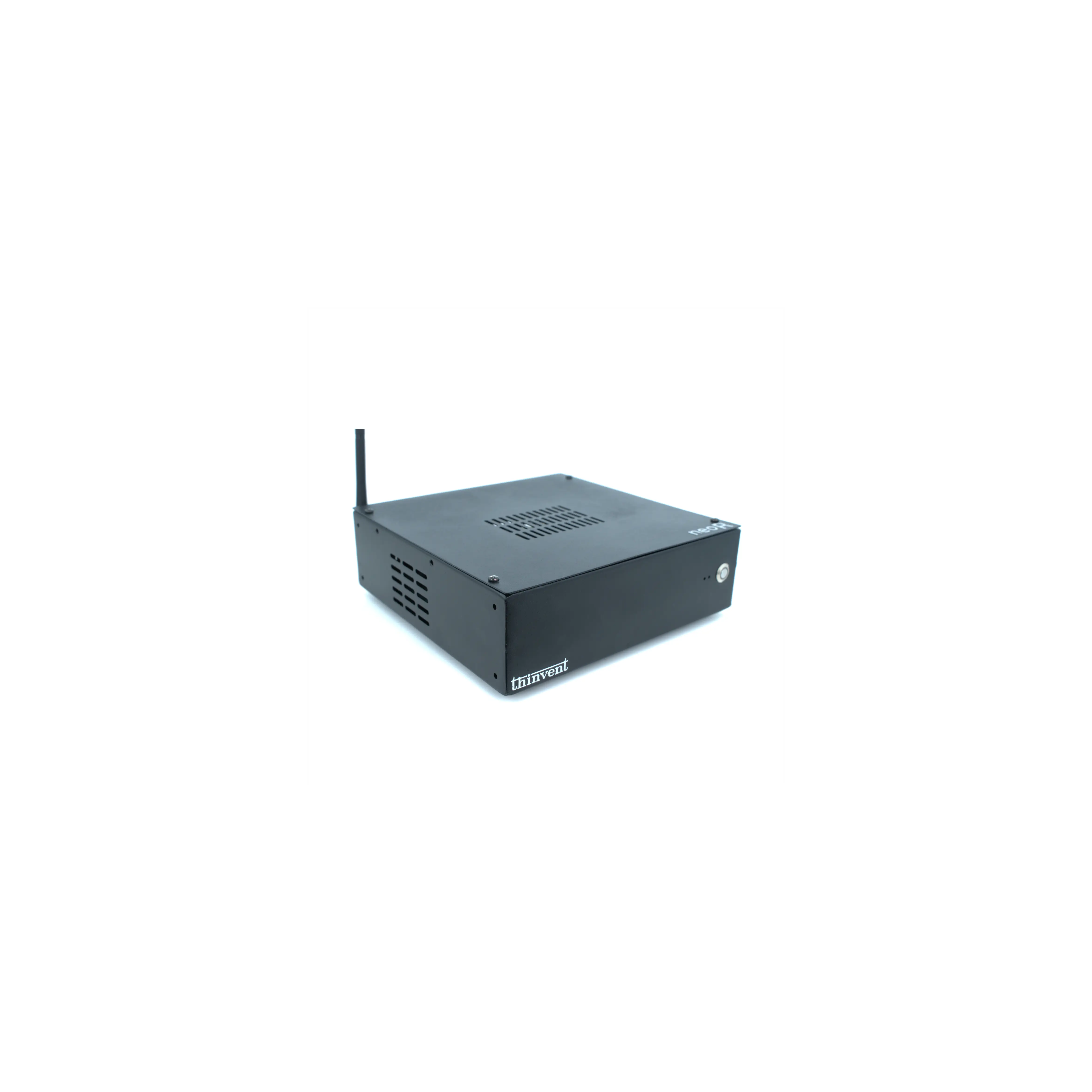
What Are Intel Core i9 Processors?
Intel Core i9 processors represent the pinnacle of consumer and professional-grade CPU performance from Intel. Designed for demanding workloads, these processors feature high core counts, exceptional clock speeds, and advanced technologies like Intel Turbo Boost Max Technology 3.0 and Thermal Velocity Boost. They are engineered to handle intensive tasks such as 3D rendering, scientific simulations, high-end gaming, and complex data analysis with ease. For industrial applications, this translates to unparalleled computational power for edge computing, AI inference, and real-time data processing in harsh environments.
Key Specifications and Technical Details
Core i9 CPUs are distinguished by their architectural superiority. Key specifications typically include:
-
High Core/Thread Count: Modern i9 processors feature a high number of performance cores (P-cores) and efficiency cores (E-cores), offering exceptional multi-threaded performance. For example, a 14th Gen i9 can have up to 24 cores (8 P-cores + 16 E-cores) and 32 threads.
-
High Clock Speeds: Base frequencies often start above 3.0 GHz, with maximum turbo frequencies reaching up to 6.0 GHz, ensuring rapid single-threaded performance.
-
Large Cache Sizes: They are equipped with substantial L3 cache (often 36MB or more), which significantly speeds up data access for repetitive tasks.
-
Advanced Features: Support for PCIe 5.0, Thunderbolt 4, Intel® UHD Graphics, and Intel® Deep Learning Boost for AI acceleration.
Ideal Use Cases and Applications
Industrial computers powered by Core i9 processors are built for mission-critical, compute-intensive environments. Their primary applications include:
-
Industrial Automation & Control: Running complex PLCs, SCADA systems, and digital twin simulations.
-
Artificial Intelligence & Machine Learning: Deploying AI models for predictive maintenance, visual inspection, and robotics at the edge.
-
Media & Digital Signage: Driving multiple 4K/8K displays in high-traffic digital signage networks or broadcast environments.
-
Research & Development: Performing CAD/CAM, finite element analysis (FEA), and computational fluid dynamics (CFD).
-
High-Frequency Trading: Where microsecond latency and immense data processing are critical.
Comparing Processor Tiers for Industrial Use
When selecting an industrial computer, it's crucial to match the processor to the application's demands. The following table provides a high-level comparison:
| Feature | Intel Core i9 (High-End) | Intel Core i7 (Mid-High) | Intel Core i5 (Mid-Range) | Intel N-Series (Entry/Efficiency) |
|---|---|---|---|---|
| Best For | Maximum performance, AI, heavy simulation | Advanced multitasking, design work | General automation, kiosks, light CAD | Fanless operation, basic HMI, thin clients |
| Core/Thread Count | Very High (e.g., 24C/32T) | High (e.g., 16C/24T) | Moderate (e.g., 14C/20T) | Low (e.g., 4C/4T) |
| Thermal Design | Requires robust cooling | Requires active cooling | Balanced cooling | Fanless, low-power |
| Industrial Fit | Rack servers, high-end workstations | Industrial PCs, workstations | Panel PCs, compact industrial PCs | Space-constrained, rugged mini PCs |
Thinvent's High-Performance Computing Solutions
Thinvent specializes in integrating top-tier components like Intel Core i9 processors into robust, reliable industrial computing platforms. Our product range includes rugged industrial PCs, panel PCs, and rack-mount servers designed to leverage the full power of these CPUs in challenging conditions. Featuring wide-temperature operation, shock and vibration resistance, and long-term component availability, Thinvent systems ensure that your high-performance applications run reliably 24/7. We provide tailored solutions, from powerful fanless computers for dusty environments to liquid-cooled workstations for maximum sustained performance.